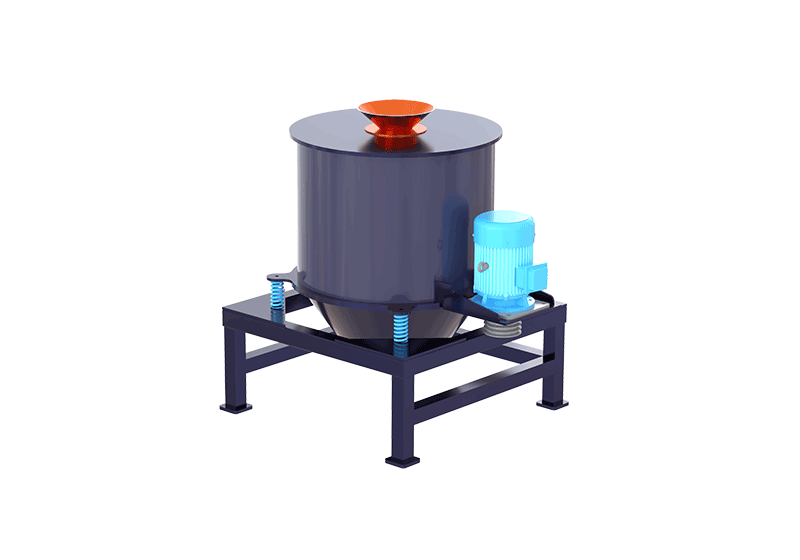
Centrifugal liquid separation for short metal chips
The DILOYA Centrifugal Dryer is an accessory for removing residual water, cutting fluid or oil from suitable short metal chips. It is intended for machining swarf that is already short enough to feed and process reliably. Long, tangled turnings may require shredding before they enter the separation stage.
The machine uses centrifugal action rather than relying on a thermal evaporation process. As the material is subjected to rotation, separable liquid is driven away from the chips and collected through the configured separation and drainage arrangement. The prepared chips and recovered liquid can then be handled as separate streams.
Residual liquid content as low as 3%
Under suitable material and operating conditions, the residual water or oil content after centrifugal drying can be as low as 3%. This is an achievable application-dependent figure, not an unconditional guarantee for every metal chip, liquid or loading condition.
The result depends on chip size and shape, metal type, initial liquid content, fluid viscosity, temperature, loading consistency and the selected machine settings. Fine particles, compacted chip nests and strongly retained fluid may behave differently from clean, free-flowing short chips.
The measurement basis, sampling method and operating conditions for a 3% target must be agreed for the project and confirmed with representative testing. It does not mean the machine removes exactly 97% of the incoming liquid, and it should not be interpreted as a combined guaranteed limit for water and oil without a defined test basis.
Suitable short machining chips
> Steel and iron chips: suitable short ferrous machining chips carrying separable cutting fluid, water or oil.
> Aluminium chips: suitable short aluminium swarf, assessed for size, bulk density, fines and fluid retention.
> Copper and other metal chips: suitably prepared material evaluated for the selected machine and separation duty.
The feed must remain within the agreed limits for chip size, contamination and fluid condition. Remove unsuitable solid objects and avoid feeding long, tangled bundles where they could interfere with material flow or stable operation. Keep alloys separated where required by the recycling process.
How the separation stage works
1> Prepare the chips: sort the material and reduce long turnings to suitable short chips where necessary.
2> Feed at a controlled rate: match loading to the selected dryer and the incoming fluid condition.
3> Apply centrifugal separation: rotation drives separable liquid away from the chips.
4> Collect the separated liquid: route water, coolant or oil to the specified collection or treatment arrangement.
5> Transfer the dried chips: collect or convey the prepared material to storage or the next processing stage.
Integration with shredding and briquetting
A typical metal-turnings line can combine shredding, centrifugal separation and briquetting. Shredding prepares tangled swarf for the dryer, centrifugal separation reduces the retained liquid, and the press compacts the prepared chips. The final sequence and interfaces must be selected around the actual material and project requirements.
Discharge heights, transfer equipment, buffer capacity and operating controls should be coordinated across the line. The average capacities of the connected machines must be matched so the separation stage does not become a production bottleneck.
Handling and liquid-recovery benefits
Reducing separable liquid can help limit dripping during chip handling, reduce the amount of liquid carried into downstream equipment and make the material easier to store and transport. Collecting liquid separately also allows its quality and destination to be managed independently of the chips.
Recovered coolant or oil is not automatically ready for direct reuse. Filtration, quality checks, contamination control or other treatment may be required before it can be returned to production. The recovery arrangement must suit the original fluid and the receiving process.
Operating considerations
Stable loading, appropriate chip preparation and maintenance are important for consistent separation. Inspect and clean the machine according to its operating instructions, and stop and isolate it before any intervention. Monitor abnormal vibration, material build-up and other operating conditions using the procedures specified for the selected model.
The dryer does not sterilise material, remove every contaminant or make a chip stream completely free of fluid. Final handling, storage and downstream acceptance requirements must be evaluated separately.
Information needed for selection
Provide samples or photos of the short chips, metal and alloy, size distribution, bulk density, initial water or oil condition, fluid type, required throughput and desired residual-fluid target. Include upstream shredding equipment, downstream briquetting requirements, available space and power supply.
DILOYA will assess the centrifugal dryer together with the proposed feed and discharge arrangements. Representative testing is used to confirm a practical residual-liquid target and suitable operating configuration for the project.