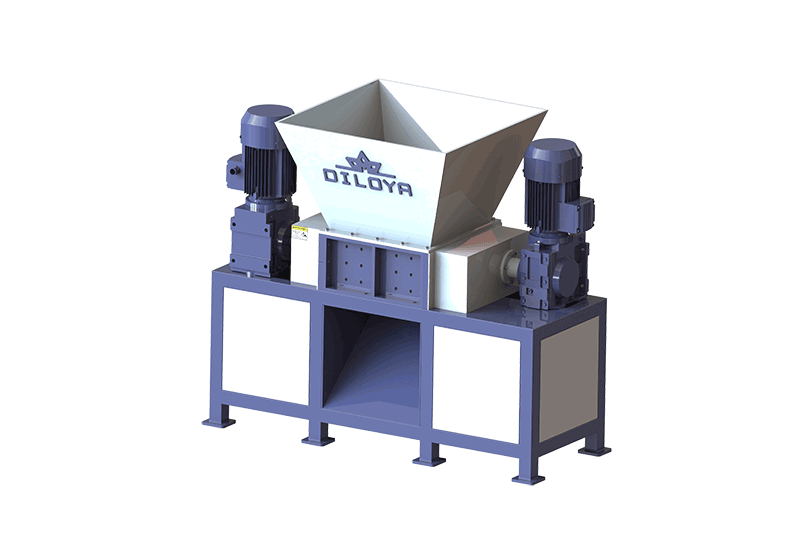
Metal-turnings preparation before briquetting
The DILOYA Double Shaft Shredder is an upstream accessory for metal-chip briquetting systems. It is designed to reduce suitable machining turnings into smaller pieces before they enter a briquetting machine. Typical feed materials include steel and iron turnings, copper turnings and aluminium turnings generated by turning, milling, drilling and other machining operations.
Long, curled swarf can form loose, tangled bundles that occupy considerable space and are difficult to feed consistently. Size reduction breaks up these bundles and shortens the chips, making the material easier to transfer, buffer and meter into the press. The shredder prepares the feedstock; the downstream briquetting machine performs the final compression into dense briquettes.
Parameter:
| Model | DDS300 | DDS400 | DDS500 | DDS600 | NDS800 | NDS1000 | NDS1200 | NDS1400 | NDS2000 |
| Chamber Size | 300x300mm | 400x400mm | 500x450mm | 600x480mm | 800x600mm | 1000x750mm | 1200x900mm | 1400x1200mm | 2000x1400mm |
| Rotor Diameter | 160mm | 200mm | 220mm | 280mm | 320mm | 380mm | 480mm | 650mm | 700mm |
| Motor Power | 3kw | 5.5kw | 2x5.5kw | 2x11kw | 2x22kw | 2x37kw | 2x45kw | 2x75kw | 2x110kw |
| Machine Weight | 450kg | 680kg | 1250kg | 1680kg | 3650kg | 6840kg | 9530kg | 15320kjg | 26750kg |
Twin-shaft cutting design
The machine uses two cutter shafts to engage and break down the incoming turnings. The twin-shaft arrangement pulls suitable material into the cutting zone and reduces the size of tangled chips through repeated cutting and tearing. The hopper provides an entry point for controlled loading, while the discharge arrangement is selected around the next stage of the production line.
Cutter configuration, drive selection and feeding method must suit the actual metal and chip geometry. Aluminium, copper and ferrous turnings have different cutting characteristics, so one operating setting should not be assumed to deliver identical results for every material. The required discharge size is established together with the inlet and feeding requirements of the selected briquetting machine.
Suitable machining materials
> Steel and iron turnings: suitable curled and tangled machining swarf requiring size reduction before pressing. Chip thickness, hardness and the presence of solid pieces must be assessed.
> Copper turnings: long or intertwined copper machining chips that need to be shortened for more manageable transfer and press feeding.
> Aluminium turnings: lightweight, bulky aluminium swarf that can form loose nests and benefit from preparation before buffering and briquetting.
> Other metal turnings: suitability is evaluated from representative samples and the requirements of the complete line.
Keep different metals and alloy grades separated when downstream recycling requires grade control. Remove tools, bars, heavy solid offcuts and other unsuitable contaminants before feeding. This application is for machining turnings, not an unrestricted mixed-scrap shredding duty.
Automatic reversing for material release
The shredder includes an automatic reversing function for the cutter shafts. When material accumulation or an overload condition triggers the configured control sequence, the shafts can reverse to help loosen the obstruction before returning to normal shredding. This supports more continuous operation and can reduce the need for routine manual clearing.
Automatic reversing does not mean that every obstruction can be cleared automatically, nor does it make unsuitable feedstock acceptable. Repeated reversing or a persistent blockage requires the feed to be checked and the machine stopped according to its operating instructions. Any manual clearing or maintenance must follow the prescribed isolation procedure; operators must never reach into an operating hopper or cutting chamber.
How it works with a briquetting machine
1> Collect and sort the turnings: identify the metal, remove unsuitable contaminants and organise the feed around the production schedule.
2> Load the shredder: introduce suitable turnings at a controlled rate through the hopper using the agreed loading arrangement.
3> Shred the material: the two cutter shafts break up tangled bundles and reduce chip length. Automatic reversing assists material release when required by the control sequence.
4> Transfer and buffer the prepared chips: discharge to a suitable collection point, conveyor or buffer hopper according to the line layout.
5> Feed and briquette: deliver the prepared chips to the matched briquetting machine for hydraulic compaction.
Matched to different briquetting-machine models
The Double Shaft Shredder can be configured for use with different briquetting-machine models rather than treated as a one-size-fits-all attachment. Engineering coordination covers the shredder discharge height, transfer method, chip size, buffer capacity, press inlet and operating controls. Existing presses can also be assessed for integration, subject to their actual feed requirements and available interfaces.
A suitable buffer between shredding and pressing can help accommodate the different operating cycles of the two machines. However, buffering cannot compensate indefinitely for a mismatch in average capacity. The shredder, transfer equipment and press must be selected as a connected system using the actual material and required sustained output.
Practical benefits for chip-handling operations
> More manageable feedstock: shorter chips are easier to transfer and present to a suitably designed press-feeding system.
> Reduced tangling: breaking up chip nests helps address feeding difficulties caused by long machining swarf.
> Coordinated production: shredder operation can be matched to downstream buffering and briquetting demand.
> Flexible integration: the configuration can be selected around different press models and workshop layouts.
> Less routine intervention: automatic reversing helps release material build-up within the limits of the selected control arrangement.
Actual throughput, discharge-size distribution and the effect on briquetting performance depend on chip shape, metal type, cutter configuration, loading consistency and the downstream equipment. No fixed output, chip size or energy-consumption figure is specified without a defined configuration and material assessment.
Information needed for selection
Send DILOYA photos or samples of the turnings, the metal and alloy, typical chip length and thickness, loose bulk density, oil or coolant condition, required hourly output and your existing or proposed briquetting-machine model. Available floor space, loading method, transfer height and local electrical supply are also important.
Our team will evaluate the shredder and press together and recommend a suitable material-preparation arrangement. The objective is a reliable flow from loose machining turnings to prepared feedstock and then to briquettes, with each stage matched to the actual workshop duty.