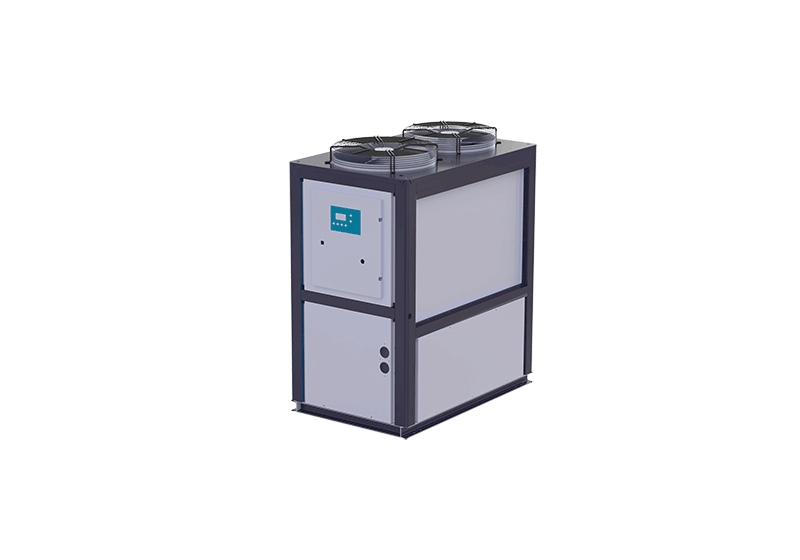
Hydraulic oil cooling for balers and briquetting machines
The DILOYA Industrial Oil Chiller is a cooling accessory for hydraulic power units used on suitable hydraulic balers and briquetting machines. It removes heat from the hydraulic oil circuit to help maintain the operating-temperature range required by the machine and its hydraulic components.
Repeated pressing cycles and extended production generate heat in a hydraulic system. Where the cooling arrangement cannot remove that heat at the necessary rate, oil temperature can rise beyond the intended operating range. A correctly selected industrial oil chiller adds controlled cooling capacity for the actual machine duty and installation.
Parameter:
| Model | Cooling Capacity | Power | Machine Size | Weight |
| IC25 | 2500 kcal/h | 1.7kw | 458×538×817mm | 85kg |
| IC60 | 6000 kcal/h | 3.5kw | 662×706×1153mm | 130kg |
| IC80 | 8000 kcal/h | 4kw | 634×674×1192mm | 150kg |
| IC120 | 12000 kcal/h | 6.5kw | 700×750×1343mm | 180kg |
| IC150 | 15000 kcal/h | 7.8kw | 704×754×1442mm
| 220kg |
| IC180 | 18000 kcal/h | 9kw | 754×824×1442mm | 280kg |
| IC200 | 20000 kcal/h | 11kw | 804×954×1502mm | 320kg |
| IC240 | 24000 kcal/h | 12.5kw | 801×1255×1505mm | 350kg |
| IC300 | 30000 kcal/h | 15.5kw | 801×1355×1585mm | 400kg |
| IC400 | 40000 kcal/h | 21.5kw | 881×1555×1685mm | 510kg |
| IC500 | 50000 kcal/h | 27.5kw | 920×1670×1853mm | 620kg |
Supporting stable hydraulic operation
Hydraulic oil temperature influences fluid viscosity and the operating conditions of pumps, valves, seals and other components. Keeping temperature within the specified range helps the hydraulic system perform as intended during repeated machine cycles.
The goal is controlled oil temperature, not the lowest possible temperature. An unsuitable setpoint or an incorrectly sized cooling system can create other operating problems. The required temperature range must follow the hydraulic-machine specification, oil requirements and actual site conditions.
How the cooling process works
The chiller removes heat from the hydraulic oil through the specified cooling and heat-exchange arrangement. The absorbed heat is then rejected through the refrigeration system. Temperature control coordinates cooling demand around the selected operating setpoint and approved control range.
The connection method, oil-side flow path, permitted flow rate, operating pressure and cooling circuit are confirmed for the selected chiller and hydraulic system. They should not be assumed from appearance alone. The installation must preserve suitable filtration, fluid compatibility and the hydraulic machine's required operating conditions.
Cooling for 24-hour production schedules
When the chiller is correctly sized and the complete machine is rated and maintained for the intended duty, hydraulic cooling can support production schedules that include 24-hour operation. This requires the available cooling capacity to match the real heat load throughout the expected ambient-temperature range.
A chiller alone cannot guarantee uninterrupted operation of a baler or briquetting machine. Continuous production also depends on the machine's duty rating, material supply, maintenance requirements, power availability and the condition of the complete system.
Planned inspection and servicing remain necessary. A 24-hour production objective should therefore be treated as an engineering duty requirement, not a promise that maintenance or operating checks can be omitted.
Suitable hydraulic-machine applications
> Hydraulic balers: cooling arrangements selected for the heat generated by the actual compression cycle and operating schedule.
> Metal-chip briquetting machines: hydraulic oil-temperature management for repeated high-load pressing operation.
> Other compatible hydraulic power units: application-specific cooling assessed from the circuit, oil and operating requirements.
Machine compatibility must be confirmed before connection. Oil type, viscosity range, permitted temperatures, circuit pressure, flow and the available interfaces are all relevant to selection.
Sizing the cooling capacity
Chiller selection is based on the heat that must be removed, not simply the installed motor power or oil-tank volume. Important inputs include the machine's operating cycle, average load, hydraulic-system efficiency, existing heat rejection, required oil temperature and the hottest expected site conditions.
Cooling capacity must be checked at the actual design conditions. A catalogue rating measured under different temperatures may not describe the capacity available at the installation. The selected arrangement should be assessed for sustained duty rather than only short start-up operation.
Oversizing is not a substitute for proper temperature control. The objective is a practical balance of cooling performance, stable operation and electricity use for the specified production schedule.
Efficient cooling and practical benefits
> Oil-temperature control: remove hydraulic heat to help keep the fluid within the required operating range.
> Support for sustained production: match heat rejection to demanding baling or briquetting duty.
> Reduced overheating-related interruptions: address excessive hydraulic oil temperature where heat load has been correctly assessed.
> Application-specific integration: select the cooling circuit and interfaces around the actual hydraulic power unit.
> Coordinated operation: configure temperature control and machine interfaces as required for the installation.
Cooling effectiveness and energy use depend on the selected equipment, temperature difference, ambient conditions and maintenance. No fixed energy-saving percentage, cooling rate or production increase is specified without a defined configuration and operating data.
Installation and maintenance considerations
Provide the clearances and ventilation required by the selected chiller. The installation must allow heat rejection and practical access for inspection and servicing. Restricted airflow, heat recirculation or contaminated heat-transfer surfaces can affect cooling performance.
Use suitable piping, connections and protective arrangements for the specified oil circuit. Follow the approved installation, electrical and maintenance instructions, including isolation before work. Confirm any required alarms, interlocks or operating permissions in the project specification.
Regular inspection of the cooling and oil circuits is important for sustained performance. Refrigeration-system work must be undertaken by appropriately qualified personnel according to the applicable requirements.
Information needed for selection
Provide the baler or briquetting-machine model, hydraulic power-unit details, oil type and tank volume, current and target oil temperatures, operating cycle and daily production schedule. Include available flow and pressure data, existing cooling equipment, installation conditions, ambient-temperature range and local power supply.
DILOYA will assess the cooling duty together with the machine requirements. The objective is a correctly matched industrial oil chiller that provides effective hydraulic heat removal and supports reliable, efficient operation under the specified production conditions.