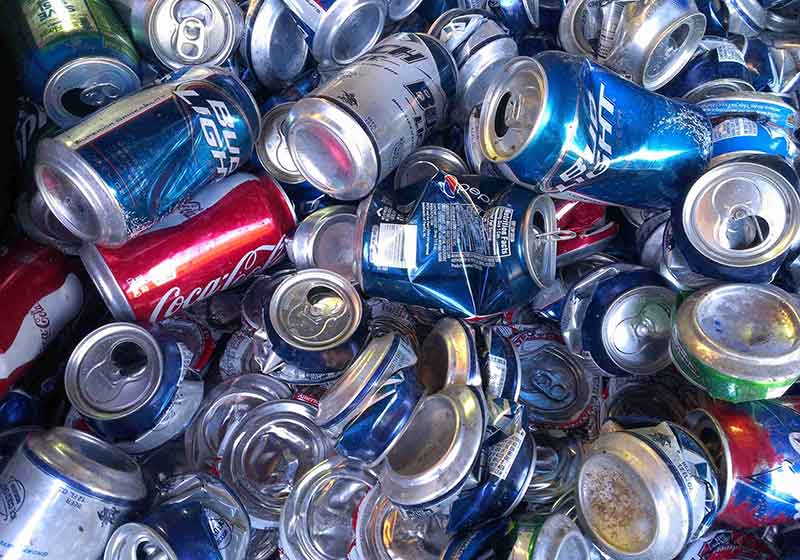
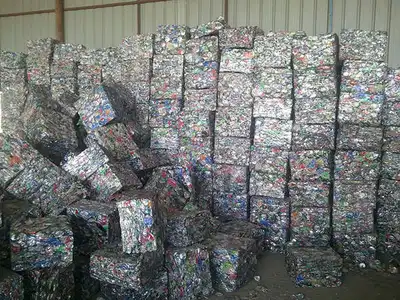
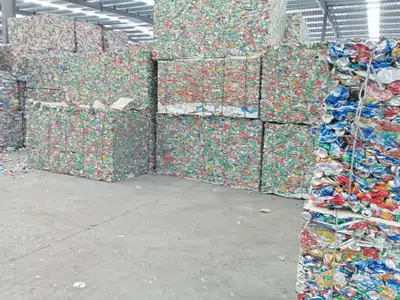
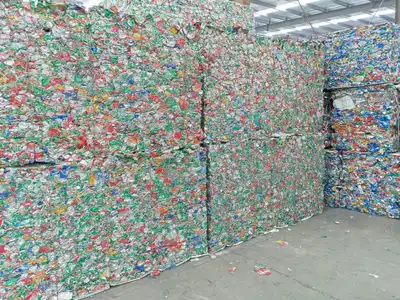
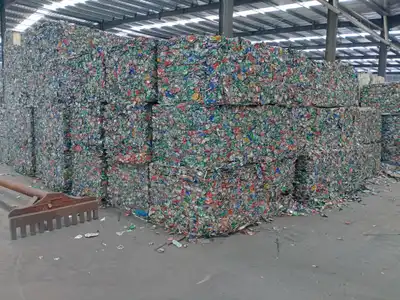
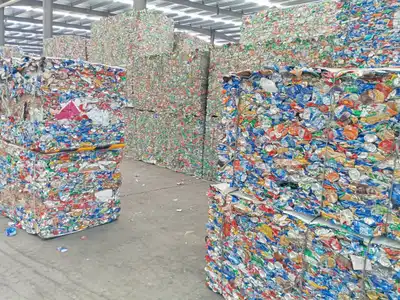
Aluminium UBC means used beverage cans collected from households, commercial recycling programs, material recovery facilities and deposit-return systems. Empty cans are lightweight, springy and contain considerable air space, so loose material is expensive to store and transport. Incoming streams may also contain residual liquid, steel cans, plastic bottles, paper and other contaminants.
A hydraulic aluminium UBC baler compresses sorted cans into dense rectangular transport bales. This application is intended for baling only. The equipment and upstream preparation should be selected together so the finished bales achieve practical density, dimensional stability and the quality required by aluminium can recyclers and remelting plants.
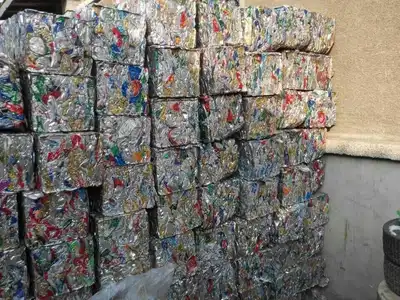
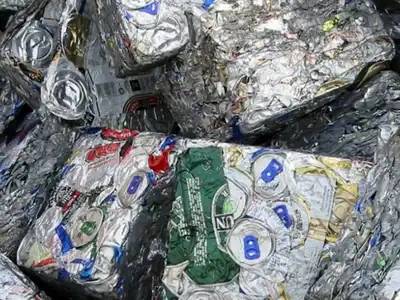
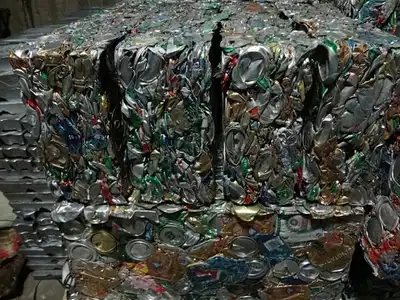
1. Effect After Baling:
2. What UBC Material Is Suitable for Baling?
The feed should consist primarily of empty aluminium beverage cans. Steel cans, glass, stones, plastic containers and loose refuse should be removed with manual sorting, screening, magnetic separation or other suitable equipment. Residual drinks should be drained where required to reduce leakage, odor, corrosion and unnecessary bale weight.
The baler configuration depends on whether cans arrive loose, flattened, pre-compacted or mixed with collection bags. Feed consistency and contamination level directly affect chamber filling, bale density, tying reliability and buyer acceptance.
3. Why Bale Aluminium UBC?
Reduce volume dramatically: compression collapses thin can walls and removes air space from the loose collection stream.
Lower logistics cost: dense bales improve payload and container utilization compared with loose or lightly compacted cans.
Improve warehouse control: rectangular packages are easier to weigh, count, stack and manage as inventory.
Reduce litter and scattering: contained cans are less likely to blow around the yard or spill during loading.
Support quality inspection: sorted bales with consistent composition are easier for buyers to sample and evaluate.
Prepare recycling feed: stable UBC bales simplify receiving, storage and controlled processing at can recycling or remelting facilities.
4. How Does an Aluminium UBC Baler Work?
Sort and drain
Non-aluminium contaminants are removed and excessive residual liquid is drained according to the plant process.
Feed the baler
Loose cans enter the chamber through a conveyor, loading hopper or other controlled feeding system.
Pre-compress
The first stage collapses the cans, removes air space and prepares a consistent charge for final compression.
Apply hydraulic compression
One or more rams compress the material to the required bale dimensions and practical density.
Tie or stabilize
High-throughput systems can use automatic wire tying or another specified method to control bale expansion.
Discharge and store
Finished bales are discharged for weighing, labeling, stacking and shipment.
5. What Do Our Engineers Evaluate?
loose, flattened or pre-compacted can condition and bulk density;
contamination, residual liquid and upstream sorting equipment;
hourly or daily capacity and peak collection volume;
required bale dimensions, weight, density and buyer specification;
conveyor size, hopper volume, chamber opening and feed continuity;
manual, semi-automatic or fully automatic operation and tying method;
installation space, local voltage, drainage, housekeeping and downstream handling.
6. How to Choose a Suitable Aluminium UBC Baler?
Begin with the real loose bulk density, contamination level and required throughput. Small collection centers may prioritize compact installation and simple operation, while material recovery facilities need continuous conveyor feeding, automatic cycling, dependable tying and rapid bale discharge. Bale size must match forklifts, storage layout, transport equipment and the receiving recycler's specification.
Send DILOYA representative material photos, the loose or flattened can condition, hourly capacity, preferred bale size and weight, feeding arrangement, tying requirement, installation space and local voltage. Our engineers will configure the chamber, hydraulic system, controls, conveyor interface and discharge arrangement for stable UBC baling.