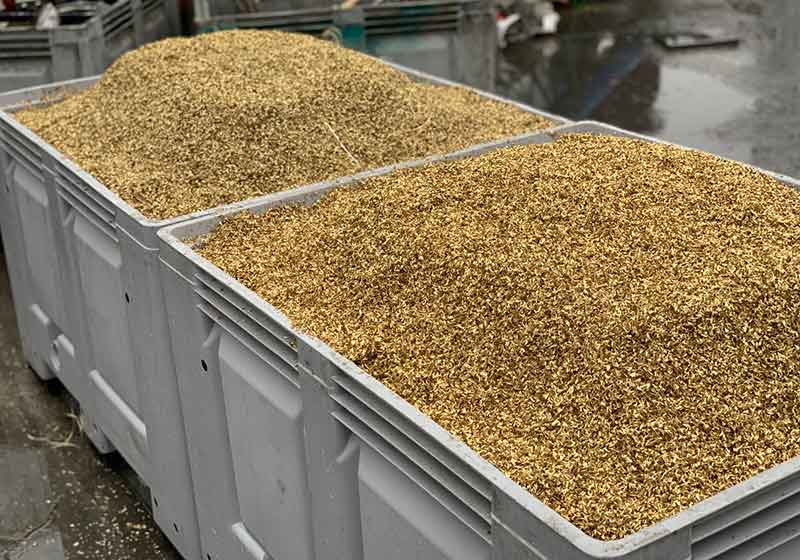
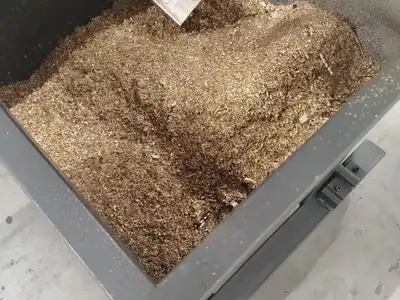
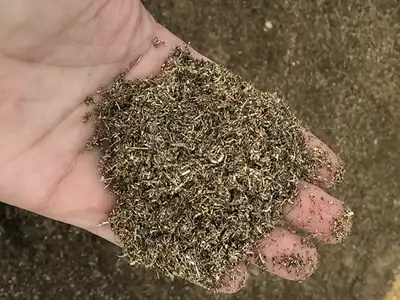
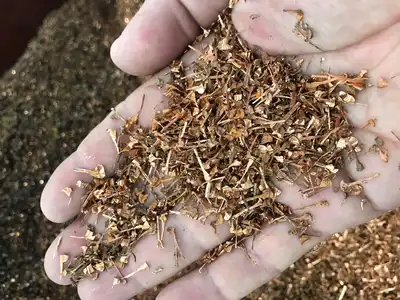
Brass chips are produced when machining valves, fittings, bearings, plumbing parts and other copper-zinc alloy components. Loose chips vary from fine needles and flakes to short curls, often retain cutting oil and can contain several brass grades. Their low bulk density makes open-bin storage, transport and furnace feeding inefficient.
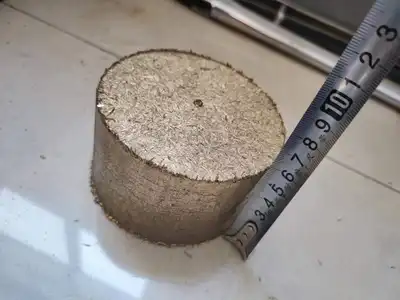
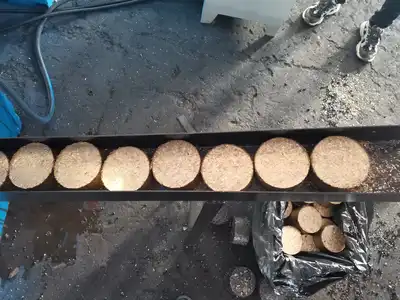
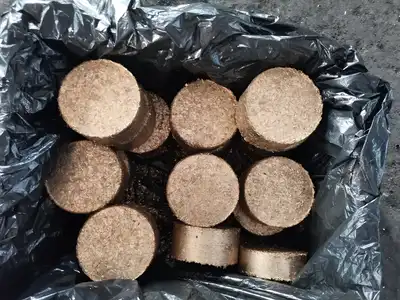
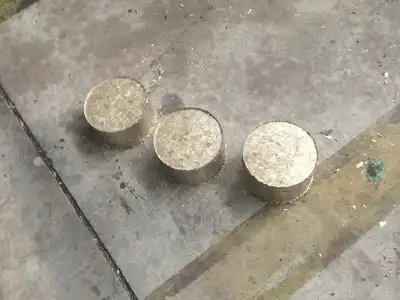
DILOYA hydraulic briquetting presses compress sorted brass chips into dense cylindrical briquettes without binders. Briquetting reduces occupied volume, recovers part of the cutting fluid and produces stable packages for weighing, shipping and controlled remelting. This Copper&Brass Scrap application is intended for briquetting only.
Effect After Brass Chip Briquetting
Suitable Brass Chip Feed
Suitable feed includes short brass turnings, milling chips, drilled swarf and screened alloy fragments. Different brass grades should be separated whenever the recycler or foundry requires controlled copper and zinc content. Steel, aluminium, plastic, rags, abrasive material and excessive free liquid should be removed. Long nests may require a chip crusher before automatic feeding.
Why Briquette Brass Chips?
- Dense packages: reduce storage footprint and freight volume.
- Fluid recovery: separates part of the retained cutting oil or coolant.
- Grade control: compact, labeled batches support alloy traceability.
- Reduced handling loss: briquettes prevent small chips from spilling from bins.
- Consistent furnace charging: regular units simplify batching and remelting.
Process and Quality Control
Sorted chips are screened, conditioned and metered into the briquetting chamber. Controlled hydraulic pressure and dwell time form a stable cylinder, after which expressed fluid is collected and the briquette is discharged. Operators monitor briquette density, cracking, weight consistency, feed continuity and recovered-liquid condition.
What DILOYA Engineers Evaluate
DILOYA evaluates brass grade, copper-zinc composition, chip size and curl, loose bulk density, oil or coolant content, contamination, hourly throughput, target briquette diameter and density, feeding method, fluid recovery, installation space and local voltage. Representative samples help our engineers configure the chamber, feeder, press force, hydraulic system and cooling for reliable production.