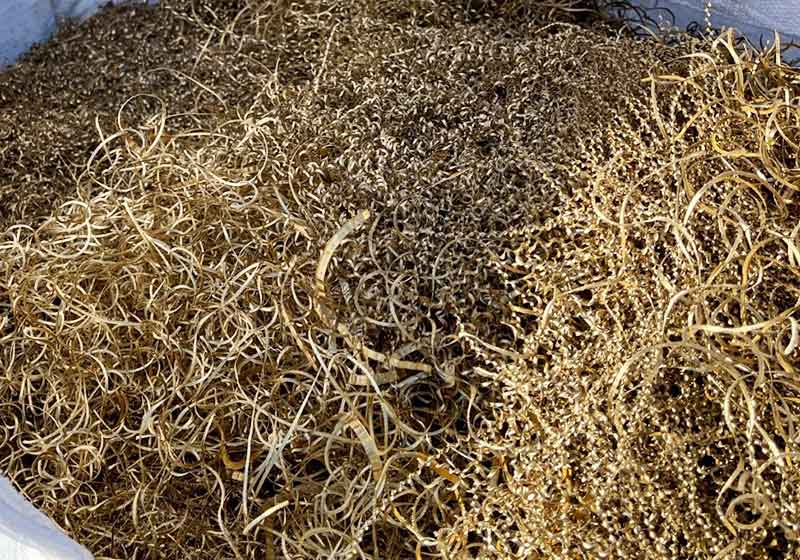
Brass turnings are curled or spiral machining residues produced when turning, drilling and milling brass components. Long ribbons and intertwined curls can form springy bundles with a low loose bulk density, making them difficult to store and feed consistently. DILOYA configures a suitable preparation and compaction process to convert sorted brass turnings into manageable bales or briquettes.
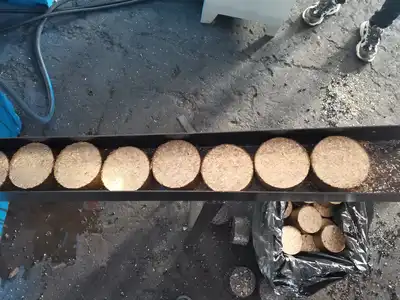
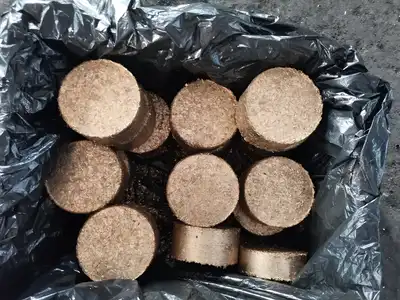
1. Effect After Briquetting
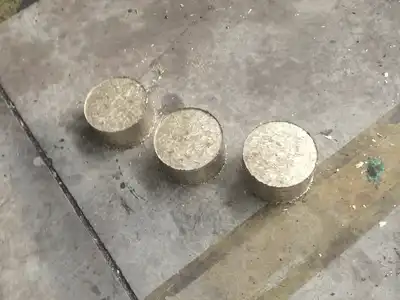
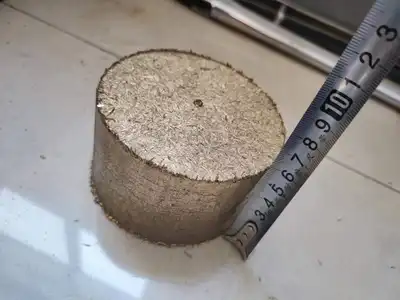
The supplied photographs show cylindrical brass-turnings briquettes during discharge, collection and inspection. They illustrate the compacted product; package dimensions, weight and production rate must be confirmed for the customer's material and selected machine.
2. Why Process Brass Turnings?
- Reduce bulky loose material: compaction turns springy curls into defined packages for more organized storage.
- Improve feeding and handling: suitable preparation reduces the difficulty of handling tangled nests before briquetting.
- Maintain alloy separation: process identified brass grades in separate lots rather than mixing them with copper or other metals.
- Manage retained machining fluid: specify collection and any required upstream fluid-separation equipment around the actual condition.
- Match downstream requirements: select bale or briquette form, dimensions and handling arrangements for the receiving recycler or processor.
3. Brass Turnings Are Not the Same as Short Brass Chips
The important distinction is chip geometry. Long, curled turnings can interlock and bridge in a receiving hopper, whereas suitably prepared short chips may feed more readily. A system selected for short brass chips should not automatically be assumed suitable for untreated turning bundles.
Representative samples should be checked for turning length, ribbon thickness, bundle size, flow behavior and fluid condition. Long or entangled turnings may require shredding before screw feeding and hydraulic briquetting. The preparation stage and the press must be selected together.
4. Baling or Shredding-and-Briquetting
Baling can be considered for suitable bulky brass turnings when the requirement is a larger transport package. Machine chamber size, loading access and discharge arrangements must match the actual material and buyer's specification.
Shredding followed by briquetting is considered when the objective is smaller compact briquettes and the original turnings are too long or tangled for the selected press feed. Prepared material is transferred through a suitable feeding arrangement and compressed hydraulically. Pre-compression, hopper buffering or fluid-separation stages may be specified where required; they are not automatically included in every machine.
5. Typical Processing Sequence
- Sort and inspect: separate brass grades and remove foreign objects, tools and oversized solid pieces.
- Prepare the turnings: shred long bundles when needed for the selected feeding and pressing arrangement.
- Address fluid content: provide drainage or a specified de-oiling stage where the material requires it.
- Feed consistently: coordinate the hopper and transfer system with the briquetting machine.
- Compress and discharge: produce the specified briquette or bale and collect it using suitable handling equipment.
- Check the finished product: verify package weight, dimensions, condition and lot identity against the agreed requirements.
6. Material Quality and Practical Operation
Brass alloy composition, chip shape, moisture and cutting-fluid content can vary between machining jobs. Keep material traceable and avoid mixing different grades without the buyer's agreement. Compression does not purify the alloy or remove every contaminant.
The measurement photograph is a product example rather than a universal diameter specification. Actual briquette dimensions, weight and achievable output depend on the selected equipment and representative material trials. Any recovered fluid must be assessed before reuse, and safe access, guarding and routine cleaning should be included in the line layout.
7. What Our Engineers Evaluate
DILOYA reviews brass grade, turning length and thickness, curl and nest condition, loose bulk density, oil or coolant content, foreign material, required throughput and target bale or briquette dimensions. Feeding method, any required shredding or de-oiling, collection equipment, available floor space, electrical supply and downstream buyer requirements complete the selection process.