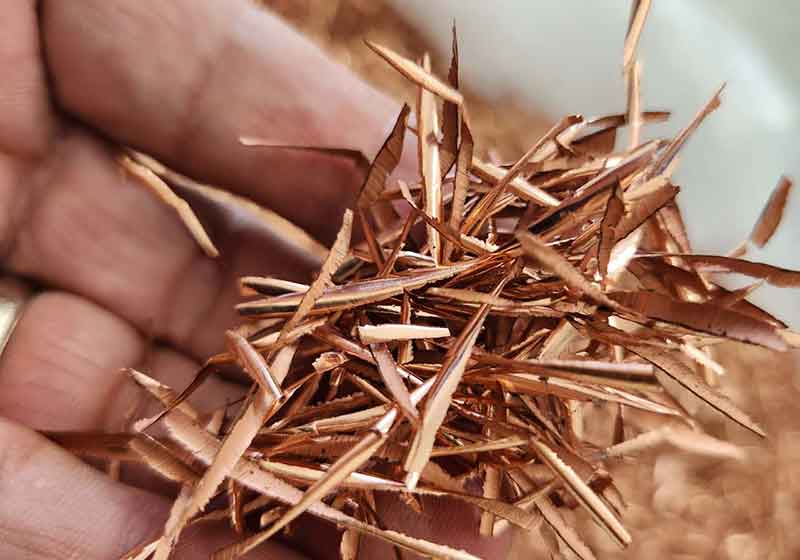
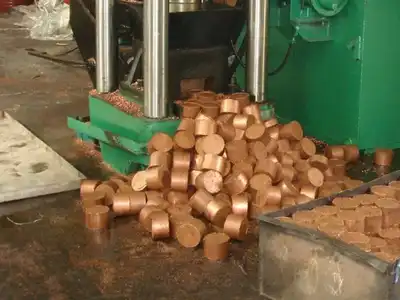
Copper chips are machining residues produced by turning, milling, drilling and sawing copper components. They may be short curls, flakes or sharp irregular pieces and often carry cutting oil or coolant. Loose copper chips are valuable but bulky, difficult to contain and vulnerable to oxidation and handling loss.
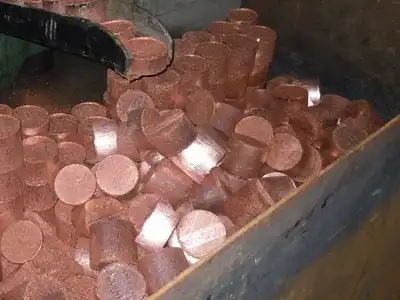
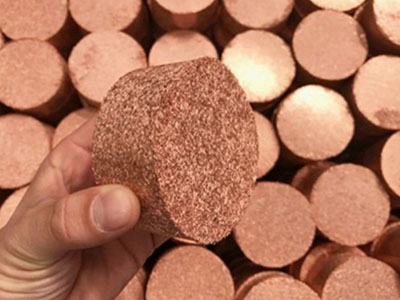
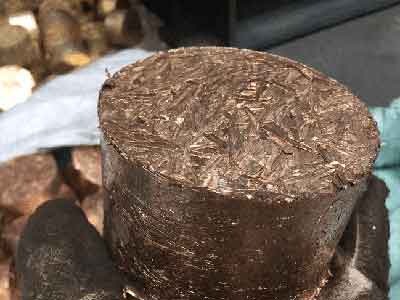
DILOYA hydraulic briquetting presses compact separated copper chips into dense cylindrical briquettes without binders. Compression improves storage, weighing, shipment and furnace charging while recovering part of the retained fluid. This Copper&Brass Scrap application is intended for briquetting only.
Effect After Copper Chip Briquetting
Suitable Feed and Preparation
Suitable feed includes clean copper turnings, short shavings, milling chips and screened machining fragments. Copper alloys and pure copper should be separated where the smelter requires controlled chemistry. Steel tools, rags, abrasive media, plastic, excessive free liquid and non-copper contamination must be removed before pressing. Long tangled nests may require crushing to achieve stable automatic feeding.
Benefits of Briquetting
- Higher bulk density: reduces bin and transport volume.
- Fluid recovery: expresses part of the retained cutting oil or coolant.
- Reduced copper loss: compact briquettes limit spillage and scattered chips.
- Controlled melting: regular units support consistent furnace charging.
- Cleaner handling: simplifies weighing, inventory and workplace housekeeping.
Typical Processing Sequence
- Segregate copper chips by grade and machining source.
- Remove tramp material and reduce long nests when required.
- Meter the conditioned chips into the briquetting chamber.
- Apply hydraulic pressure and controlled dwell time while collecting expressed fluid.
- Discharge, inspect and pack finished briquettes.
What DILOYA Engineers Evaluate
DILOYA evaluates copper grade, chip geometry and length, loose bulk density, moisture and oil content, contamination, required throughput, briquette diameter and density, feeding behaviour, fluid recovery, installation space and local electrical supply. Send representative photos or samples, daily volume and downstream specifications so the press force, chamber, hopper, feeder, hydraulic power and cooling can be matched to the material.