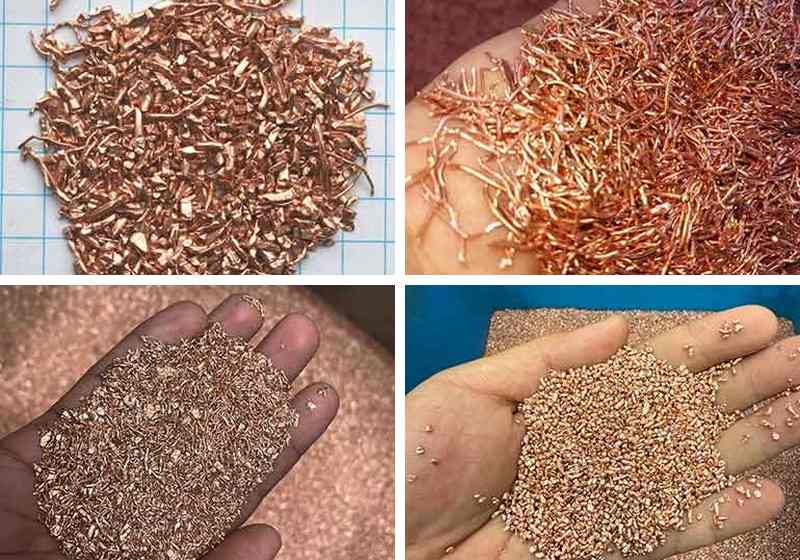
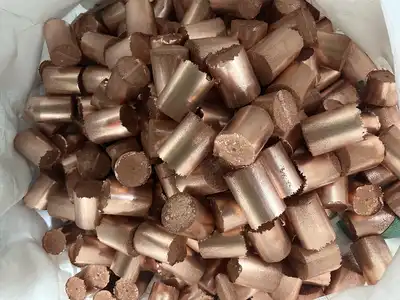
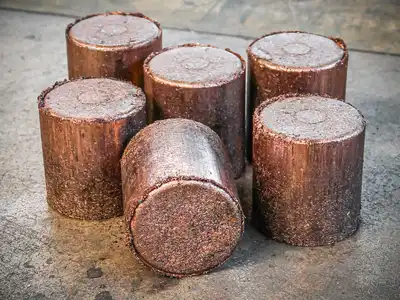
Copper granules are small, flowable particles recovered from cable processing, wire chopping, screening and other copper separation operations. Depending on the source, the material may range from coarse chopped wire to fine metallic grains. Loose granules have high value but can spill, create dust, oxidize rapidly and require many containers for secure storage and shipment.
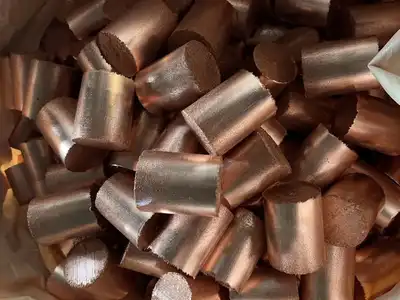
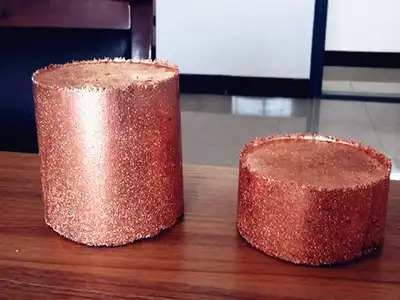
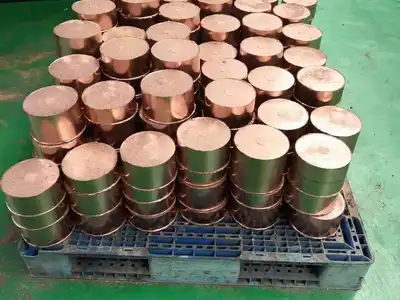
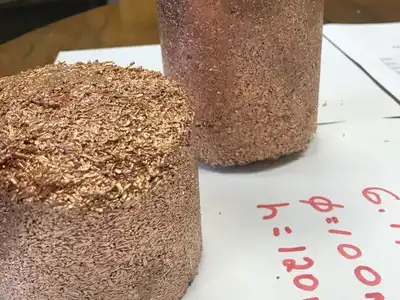
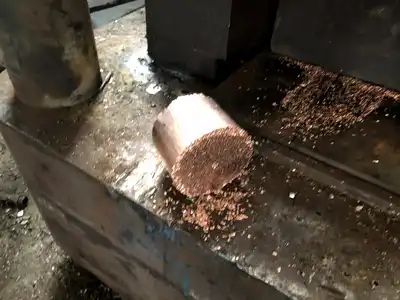
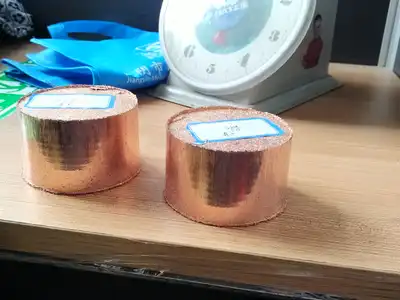
DILOYA hydraulic briquetting presses compact clean copper granules into dense cylindrical briquettes without adding binders. The resulting units are easier to count, weigh, handle and charge into a furnace while reducing material loss during transfer. This application belongs to Copper&Brass Scrap and is intended for briquetting only.
Effect After Copper Granule Briquetting
Suitable Copper Granule Feed
Typical feed includes chopped copper wire, cable granules, screened copper particles and clean dry copper fines with a controlled particle-size range. Copper and brass grades should be separated where downstream chemistry matters. Plastic insulation, textile fibre, steel, aluminium, stones and excessive dust should be removed before pressing.
The briquetting response depends on particle shape, size distribution, purity and moisture. Very fine dry material may need enclosed transfer and dust control, while damp granules may require drying or conditioning to achieve stable briquette density and prevent corrosion during storage.
Why Briquette Copper Granules?
- Reduced material loss: dense briquettes are less likely to spill or blow away during loading and furnace charging.
- Compact storage: higher bulk density reduces the number of bins, bags and pallets required.
- Secure handling: regular cylindrical units simplify weighing, inventory, forklift movement and shipment.
- Consistent furnace feed: uniform briquettes support controlled batch charging and predictable melting.
- Cleaner operation: enclosed feeding and compression reduce loose particles around the recycling area.
Typical Briquetting Process
- Sort the copper granules by metal grade, purity and particle-size range.
- Remove non-metal contaminants and condition moisture when required.
- Meter the granules from a sealed hopper into the briquetting chamber.
- Apply controlled hydraulic pressure and dwell time to form a dense binder-free briquette.
- Discharge, inspect and collect the briquettes for weighing, packing or direct furnace delivery.
Feeding, Density and Quality Control
Because copper granules flow differently from long chips, the hopper angle, feeder type and chamber filling accuracy must be matched to the particle distribution. Controlled dosing helps keep briquette height and weight consistent. Press force, chamber diameter and dwell time are selected to achieve the required density without excessive energy use.
Operators should monitor briquette cracking, loose surface particles, weight variation and feed continuity. Screens, magnets, dust extraction and enclosed conveyors can be integrated upstream when the granulation line requires additional purification and clean transfer.
What DILOYA Engineers Evaluate
DILOYA evaluates copper source and grade, particle-size distribution, purity, loose bulk density, moisture, dust content, contamination, hourly throughput, desired briquette diameter and density, upstream separation equipment, feeding method, packaging requirement, installation space and local electrical supply.
Send representative granule photos or samples, composition data, daily volume and the downstream smelter specification. Our engineers will match the press force, chamber diameter, hopper, dosing feeder, dust control, hydraulic power and cooling to the actual copper-granule stream.