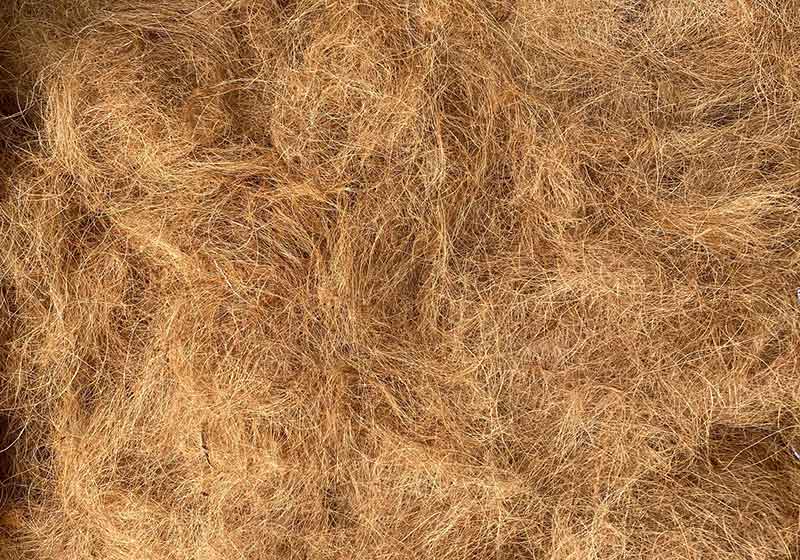
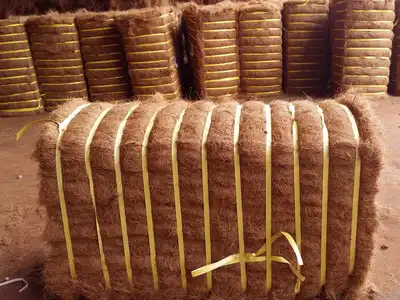
Coir fiber is a durable natural material recovered from coconut husks and used in mattresses, erosion-control products, brushes, horticulture and composite products. Loose coir is light, springy and voluminous, so untreated fibre is difficult to stack, count and transport efficiently.
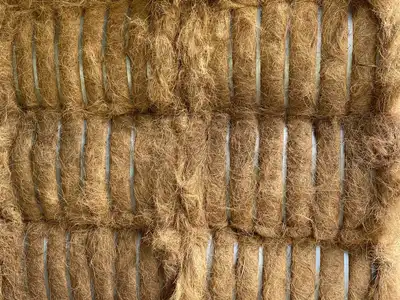
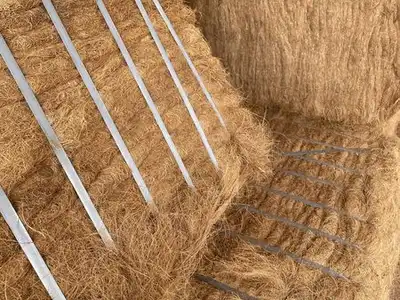
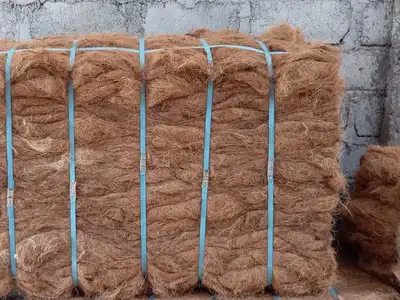
DILOYA hydraulic fibre balers compress dry, sorted coir into dense tied rectangular bales for stable warehousing, accurate weighing, forklift handling and economical container loading. This Natural Fiber application is intended for baling only.
Effect After Coir Fiber Baling
Suitable Coir Feed
Suitable feed includes dry brown coir, white coir, mattress fibre, clean processed coconut fibre and compatible production offcuts. Fibre grades and lengths should be separated when required by the buyer. Excess pith, dust, stones, metal, plastic and wet or mouldy material should be removed before loading.
Why Bale Coir Fiber?
- Volume reduction: converts loose springy fibre into compact packages.
- Stable logistics: tied bales stack securely and improve container utilisation.
- Cleaner handling: contains dust and loose strands around the workplace.
- Trade consistency: controlled dimensions and weight simplify inventory and dispatch.
- Product protection: wrapping and dry storage help preserve fibre quality.
Baling Process
- Inspect, dry and separate the coir by grade, length and moisture.
- Load repeatable charges into the vertical or horizontal fibre baler.
- Compress through controlled feeding strokes until the target density is reached.
- Tie the bale with suitable straps or wire and wrap it when the buyer requires protection.
- Weigh, label and stack the finished bale in a dry ventilated warehouse.
Moisture, Quality and Safety
Coir should be baled at a controlled, buyer-approved moisture level. Wet material can produce misleading bale weights, encourage mould and create storage-quality problems. Uniform feed preparation and charge quantity improve bale consistency. Mechanical loading, guarded work zones and suitable dust control support safe operation.
What DILOYA Engineers Evaluate
DILOYA evaluates fibre type and length, loose bulk density, moisture, pith and dust content, spring-back, contamination, required throughput, bale dimensions and weight, tying or wrapping method, loading arrangement, installation space and local voltage. Representative samples and buyer specifications allow our engineers to match the chamber, press force, feeding arrangement and controls to the actual coir stream.