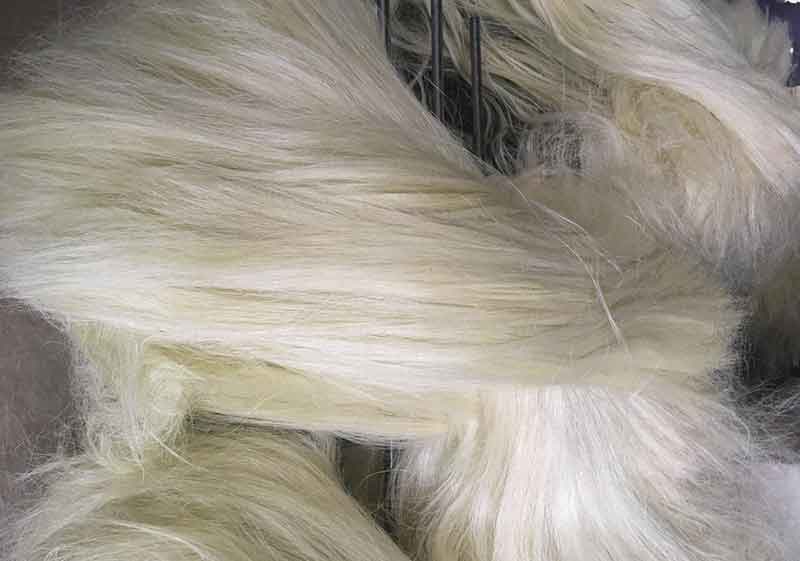
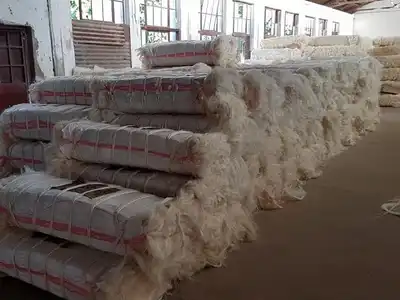
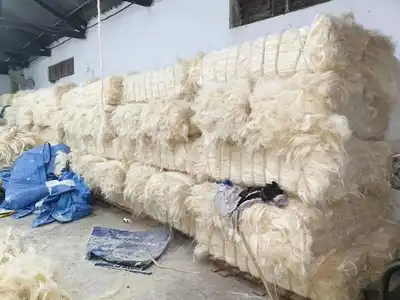
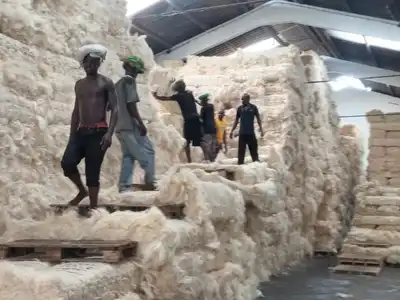
Sisal fiber is a long, resilient natural fibre used for rope, twine, matting, reinforcement and agricultural products. Loose fibres and combed bundles are light, springy and difficult to stack, while exposed strands can collect dust and absorb moisture during storage.
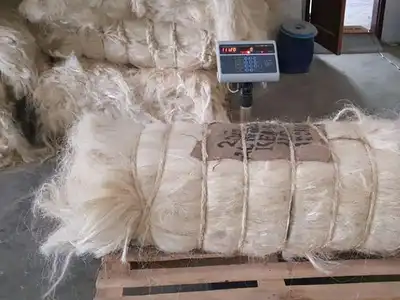
DILOYA hydraulic fibre balers compress prepared sisal into dense, tied rectangular bales for stable warehousing, accurate weighing, forklift handling and economical container shipment. This Natural Fiber application is intended for baling only.
This application is particularly relevant to sisal processors and exporters in Tanzania. A common customer requirement is a finished bale of approximately 100 kg. DILOYA configures the chamber, compression stroke, feeding procedure and tying arrangement around this target so operators can produce repeatable export packages.
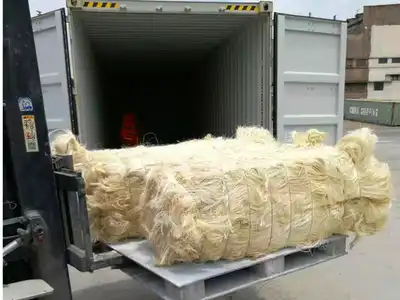
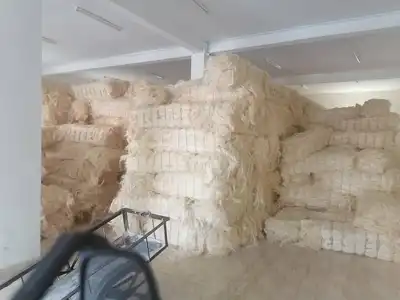
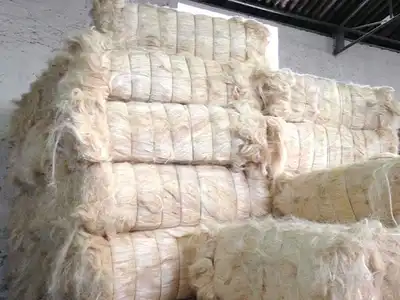
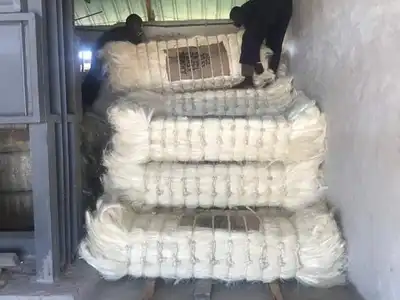
Effect After Sisal Fiber Baling
Suitable Sisal Feed
Suitable feed includes dry combed sisal, cut fibre, tow, production offcuts and clean loose bundles. Fibre grade, colour and length should be separated where the buyer requires consistent quality. Stones, metal, wet material, excessive dust and incompatible fibres should be removed before loading.
Why Bale Sisal Fiber?
- Volume reduction: compresses springy fibre into compact packages.
- Stable logistics: tied bales stack securely and use container space efficiently.
- Product protection: wrapping and controlled storage reduce contamination and moisture exposure.
- Consistent trade units: repeatable bale weight simplifies inventory and export documentation.
- Safer handling: contained fibres are easier to lift and move by forklift.
Baling Process
- Inspect and separate the fibre by grade, colour, length and moisture.
- Load uniform batches into the vertical or horizontal fibre baler.
- Compress through repeated feeding strokes until target density is reached.
- Tie the bale with suitable straps or wire and apply protective wrapping when required.
- Weigh, label and stack the finished bale in a dry ventilated area.
100 kg Bale Control for Tanzania
For Tanzanian sisal operations, the baler can be selected and commissioned around a nominal 100 kg finished bale. Consistent results require uniform fibre grade, controlled moisture, repeatable charge quantity and a defined compression endpoint. The first production batches are weighed, and operators adjust the number or mass of feed charges until the agreed bale-weight tolerance is reached.
The exact bale dimensions and permitted weight variation should follow the exporter, warehouse, container-loading and buyer requirements. Because wet fibre is heavier and can affect storage quality, moisture control is essential; the machine should not be used to compensate for inconsistent or excessively wet feed.
What DILOYA Engineers Evaluate
DILOYA evaluates fibre grade and length, loose bulk density, moisture, spring-back, contamination, hourly or daily throughput, the nominal 100 kg target and acceptable weight tolerance, bale dimensions, tying material, loading method, wrapping requirement, Tanzanian site conditions, installation space and local voltage. Representative material photos and export specifications allow our engineers to match the chamber, press force, feeding arrangement, tying system and controls to the operation.