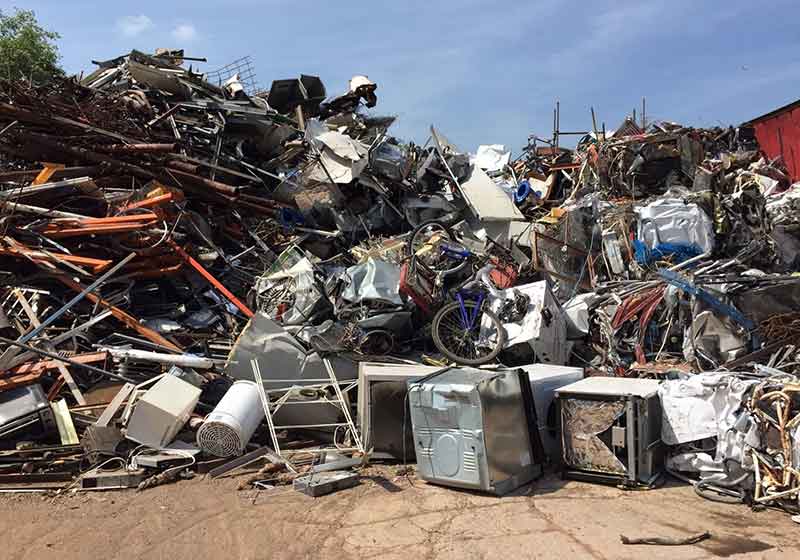
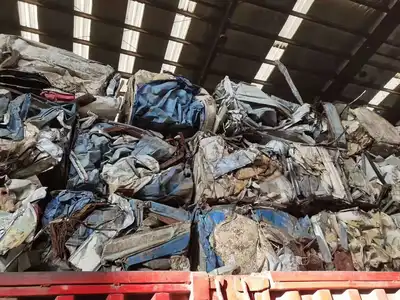
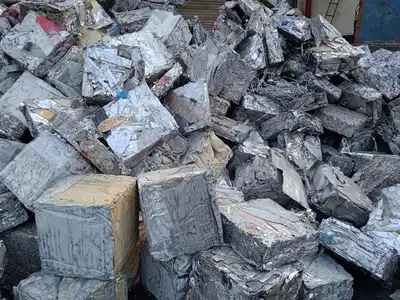
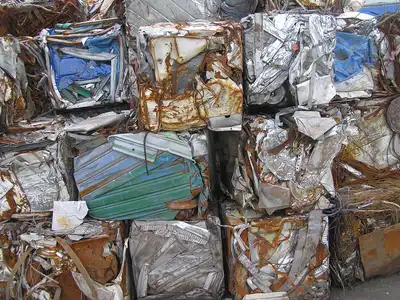
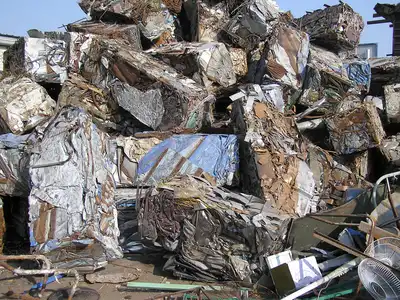
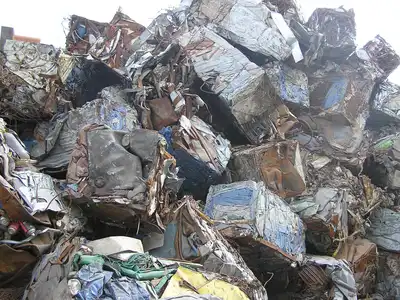
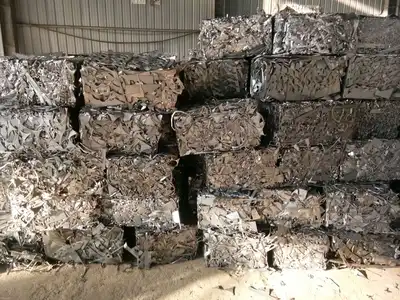
Light scrap metal covers thin-gauge steel sheet, press-shop offcuts, appliance panels, painted cladding, light fabrication waste and mixed bulky ferrous pieces. Although individual pieces are light, the loose material occupies substantial space, nests irregularly and is difficult to load efficiently.
DILOYA configures hydraulic metal balers for this material to produce compact rectangular transport bales. This application is for baling only. It is distinct from heavy steel scrap because chamber volume, feed opening and control of springy sheet are more important than cutting or pre-breaking thick sections.
From Loose Sheet to Transport Bale
Material Profile
Suitable feed includes thin steel sheet, stamping skeletons, trim waste, flattened drums or panels, light demolition sheet and sorted appliance casings after hazardous parts are removed. The feed should not contain sealed vessels, gas cylinders, batteries, pressurized components, explosive items or oversized heavy sections.
Long springy strips, nested panels and large flat sheets behave differently inside the chamber. Representative dimensions and the percentage of heavy or non-ferrous contamination are therefore required before selecting the baler.
What Baling Changes
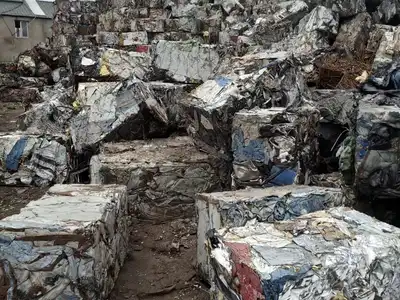
- Storage: loose sheet piles become stackable packages with a predictable footprint.
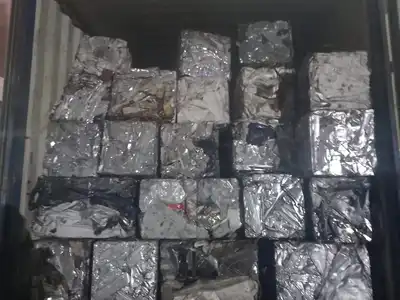
- Loading: rectangular bales improve grab, forklift, truck and container handling.
- Transport: reduced void space increases practical payload and lowers movement frequency.
- Housekeeping: sharp offcuts and wind-blown sheet are contained in controlled units.
- Trading: repeatable bale size and separated material grades simplify weighing and buyer inspection.
Baler Configuration by Feed Condition
| Feed condition | Configuration priority |
|---|
| Loose thin sheet and press offcuts | Large feed box, fast loading cycle and multi-directional compression |
| Large panels or appliance sheet | Wide opening, controlled grab loading and sufficient chamber length |
| Springy mixed light scrap | Pre-compression, secure lid control and stable discharge sequence |
| High-volume recycling yard feed | Heavy-duty chamber, automatic cycle and rapid bale discharge |
How the Light Scrap Baling Cycle Works
- Material inspection and sorting: operators remove sealed containers, batteries, gas cylinders, heavy castings and non-ferrous contamination before loading. Oversized flat panels may be folded or cut to a practical feed size.
- Controlled chamber loading: a grab, conveyor or manual loading method places material evenly across the feed box. Alternating bulky panels with smaller offcuts helps reduce bridging and empty pockets.
- Pre-compression: the lid or first ram contains springy sheet, pushes material below the chamber edge and creates a stable charge for the main compression stroke.
- Multi-directional baling: the main and side rams compact the charge into a rectangular package. Pressure, stroke sequence and holding time are adjusted for sheet thickness and spring-back rather than using maximum force alone.
- Bale discharge and inspection: the finished bale is pushed or turned out of the chamber, then checked for shape, loose edges, approximate weight and safe lifting condition before stacking or loading.
Chamber, Ram and Loading Considerations
Light scrap normally requires a generous feed opening because its loose volume is high in relation to its weight. A chamber that is too small increases loading cycles and encourages material to bridge above the compression zone. For long strips and springy stampings, lid geometry and the first compression direction are especially important for keeping the feed contained.
Two- or three-directional compression can improve bale shape when the material varies in size and orientation. The hydraulic power unit should be selected around the required cycle frequency, ambient conditions and duty hours. Wear plates, replaceable cutting edges, chamber liners and accessible inspection points help the machine handle abrasive coatings, sharp edges and occasional dirt while simplifying maintenance.
Bale Handling, Storage and Transport Planning
The target bale is defined by the complete logistics route, not density alone. Width and height must suit the discharge area, forklift or grab attachment, storage stack and truck or container opening. The expected bale weight should remain within lifting limits and allow a practical loading pattern without exceeding legal payload.
When the downstream buyer uses a shredder, furnace or sorting line, confirm acceptable bale dimensions, material grade and contamination limits before finalizing the machine. Consistent packages support quicker weighing and inspection, but different coatings, trapped moisture or mixed grades can still affect acceptance and settlement.
Operational and Safety Boundaries
- Do not load closed drums, pressurized vessels, gas cylinders, batteries, explosive components or material with unidentified liquids.
- Keep people clear of the feed box, lid, ram, discharge path and suspended grab load during the automatic cycle.
- Use interlocked guards, emergency stops, pressure protection and lockout procedures appropriate to the installation.
- Control sharp projecting edges before manual handling, and maintain clear access for inspection, cleaning and hydraulic service.
- Separate unusually thick or heavy pieces because they can prevent full chamber closure and produce an unstable bale.
Quality Variables That Affect Bale Stability
Bale density is not determined by hydraulic force alone. Sheet thickness, piece size, coatings, trapped dirt, moisture, nesting and spring-back all affect chamber filling and final package stability. Bale dimensions should match the receiving buyer, lifting equipment, container plan and downstream shredder or furnace route.
Project Data for Machine Selection
Send DILOYA representative material photos, maximum piece dimensions, approximate loose bulk density, hourly or daily volume, contamination details, preferred bale size and weight, loading method, discharge direction, available installation space and local voltage. Our engineers will match the feed box, ram arrangement, hydraulic power, cycle controls and wear protection to the actual light scrap stream.