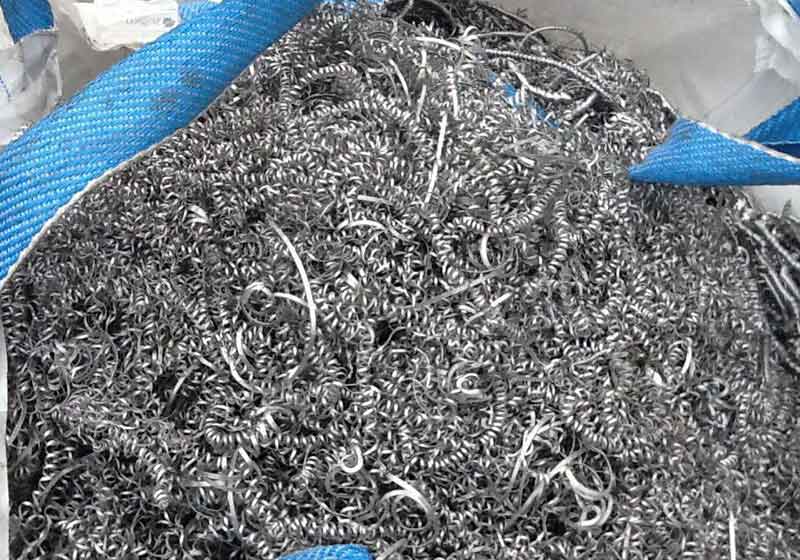
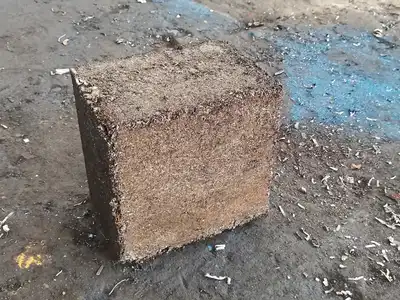
Steel shavings are long, curled and springy machining residues created by turning, boring, drilling and other cutting operations. Unlike short chips, loose shavings interlock into bulky nests, bridge across hoppers and can wrap around conventional feeding equipment. They also retain cutting oil or coolant, making storage and transport untidy and inefficient.
DILOYA supports two processing routes. Compressible shavings can be packed directly into dense rectangular bales with a hydraulic metal baler. For a smaller, more uniform furnace feed, long nests are first shredded or crushed into short chips and then compacted in a hydraulic briquetting press. The correct route depends on shaving length, spring-back, fluid content, required density and the recycler's receiving specification.
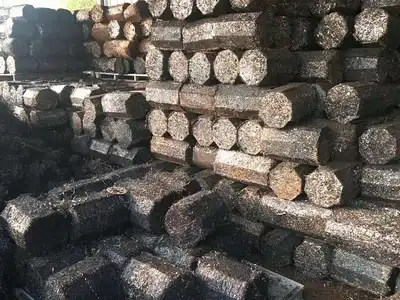
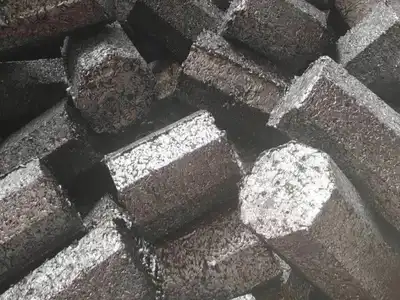
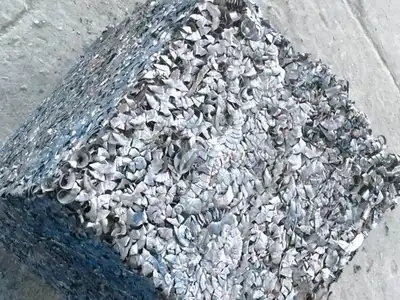
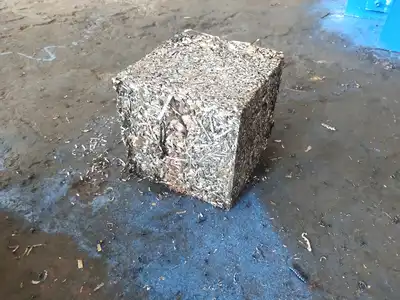
Steel Shavings Processing Results
Route 1: Direct Baling
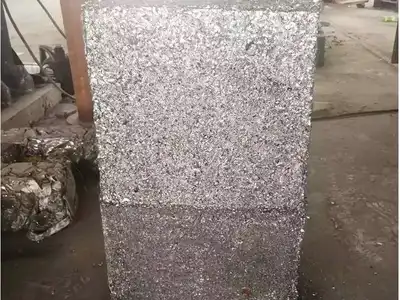
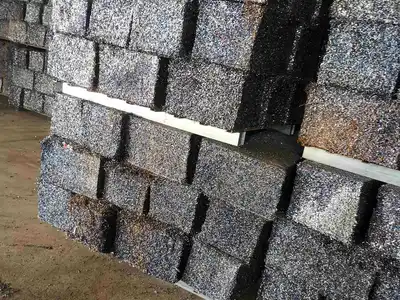
Direct baling is suitable when the shavings can fold and lock together under compression and the receiving recycler accepts rectangular packages. A wide feed opening, strong lid or wing system and controlled compression sequence contain the springy nests and reduce loose volume quickly. The finished bale is easier to stack, lift and load than open bins of entangled swarf.
This route has a simple material flow and is practical for mixed-length dry or moderately oily shavings. Bale density and stability depend on curl geometry, batch size, spring-back, chamber dimensions and compression force.
Route 2: Shred First, Then Briquette
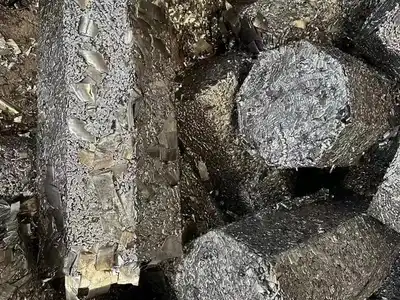
Long shavings that bridge, wrap or feed inconsistently should be shortened in a chip shredder or crusher before briquetting. Size reduction creates a more uniform feed that can be metered reliably into the briquette chamber. High hydraulic pressure then produces dense cylindrical briquettes and expresses part of the retained cutting fluid.
This route is preferred when the foundry needs compact, repeatable furnace feed, when fluid recovery is important, or when very high density is required. The shredder, transfer system, buffer hopper and press must be sized as one line so that no stage becomes a bottleneck.
Process Selection Guide
| Material condition | Recommended process | Finished output |
|---|
| Foldable nests accepted as transport packages | Direct hydraulic baling | Rectangular bale |
| Long tangled shavings with unstable feeding | Shredding or crushing, then briquetting | Dense cylindrical briquette |
| Oily shavings requiring fluid recovery | Conditioning and hydraulic briquetting | Compact briquette plus recovered fluid |
Operating and Safety Considerations
Steel shavings can have sharp edges and may entangle clothing or tools. Mechanical loading and enclosed transfer are preferred over manual handling. Tramp parts, tools, rags and incompatible alloys should be removed before baling or shredding. If fines or oil mist are present, ventilation, housekeeping and fire-control measures must follow the plant's risk assessment.
For briquetting lines, monitor shred size, hopper bridging, feeder load, briquette density and recovered fluid. For baling, monitor fill quantity, compression sequence, bale stability and protruding strands. Wear liners, cutters, screens and hydraulic filtration should be inspected on a planned schedule.
What DILOYA Engineers Evaluate
DILOYA evaluates steel grade, shaving width and length, curl and nest condition, loose bulk density, spring-back, oil or coolant content, contamination, required throughput, desired bale or briquette dimensions, fluid recovery, loading method, available floor space and local electrical supply.
Send representative material photos or samples, daily volume and the required downstream package. Our engineers will determine whether direct baling or shredding plus briquetting is more suitable and configure the baler chamber, shredder, feeder, press force, hydraulic power, cooling and fluid collection accordingly.