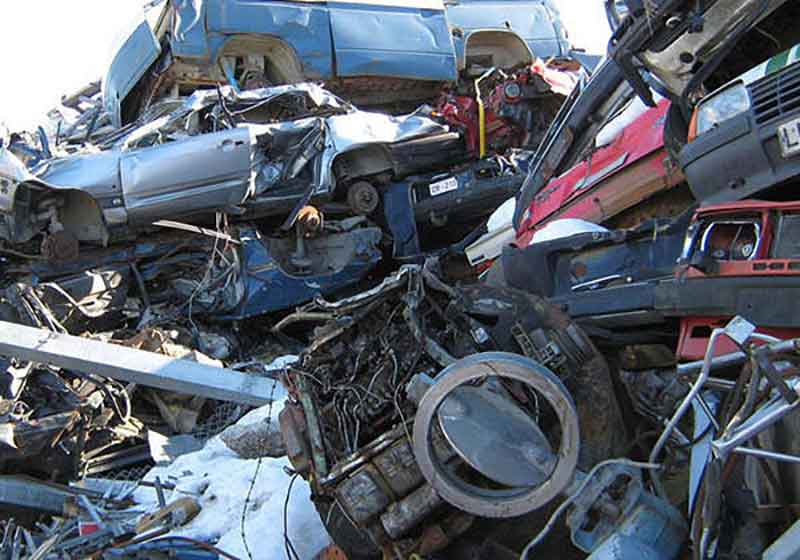
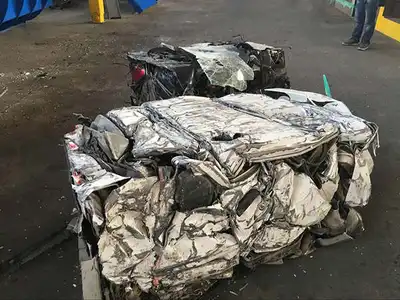
Waste cars and end-of-life vehicle shells are large, irregular and difficult to store or transport efficiently. Even after fluids and reusable components are removed, the remaining body structure contains sheet steel, reinforced sections, doors, roof panels and mixed attached parts that occupy substantial yard space.
DILOYA processes prepared vehicle shells with a dedicated car baler. Its long box, heavy-duty folding wings or lid system and high compression force are designed to fold an entire depolluted shell into a dense rectangular package. This application is intended for professional car baling only, not for ordinary light-scrap balers.
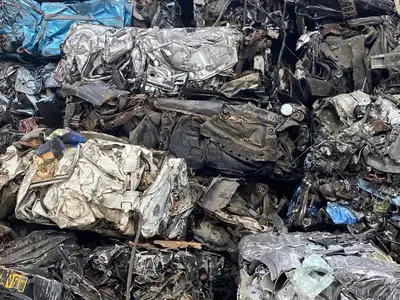
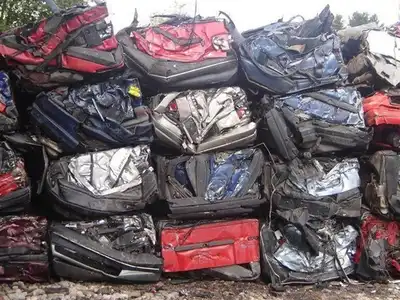
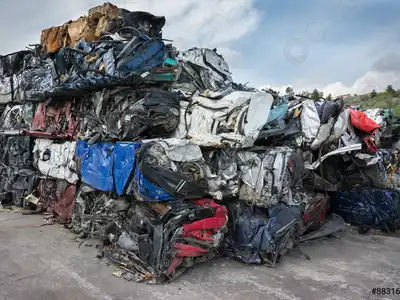
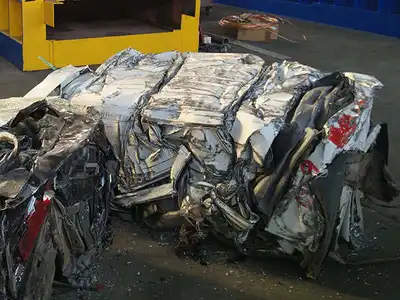
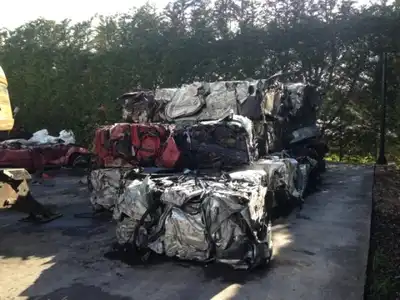
Effect After Waste Car Baling
Vehicle Preparation Before Baling
Every vehicle must be depolluted and prepared before it enters the baler. Fuel, engine oil, transmission fluid, brake fluid, coolant, refrigerant and other regulated liquids must be drained using approved recovery equipment. Batteries, gas cylinders, airbags or other pyrotechnic devices and pressurized components must be removed or made safe according to local regulations.
Tyres, reusable parts, catalytic converters, wiring, non-ferrous components and other items may be removed according to the dismantling facility's recovery plan. Engines and heavy driveline assemblies are usually taken out when their mass or position could create an unstable bale or exceed the machine specification.
Why Use a Dedicated Car Baler?
- Vehicle-length feed box: accepts prepared passenger-car shells without extensive manual cutting.
- Controlled folding: heavy wings or lids collapse the roof, sides and body panels into the compression chamber.
- High compression force: produces dense, stable rectangular packages suitable for handling and shipment.
- Efficient yard logistics: reduces vehicle storage footprint and improves stacking, loading and inventory control.
- Mechanical loading: supports excavator or grapple feeding and minimizes direct operator contact with sharp body panels.
Typical Car Baling Cycle
- Verify that the vehicle has been depolluted, dismantled as required and cleared for compression.
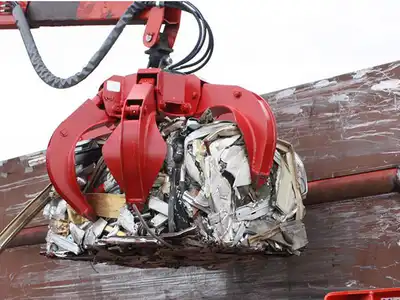
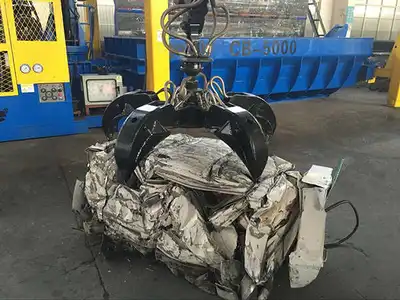
- Load the shell into the car baler with a grapple, crane or excavator and confirm that it is positioned inside the feed box.
- Close the side wings or lid in the programmed sequence to fold protruding body panels inward.
- Apply the main compression stroke to form the target bale dimensions and density.
- Open the chamber, eject or lift out the completed bale, and move it to the designated stacking area.
Machine Configuration and Yard Integration
Car balers may be configured as stationary or mobile systems depending on yard layout and collection operations. Selection includes feed-box length, wing arrangement, compression force, bale size, cycle time, hydraulic power, oil cooling, remote control, ejection method and protection for exposed hoses and cylinders.
The loading approach, bale removal path and stacking zone should be planned together. Sufficient clearance is required for the grapple carrier, maintenance access and safe separation between operators, equipment and stored vehicles. Foundations, drainage and recovered-fluid controls must suit the installation site.
Safety and Compliance
Vehicle baling is performed only after verified depollution. Sealed tanks, LPG or CNG cylinders, undeployed airbags, batteries and other hazardous components must never enter the compression chamber. Operators should use mechanical handling, maintain exclusion zones and follow lockout procedures before clearing obstructions or carrying out maintenance.
What DILOYA Engineers Evaluate
DILOYA evaluates vehicle type and maximum dimensions, residual component policy, daily car volume, required bale size and density, loading equipment, stationary or mobile operation, cycle target, discharge and stacking method, yard layout, foundation conditions, ambient temperature and local electrical or engine-power requirements.
Send representative vehicle photos, maximum shell dimensions, expected cars per day and a site plan. Our engineers will match the car-baler box, folding sequence, compression force, hydraulic power unit, cooling, controls and handling arrangement to the actual dismantling and recycling operation.