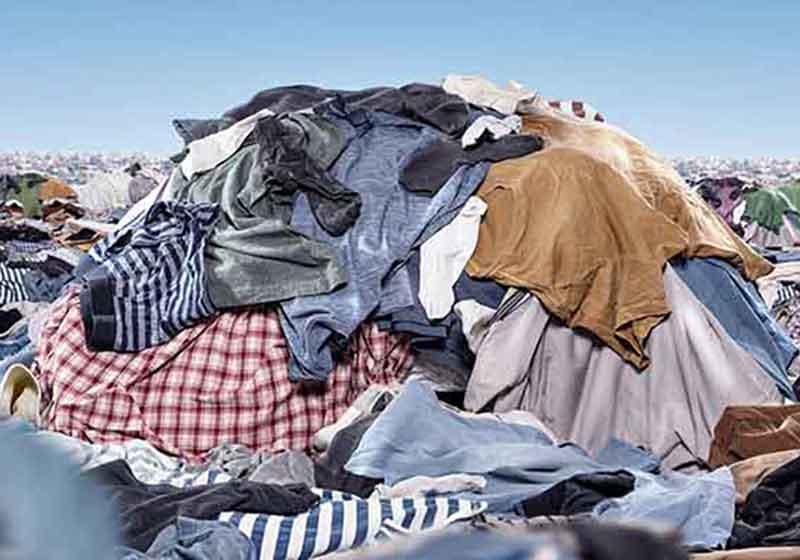
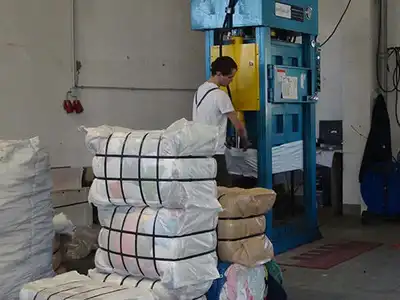
Collected old clothes arrive as a bulky mixture of shirts, trousers, knitwear, household textiles and other reusable or recyclable garments. After grading, the selected material must be reduced to a consistent transport package without damaging the operator's ability to identify each grade.
DILOYA uses a vertical lifting-box baler for this application. Clothes are loaded into the raised chamber, hydraulically compressed, and the lifting box then exposes the compact bale for easy tying. Operators secure the finished package with multiple plastic straps before weighing, labelling and stacking it. This Textiles&Old Clothes application is intended for baling only.
Old Clothes Baling Route
Grade → Load → Compress → Lift the box → Strap → Weigh → Stack
- Sort garments by reuse grade, textile type, season, colour or buyer specification.
- Line the chamber or position wrapping material when the sales package requires it.
- Load uniform batches and distribute the clothes evenly across the lifting box.
- Apply hydraulic compression until the selected bale height and density are reached.
- Raise the chamber box to expose the compressed package while it remains supported.
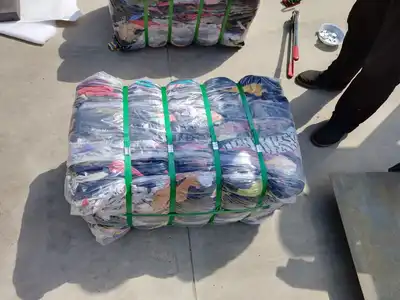
- Thread and tension the required number of plastic straps in both directions.
- Discharge, weigh, identify and stack the bale by grade and production batch.
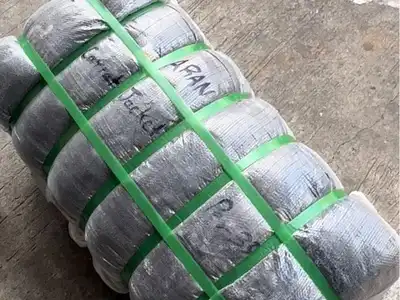
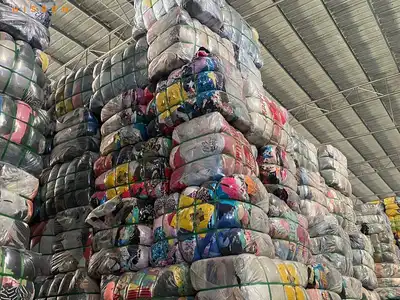
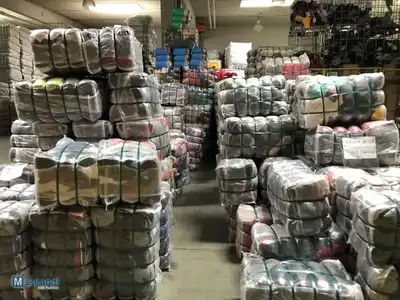
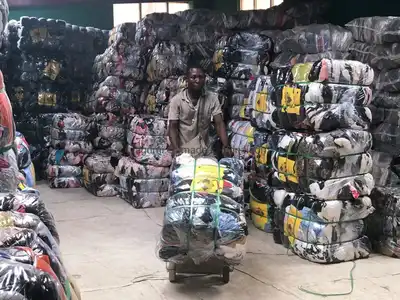
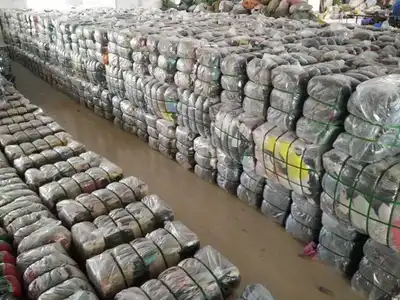
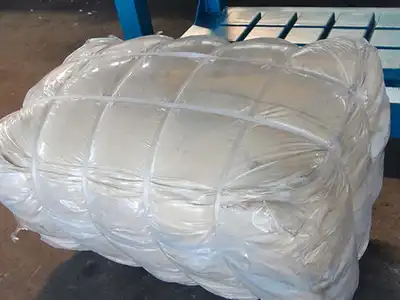
Bale, Warehouse and Machine Examples
Why a Lifting-Box Design?
- Open access for tying: raising the chamber exposes several sides of the compressed bale.
- Controlled bale shape: the vertical chamber forms a compact rectangular package.
- Simpler discharge: operators do not need to drag a fully enclosed bale through a narrow door.
- Flexible grading: batches can be changed quickly for different garment categories.
- Practical plastic strapping: clear strap channels support repeatable cross-tying.
Sorting and Feed Preparation
Clothes should be dry, inspected and separated according to the buyer's reuse or recycling grade. Remove batteries, aerosol cans, glass, metal pieces, sharp objects, wet or mouldy garments and hazardous contamination. Pockets should be checked before loading. Very hard objects and large rolls can create uneven pressure and should not enter the chamber.
Plastic Strap Specification
The strap material, width, thickness, breaking strength and number of ties must suit the target bale weight, rebound and transport distance. Plastic straps should be tensioned evenly without cutting into the clothing or leaving excessive slack. Crossing ties in two directions improves stability. The exact tying pattern is confirmed during commissioning and must follow the strap supplier's safe working limits.
Selection Data for a Reliable Package
DILOYA evaluates garment mix and grading method, loose bulk density, moisture, typical item size, daily volume, target bale dimensions and weight, required density, plastic strap specification and tie count, wrapping requirement, chamber loading height, lifting-box stroke, discharge and handling method, available floor and roof height, operator count and local voltage. Trial bales are weighed and inspected so charge quantity, pressure and strap pattern can be adjusted to the required package standard.