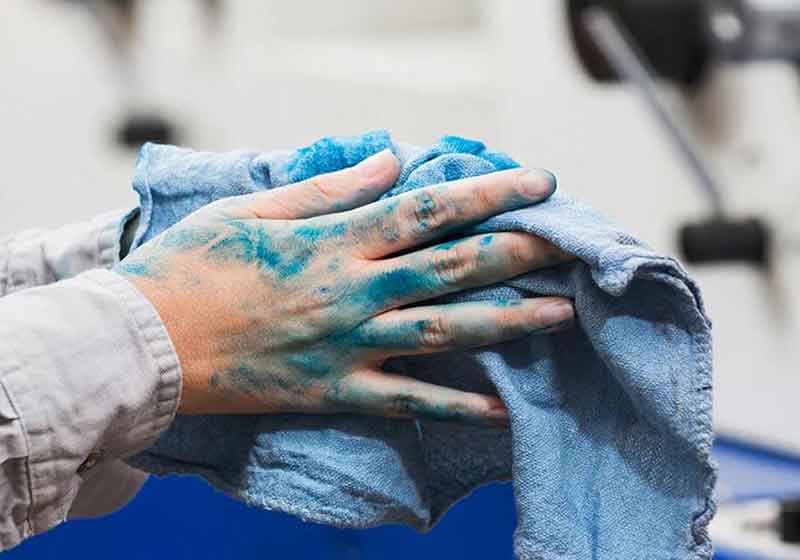
Industrial wiping rags are cut and graded textile pieces used for cleaning machinery, printing equipment, workshops and maintenance areas. Although the rags are soft, their loose and irregular form traps air, consumes warehouse space and makes each shipment difficult to standardise.
For this application, the DILOYA machine performs the compression stage only. Sorted rags are pressed into a compact block, discharged from the chamber and then manually placed into a plastic or woven bag by the operator. The bag is closed, labelled and prepared for storage or sale. This Textiles&Old Clothes application is intended for baling, followed by manual bagging.
From Loose Rags to a Saleable Pack
- Sort and inspect: separate the wiping rags by textile type, colour, size and cleanliness.
- Load a repeatable charge: place a controlled quantity into the compression chamber.
- Hydraulically compress: form a dense rectangular block at the selected pressure and stroke.
- Discharge the block: support the compressed rags so they retain their shape.
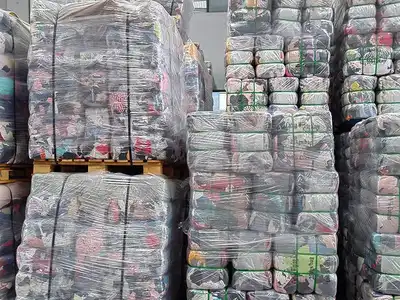
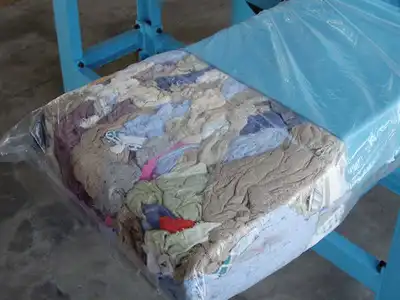
- Bag by hand: slide the compact block into the prepared bag, remove excess air and close the package.
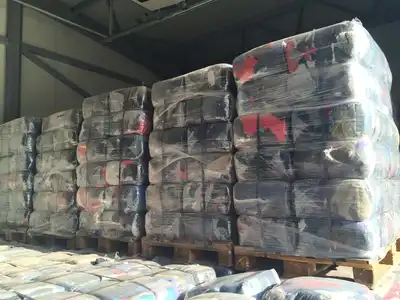
- Weigh and label: verify net weight, grade and batch before palletising.
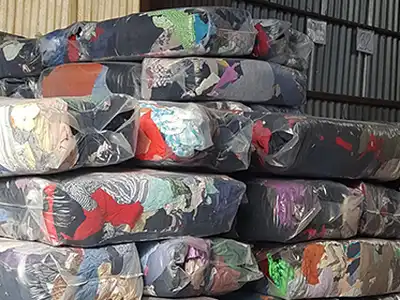
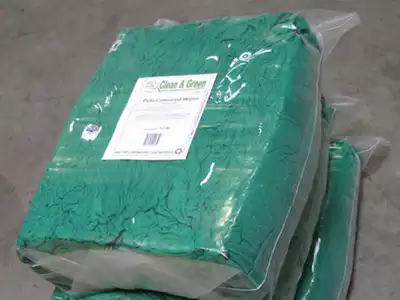
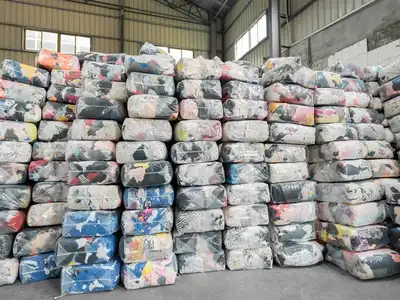
Finished Packaging Examples
Feed Acceptance Checklist
Suitable: clean cotton wiping cloths, T-shirt rags, hosiery rags, coloured or white textile offcuts and other dry absorbent fabrics prepared to the buyer's grade.
Remove before pressing: metal fasteners, zippers, hard plastic, glass, batteries, sharp objects, excessive lint, wet or mouldy fabric and cloth contaminated with hazardous liquids. Oil-bearing rags require the site's own fire, environmental and disposal controls and should not be treated as ordinary clean wiping rags.
Manual Bagging Station Requirements
- Match the press block dimensions to the bag opening and final sales package.
- Position the bagging table directly beside the discharge point to minimise lifting.
- Use a smooth transfer surface or simple support frame so the compressed block does not expand before entering the bag.
- Select bag thickness, closure method and label position according to the distributor or end user's specification.
- Provide adequate operators for the intended cycle rate; manual bagging speed can determine the output of the complete line.
Package Control and Machine Selection
The number or mass of rags loaded per cycle, textile blend, moisture and compression endpoint determine the final package weight and rebound. Trial batches should be weighed after bagging, then the charge quantity is adjusted until the required tolerance is stable. Chamber size and press force must also leave sufficient clearance for practical manual bag insertion.
DILOYA evaluates rag type and cut size, loose bulk density, dryness, contamination, required packages per hour, target block dimensions and net weight, rebound, bag dimensions and material, number of bagging operators, chamber loading height, discharge method, floor space and local voltage. These details allow the press and manual packing station to be configured as one balanced workflow.