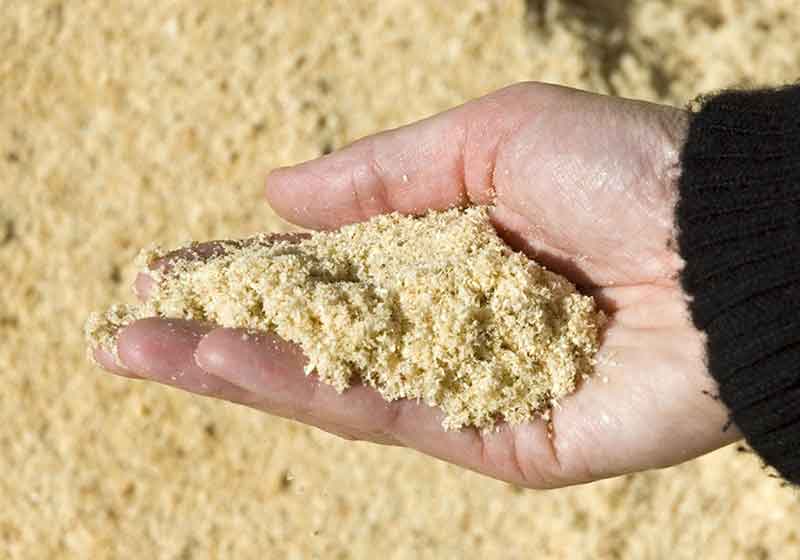
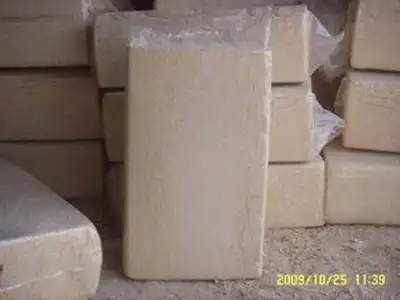
Wood sawdust is a fine, flowable by-product from sawing, sanding and panel or furniture production. In loose form it creates dust, spills easily and occupies excessive storage volume. Its fine particle structure also demands more controlled feeding and containment than coarse wood shavings.
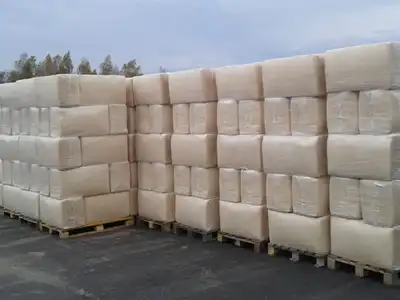
DILOYA sawdust baling systems meter the prepared material, hydraulically compress it into dense rectangular blocks and enclose each block in a plastic bag for clean storage, palletising and shipment. This Wood Sawdust/Shavings application is intended for compression and bagged packaging.
Loose Sawdust to Sealed Bale
- Screen: remove oversize wood, metal and other contamination.
- Condition: stabilise moisture and keep the sawdust free flowing.
- Meter: dose a repeatable mass or volume into the compression chamber.
- Compress: form a dense rectangular block under controlled pressure.
- Bag: transfer the block into the correctly sized plastic package.
- Close and verify: seal the bag, check weight and inspect for leakage.
- Palletise: stack uniform bales on a dry, stable pallet.
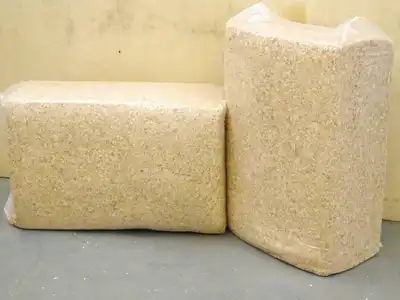
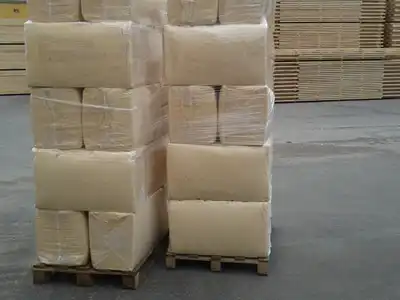
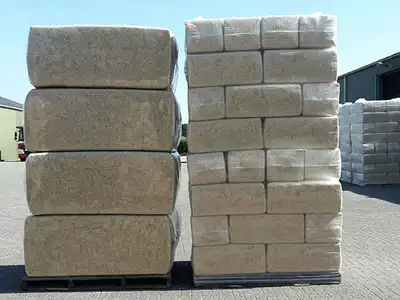
Bagged Sawdust Examples
Material Control Before Compression
Suitable feed includes clean, screened softwood or hardwood sawdust within an agreed particle-size and moisture range. Remove nails, stones, tools, large chips, plastic and treated or hazardous residues. Very wet sawdust can bridge in the feeder, produce unstable weight and deteriorate inside a sealed bag; excessively dry fines increase dust and fire risk.
Dosing, Density and Weight Accuracy
Sawdust bulk density varies with species, particle size, moisture and storage condition. A controlled day bin and dosing device are therefore essential for repeatable packages. Trial bales establish the charge quantity, compression endpoint and recovery allowance required to meet the target net weight and block dimensions. Check-weighing provides feedback before palletising.
Bagging and Seal Integrity
The bag opening must match the transfer sleeve and compressed block, while the film thickness and seal strength must withstand rebound and handling. The package should contain fines without trapping unnecessary air. Seal quality, corner puncture resistance, label adhesion and pallet stability are verified under the customer's actual storage and transport conditions.
Dust and Fire Protection
Fine dry sawdust can form combustible dust clouds. The installation requires suitable extraction, grounding, housekeeping, ignition-source control, protected electrical equipment where required and a site-specific fire-protection plan. Operators must not enter hoppers or chambers without full isolation and lockout procedures.
What DILOYA Engineers Evaluate
DILOYA evaluates wood species and source, particle-size distribution, fines, moisture, loose bulk density, flow and bridging behaviour, target bale dimensions and net weight, hourly throughput, bag size and film, closure method, feeder and buffer capacity, check-weighing, pallet pattern, dust extraction, installation space and local voltage. Representative samples help confirm whether the material can form and retain a stable bagged block.