A customer in Tanzania selected a 100kg Sisal Fiber Baler to turn loose natural fibers into compact, tied bales for storage and container shipment. The stated production rate is 8–10 bales per hour. The machine is intended primarily for sisal, with suitable coir and palm fibers also included in the supplied application description.
The main objective is to make better use of shipping space. Long, springy fibers occupy considerable volume when loose; compression brings them into a more regular unit that can be retained with suitable ties. The customer reports that a 40-foot container can carry 25–28 tonnes with the appropriate bale specification and loading arrangement.
Tanzania Project Specifications
Equipment: 100kg Sisal Fiber Baler.
Customer: Tanzania.
Stated bale weight: 100 kg.
Stated production rate: 8–10 bales/hour.
Materials: sisal fiber, suitable coir fiber and palm fiber.
Reported container cargo: 25–28 tonnes in a 40-foot container, subject to the actual bale and shipment configuration.
Three Alternative Bale Dimensions
The following dimensions were supplied as alternative bale specifications. They are separate options, not three dimensions produced simultaneously or confirmation of automatic size switching.
| Option | Bale dimensions |
|---|
| 1 | 1530 × 360 × 400 mm |
| 2 | 1300 × 550 × 300 mm |
| 3 | 1370 × 530 × 280 mm |
The selected dimensions need to be agreed with the machine configuration, material and loading plan. Confirm how the supplied dimension order maps to the finished bale before preparing a container layout. No final bale-density value is inferred here from these nominal specifications.
From Loose Sisal To A Retained Bale
The packaging process starts with prepared fibers delivered to the chamber. Hydraulic compression consolidates the charge, after which the material is retained in the approved tying arrangement and the finished bale is removed according to the supplied operating procedure. Feeding, tying and removal all contribute to the usable hourly output.

Prepared sisal fibers before compression.
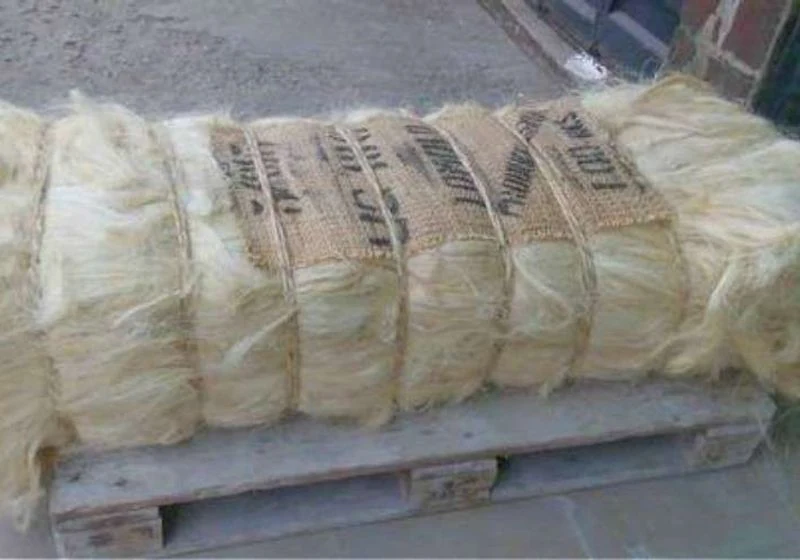
Bale example showing compressed fiber retained with ties.
The purpose is to package the fiber, not cut it into short pieces or convert it into a different product. Fiber grade, cleanliness and preparation remain upstream requirements. The bale specification should also account for how the buyer will open and use the material.
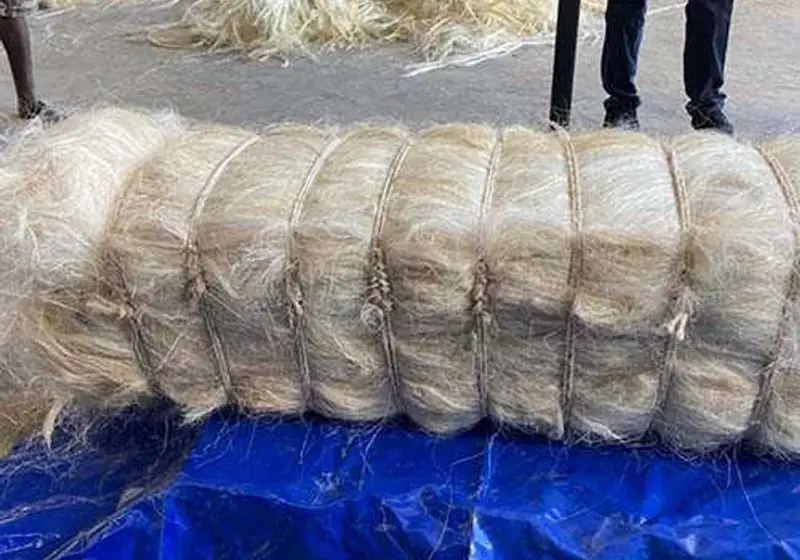
A supplied example of a retained fiber bale.
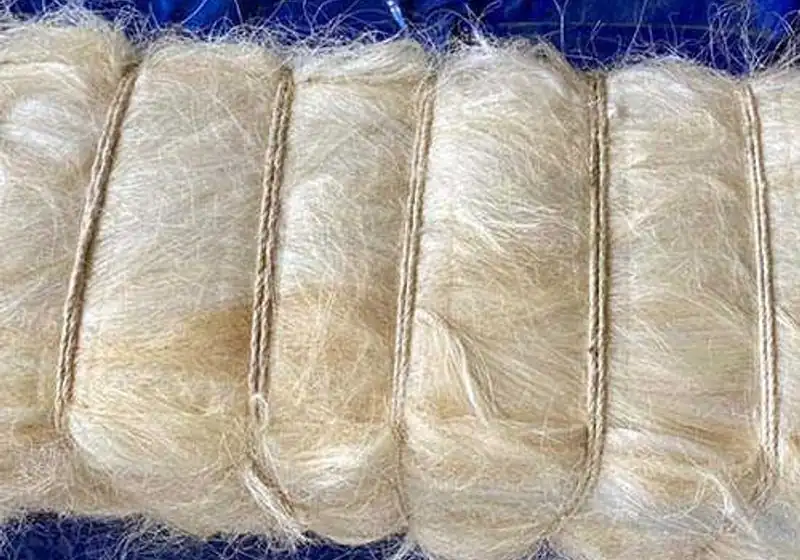
Ties hold the compressed form after pressing; the approved specification depends on the actual bale.
Container Utilization: More Fiber, Less Unused Volume
The customer's phrase “avoid losing tonnage when loading” describes a volume-utilization objective: avoiding a container that fills with bulky loose fiber before carrying the intended cargo mass. Compact, regular bales support a planned loading pattern and reduce the need to handle loose bundles during shipment preparation.
The reported 25–28 tonnes per 40-foot container is project-supplied performance information, not a universal payload guarantee. Actual results depend on net bale weights, final bale dimensions, rebound, loading gaps and the specific shipment. Container and transport limits must be confirmed before a cargo quantity is committed.
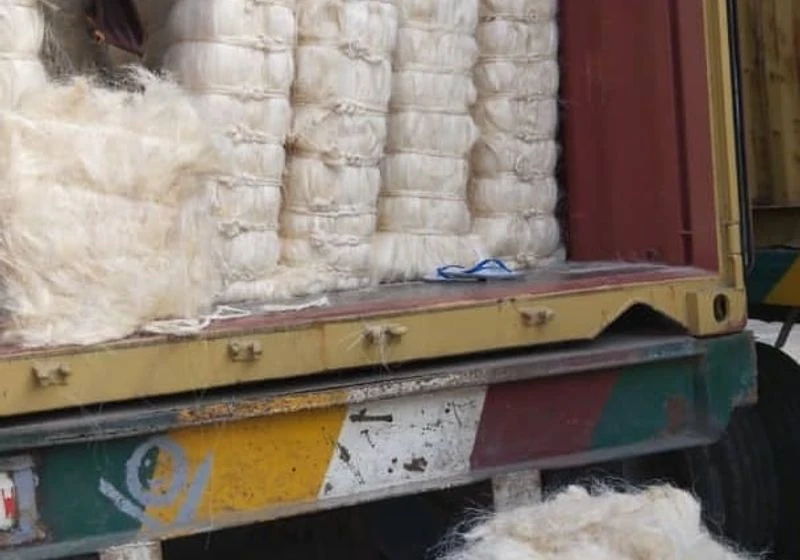
Container-loading example supplied with the case; the photo does not independently establish cargo weight.
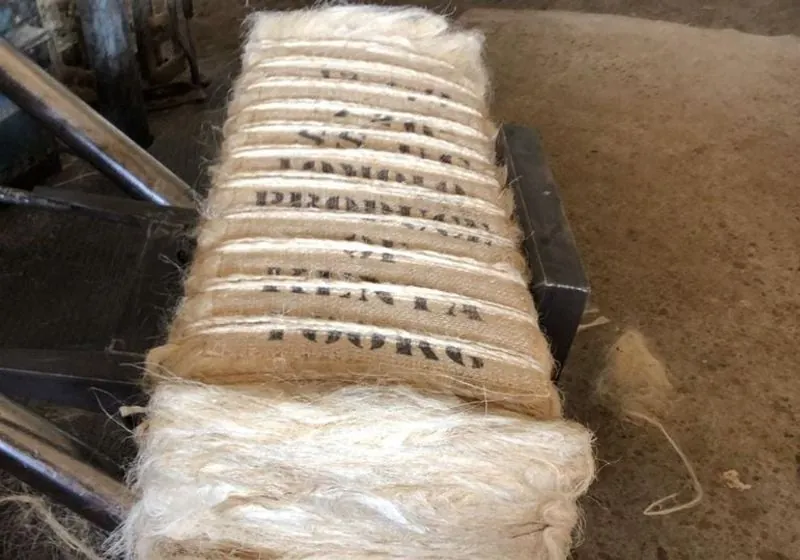
Wrapping and tying example for a compressed fiber package.
Storing And Organizing Natural-Fiber Stock
Tied bales provide identifiable units for stock records, batch separation and dispatch. They can make it easier to plan a storage area and move finished material with suitable handling equipment. Stack arrangement and handling methods must suit the actual bale stability and weight.
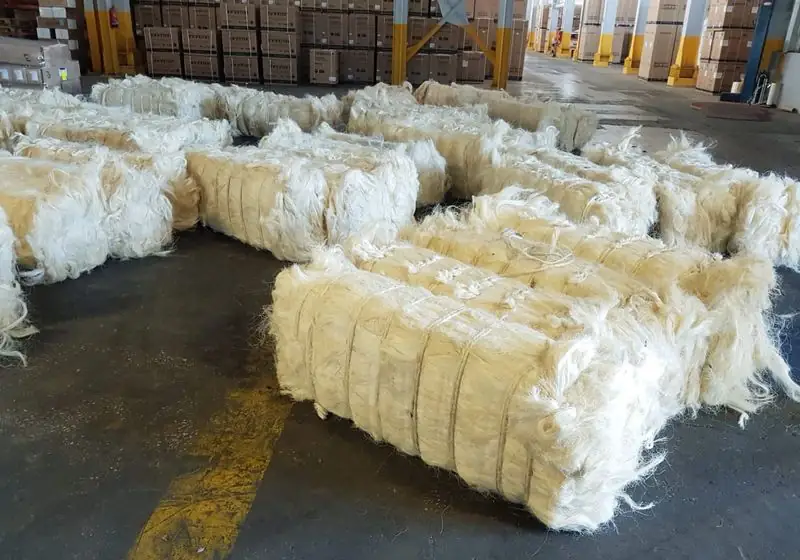
Bales arranged as separate stock units.
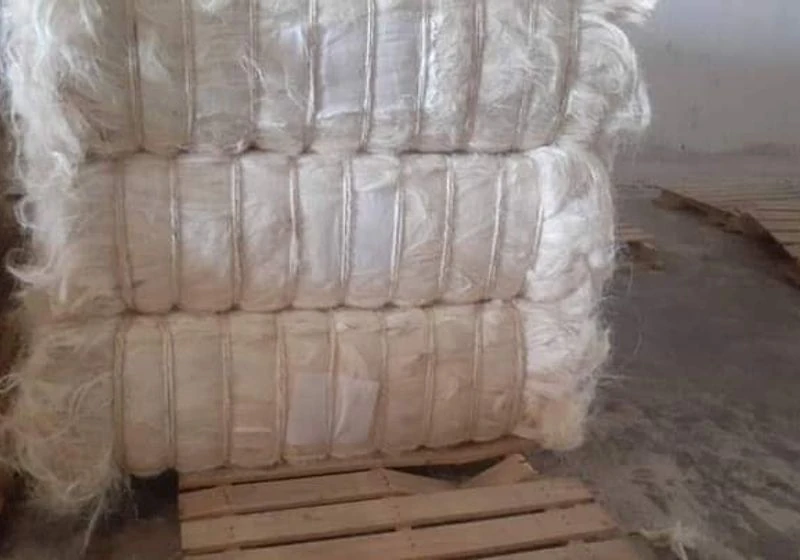
Palletized bale example for subsequent handling.
Applications Beyond This Tanzanian Customer
The supplied application information identifies Madagascar, Tanzania, Brazil and India as markets where this type of natural-fiber baling equipment is widely used. These locations describe the application market; they are not presented as four additional documented customer installations in this case.
Sisal, coir and palm fibers should be evaluated separately because their preparation and packing behavior can differ. The stated sisal case rate and container result should not automatically be assigned to every alternative material.
Customer Case FAQ
What Bale Weight And Output Were Supplied?
The stated figures are 100 kg per bale and 8–10 bales per hour. Actual production depends on material supply, compression, tying and bale removal.
Which Bale Sizes Are Available In This Brief?
The three supplied options are 1530 × 360 × 400 mm, 1300 × 550 × 300 mm and 1370 × 530 × 280 mm. Confirm the selected option for the machine and order.
Is 25–28 Tonnes Guaranteed For Every 40-Foot Container?
No. It is a reported project loading range that requires matching bale geometry and actual weights, together with confirmation of shipment limits.
