A professional industrial wiping-rag manufacturer in Croatia uses a 10kg Wiping Rags Baler to compress and package industrial cleaning cloths and suitable used clothing. The supplied machine uses weighing-based control to prepare packages to a 10 kg weight specification, with reported production of 60–80 bales per hour.
For this customer, the baler is part of a product-packaging workflow rather than simply a way to compress textile waste. Combining measured material quantity with compression creates defined handling units for orders, stock management and distribution. The key distinction is that weighing controls the quantity, while pressing reduces the loose fabric volume.
Croatia Industrial Wiping-Rag Project At A Glance
Customer location: Croatia.
Customer business: professional production of industrial wiping rags.
Equipment: 10kg Wiping Rags Baler.
Main materials: industrial wiping cloths and suitable used clothing.
Package weight specification: 10 kg per bale.
Weight-control method: weighing-based quantity control.
Reported production: 60–80 bales/hour.
Project focus: consistent-weight packages and organized compression, packing and handling.
Why An Industrial Wiper Producer Needs Defined Packages
Industrial wiping rags are supplied as a usable cleaning product, so consistent packaging matters alongside cloth quality. Loose fabric can be bulky and difficult to count as saleable units. A defined 10 kg package gives the producer a practical basis for preparing orders and identifying finished stock without relying on an estimated volume of cloth.
The actual fabric mix also matters. Different textile grades can have different loose density, thickness and rebound after compression. Suitable used clothing may be part of the customer's textile stream, but its preparation and grading should match the intended product. Baling does not wash, cut or sort garments into finished wiping rags.

Application context: industrial wiping cloths used in workshop cleaning, not a photograph of the customer's feed batch.
Weighing Control For The 10 kg Bale Specification
The customer's machine uses weighing to control the material quantity for each 10 kg package. This addresses a limitation of volume-only filling: two apparently similar charges of different fabrics need not have the same mass. Measuring the charge provides a direct basis for controlling package weight before the specified compression and packing sequence.
The 10 kg figure is the package weight specification, not a pressing-force rating or an hourly processing capacity. The weighing stage and final package checks should use a consistent definition of material weight and packaging tare. Calibration, zero checks and the agreed acceptance tolerance remain part of weight-control verification; no numerical weighing accuracy or zero-error claim has been supplied.
Once the quantity has been measured, compression consolidates that charge. Increasing compression does not add material mass to the package. Keeping these functions separate helps explain why weighing control is important for a manufacturer that supplies wiping cloths by package weight.
Weigh, Compress, Pack And Collect
1. Prepare the textile grade. Supply the selected wiping cloths or suitably prepared used clothing according to the customer's product specification. Keep grades separated and exclude unsuitable inclusions. The condition of material intended for reuse should not be confused with contaminated waste requiring a different handling route.
2. Measure the material quantity. Use the configured weighing arrangement to prepare the charge for the 10 kg package specification. The exact feeding method and whether adjustment is manual or automatic depend on the supplied equipment; a fully automatic dosing conveyor has not been specified for this project.
3. Compress the charge. The pressing sequence reduces the loose volume and forms a manageable package. Cloth composition and rebound influence the relationship between compression and the package that remains after discharge.
4. Complete the package. Discharge and contain the compressed material using the agreed bagging arrangement. Bag placement, closure, weight verification and labeling should follow the supplied configuration and the customer's quality procedure. Automatic bag sealing has not been claimed.
5. Collect and identify the finished units. Move accepted packages into the defined stock or dispatch flow. This process overview does not replace the operating instructions, guarding requirements or approved procedures for the actual machine.
Reported Production Of 60–80 Bales Per Hour
The supplied production range counts completed bales per hour. It is separate from the 10 kg package specification and should not be treated as a guaranteed cycle rate for every fabric grade or packing method. Material presentation, weighing, compression, bag handling and finished-package removal all contribute to useful production.
For a comparable order, agree how the output test will be measured. Use representative cloth, the intended bag specification and a defined operating period. Record both the accepted package count and weight-check results under the same conditions, including the packing steps covered by the assessment.
Compressed Textile Package Examples
The supplied supporting images show compressed textile packages arranged in storage and on wrapped pallets. They illustrate containment and handling rather than proving the weight of each photographed package. A picture alone cannot establish that every visible unit is a 10 kg bale.
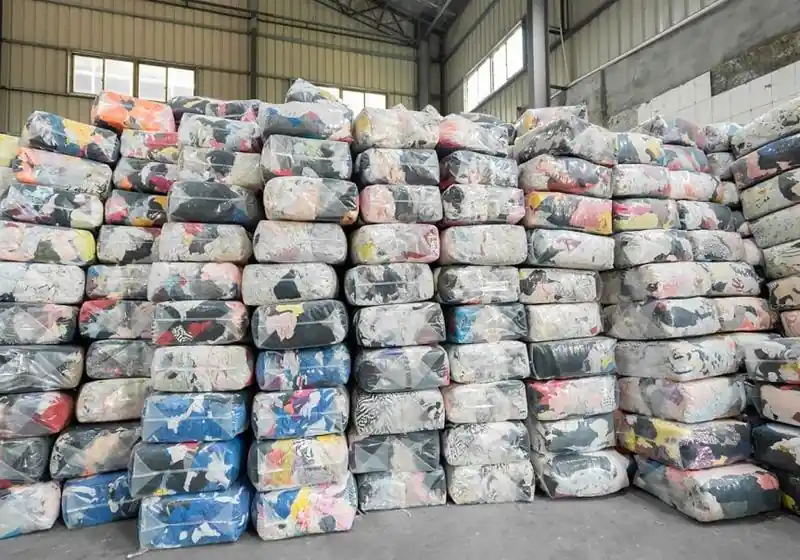
Supporting packaging example: compressed textile units arranged for storage.
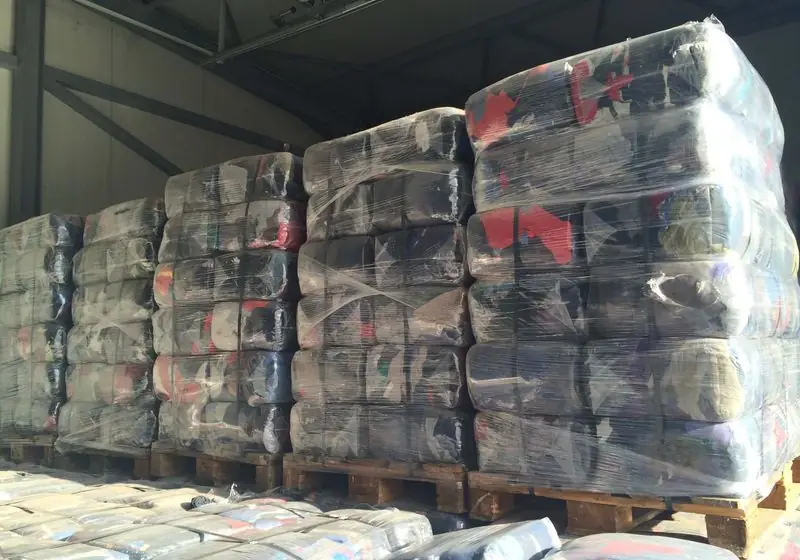
Supporting handling example: contained textile packages grouped on pallets.
Benefits For Orders, Storage And Distribution
Order consistency: weighing-based 10 kg packages help connect the packing stage with customer order quantities. Weight checks and clear labels support a consistent finished-product specification.
Organized stock: contained, defined units are easier to count and identify than loose cloth. Storage planning still needs to account for package dimensions, rebound, container or pallet arrangement and access.
Transport preparation: compression reduces the loose form of the fabric and makes packages easier to arrange for dispatch. Actual freight and warehouse savings depend on the customer's layout and shipping arrangements. No measured savings percentage, staffing reduction or financial payback period has been supplied.
Selecting A Similar Wiping Rags Baler
The related Wiping Rags Baler / Single Bale Bagging Baler product page describes the equipment family. For a similar application, provide representative fabric, the target package weight, required weight tolerance, bag dimensions, hourly package quantity and available working space.
Also specify how cloth is prepared, how the weighing stage is supplied, which packing steps need assistance and how finished units will be checked. No PLC, remote-control feature, pressing-force value or finished bale dimensions have been supplied for this Croatian case, so these are not added as project facts.
Customer Case FAQ
Why Use Weighing Control Instead Of Filling By Volume?
Different fabrics can have different mass at the same apparent loose volume. Weighing controls the material quantity directly for the 10 kg package specification, while compression manages the physical size and handling form.
What Is The Reported Hourly Output?
The project reports 60–80 bales per hour. Accepted output depends on the material, weighing and packing workflow, so comparable production should be checked under agreed conditions.
Can It Package Used Clothing As Well As Industrial Wiping Rags?
The supplied application includes suitable used clothing and industrial wiping cloths. Material preparation and product grading must be defined; the baler itself is not a garment-sorting, washing or rag-cutting machine.
Does The 10 kg Specification Establish An Exact Weighing Tolerance?
No tolerance value was supplied. The equipment controls the package to the 10 kg specification using weighing, with calibration and final checks assessed against the agreed acceptance requirements.
