This North Macedonia customer case features a 250-ton side-discharge scrap metal baler with PLC automatic control and remote control. The customer supplies the following project figures: a 500 × 500 mm bale cross-section, 250–400 kg per bale and 4–6 tonnes per hour. These measurements describe different aspects of the installation and should be kept separate when comparing equipment.
Project Specification At A Glance
Customer location: North Macedonia.
Application: baling prepared iron and steel scrap.
Nominal compression-force designation: 250 tons.
Discharge arrangement: side discharge.
Bale cross-section: 500 × 500 mm; bale length was not supplied.
Reported individual bale weight: 250–400 kg.
Reported hourly output: 4–6 t/hour.
Control arrangement: PLC automatic control and remote control.
The 250-ton designation refers to the stated machine force class, not to the mass of a bale or the quantity processed per hour. The two 500 mm dimensions describe a cross-section; they do not establish a 500 × 500 × 500 mm cube. No pressure, motor power, bale length or measured density has been added where the customer has not provided it.

Equipment configuration: side-discharge metal baler with an open loading chamber and control cabinet.
The Scrap-Handling Requirement
Loose ferrous scrap can contain thin panels, irregular sections and other prepared metal pieces that are difficult to arrange as consistent loads. Baling turns a suitable feed into defined packages that can be weighed and handled through the recycling workflow. Before loading, the actual material dimensions, composition and condition need to match the selected machine's permitted specification.
The supplied raw-material photograph illustrates a mixed scrap stream. It is not a statement that every object visible in a scrap pile can be loaded into the baler unchanged. Unsuitable, hazardous or oversized items require the appropriate sorting and preparation. The Light Scrap Metal application page provides further context for evaluating thin ferrous material.
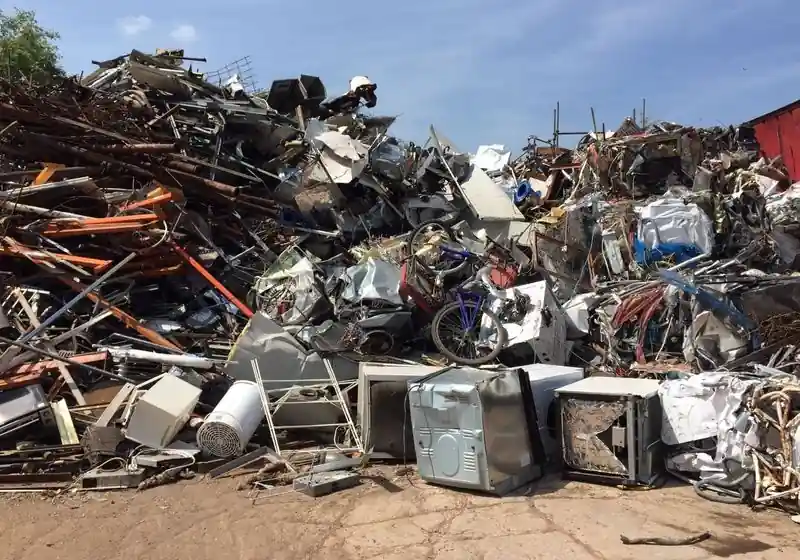
Incoming-material example: mixed scrap requires assessment, sorting and preparation before baling.
Why The Side-Discharge Arrangement Matters
The machine uses a side-discharge arrangement to present the completed bale at a defined collection position beside the compression chamber. That collection space must be considered with the feeding direction, operator position and available handling equipment. A workable layout keeps the bale removal path clear without treating the discharge area as a pedestrian route.
The related Side Push-Out Metal Baler product page explains this equipment family. When specifying a similar installation, confirm the actual ejection mechanism and cycle, the required side clearance and how the finished bale is collected. Side discharge is a layout and handling feature; it does not by itself determine the machine's hourly output or bale density.
Understanding The 500 × 500 mm Bale Cross-Section
A defined cross-section helps connect the baler to the intended handling and receiving requirements. The two supplied dimensions are useful for discussing package geometry, but the complete package volume also needs the bale length. Without that third dimension, it would be misleading to calculate density from the reported 250–400 kg weight range.
For acceptance and production records, measure the discharged package using the agreed method and record all three dimensions alongside its mass. Do not substitute the internal chamber dimensions for the external bale dimensions without confirmation. The article How to Match Material Size, Press Chamber Dimensions and Bale Requirements When Selecting a Metal Baler? explains why the feed, chamber and finished package should be assessed together.
Reported Bale Weight And Hourly Production
The reported 250–400 kg range applies to individual packages. Differences in material composition, filling conditions, package length and retained voids can change the mass of a discharged bale. Production records should therefore identify the material batch and its measured package weight rather than treating every bale as identical.
The separate 4–6 t/hour figure describes reported project production. Actual hourly results depend on representative material supply, loading, the configured compression sequence, side discharge and timely bale removal. The two endpoint weight figures should not be paired automatically with the two output figures to invent an unreported cycle-time specification. A comparable project should use an agreed measurement period and a representative feed trial.
PLC Automatic Control And Remote Control
The customer identifies PLC automatic control and remote control as part of the machine configuration. The PLC manages the configured sequence, while remote control supports authorized commands from the designated operating position. The available functions, control modes, protective interlocks and restart conditions must follow the documentation supplied with the machine.
Remote control does not authorize people to remain in the loading or discharge danger zone, and it is not a substitute for the prescribed safe operating and maintenance procedures. The photographs show equipment and scrap examples; they are not step-by-step operating instructions. No unattended-operation capability or remote operating range has been assumed.
Compressed Bale Examples
The supporting images show compacted ferrous packages after baling. They illustrate package form and material consolidation without claiming that an individual photographed bale has a measured weight, length or density that has not been documented.
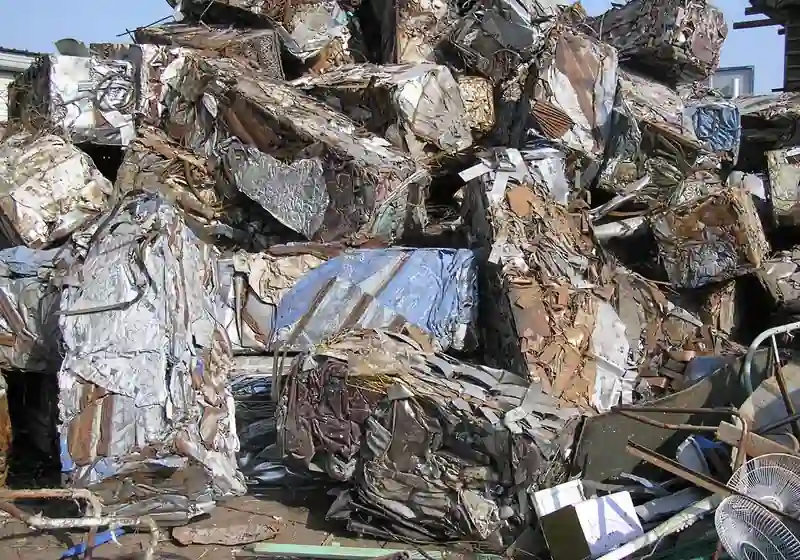
Finished-material example: mixed ferrous scrap compressed into defined packages.
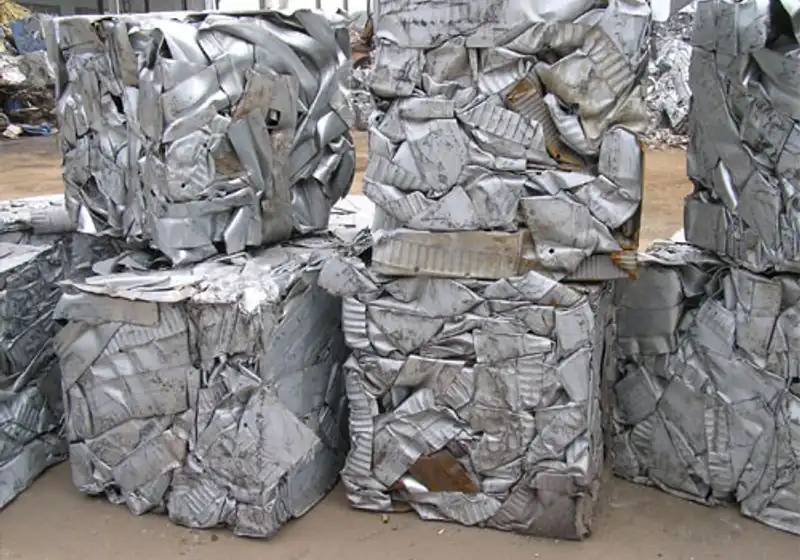
Finished-material example: rectangular sheet-metal bales ready for subsequent handling.
Storage And Downstream Handling
Defined packages provide a practical basis for weighing, stock identification and shipment planning. The storage plan still needs to address package stability, access, handling equipment and the receiving buyer's requirements. Vehicle loading must account for permissible payload and the actual package arrangement. No fixed transport-saving percentage or measured storage-volume reduction has been supplied for this case.
For a similar project, provide scrap photographs, maximum incoming dimensions and thickness, daily quantity, required processing hours, bale requirements, available power and a layout showing both loading and side-discharge areas. These details help establish whether the 250-ton side-discharge configuration is appropriate rather than selecting equipment from the force class alone.
Project FAQ
Does 500 × 500 mm Describe A Cubic Bale?
No. This case records a 500 × 500 mm cross-section. The bale length was not supplied, so a cubic package or an exact volume should not be assumed.
Is 250 Tons The Bale Weight?
No. It is the stated machine force designation. The reported individual bale weight is 250–400 kg, and reported production is 4–6 tonnes per hour.
How Does This Compare With The Polish Double-Main-Cylinder Project?
The Heavy-Duty Double Main Cylinder Metal Baler In Poland case reports a different configuration and output up to 15 t/hour. The correct comparison is based on the actual feed, chamber, finished package, handling cycle and agreed test—not on the country or one headline number.