A UK customer selected a 45kg / approximately 100lbs Old Clothes Baler for used clothing and wiping rags, with a stated output of 8–12 bales per hour. The project focuses on reducing the space occupied by loose textiles and preparing compact units for storage and transport.
Used garments and rags can accumulate quickly between collection, sorting and dispatch. Baling changes their handling form: the material remains textile stock, but is compressed and secured as a defined package rather than moved repeatedly as loose pieces.
UK Customer Project Brief
Equipment: Old Clothes Baler.
Customer location: United Kingdom.
Stated bale weight: 45 kg, commonly described as approximately 100 lbs.
Stated output: 8–12 bales per hour.
Materials: used clothing and wiping rags.
Main objective: reduce storage volume and support more economical transport handling.
The metric and imperial descriptions are approximate, not exact equivalents. The agreed net bale-weight specification should govern production and order acceptance.
The Problem: Textiles Take Up Space Before Dispatch
A loose clothing pile is difficult to count and can expand into space needed for sorting or movement. Even when material has already been graded, leaving it loose can make stock separation and loading less orderly.
For this UK application, baling is the packaging stage after the relevant sorting and preparation. The machine does not wash clothing, identify resale grades or manufacture wiping cloths. Those processes remain separate, so the quality of the material inside a bale still depends on the prepared incoming stock.
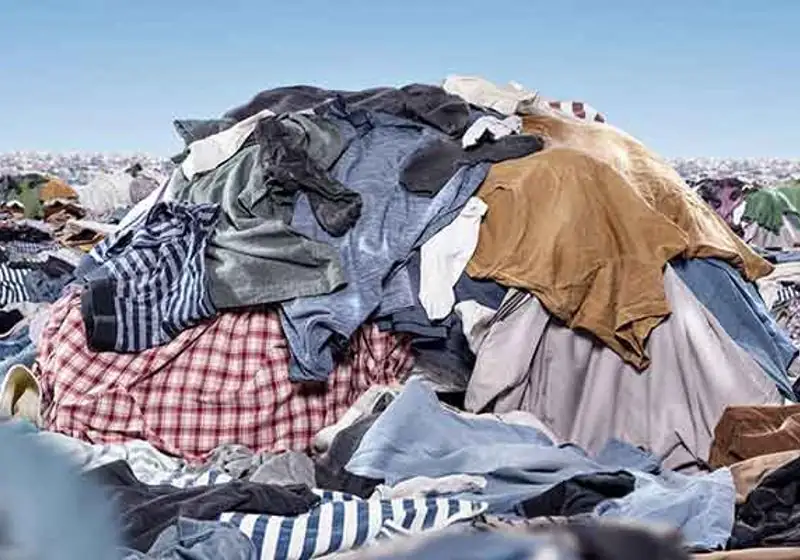
Loose-clothing material example; the image is not identified as the UK customer's premises.
A Practical Bale Format For Clothing And Rags
The stated 45 kg format gives the customer a defined unit around which to plan orders and storage. Used-clothing grades and wiping-rag batches can be kept separate and identified by the customer's stock-control method. Material type and preparation affect the volume occupied at a given weight, so bale dimensions should be confirmed rather than assumed.
The general workflow is to prepare the selected batch, feed the chamber, compress the material, secure the bale using the approved packing arrangement and move it to finished stock. The complete cycle includes the work around pressing, not just the compression stroke.
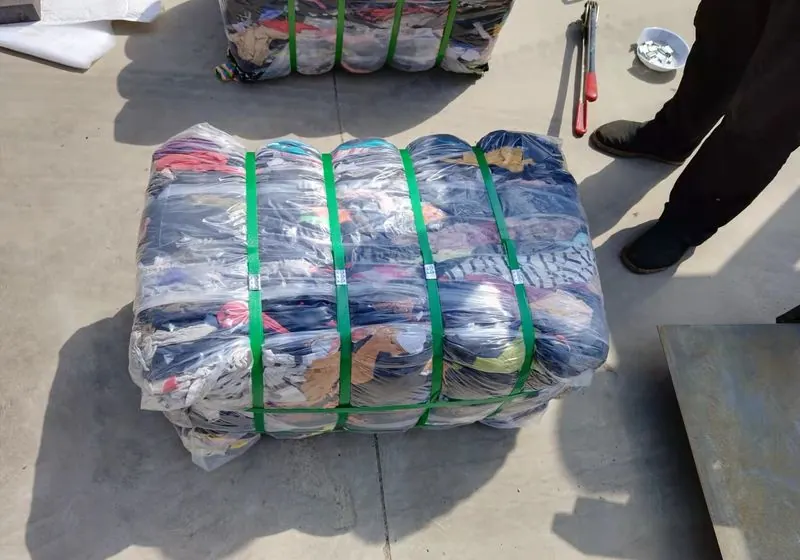
Example of compressed textiles contained and retained by straps.
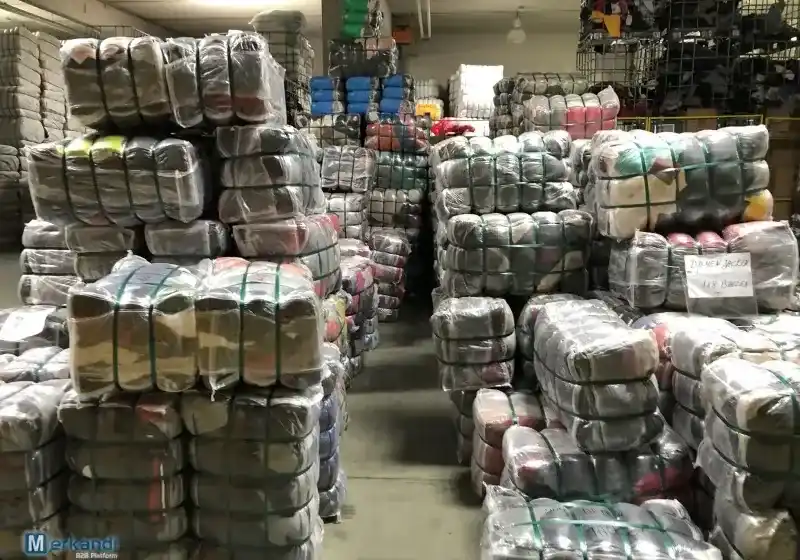
Finished-bale storage example supplied for the application.
Reducing Warehouse Occupancy
Compression brings bulky fabric into a smaller, more organized form. Secured bales can be allocated to batches and arranged within the approved storage layout. This helps the customer manage the space between material receipt and dispatch.
The benefit should be evaluated against the actual incoming textile volume and the finished bale specification. No measured floor-space saving or compression ratio was supplied, so this case does not claim a percentage reduction.
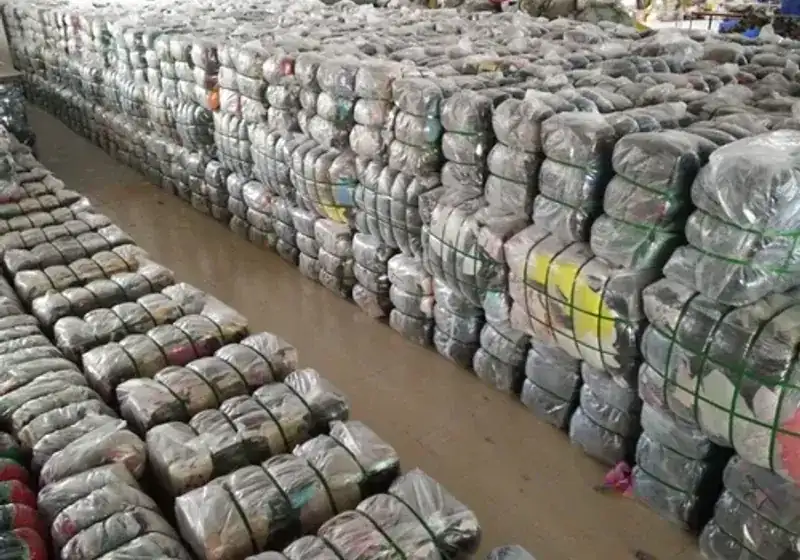
Application example showing textiles organized into identifiable packages.
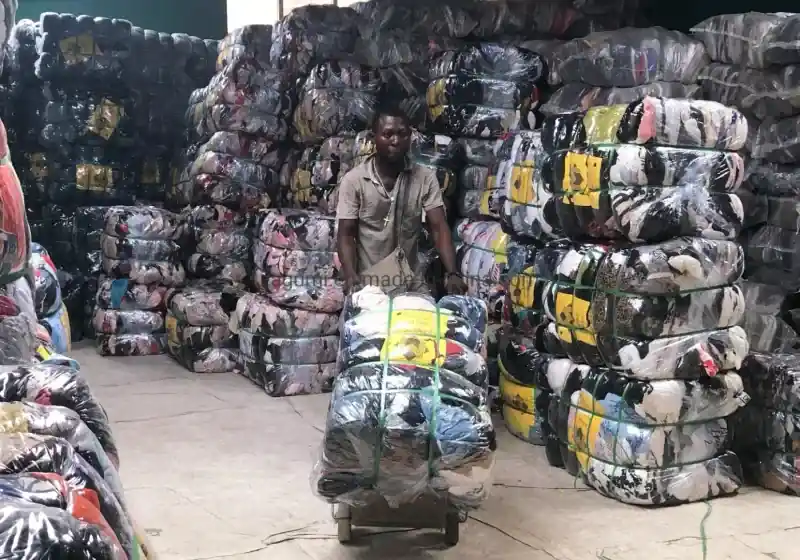
Handling and storage example; photographed bales are not independently verified as 45 kg units.
Supporting Lower Transport Cost
When a shipment is limited by space rather than weight, compressing clothing can help fit more textile material into the available loading volume. Regular packages also give the loading team a clearer unit to count and arrange. These are the mechanisms behind the customer's stated transport-cost objective.
Actual savings depend on the transport method, loading arrangement, payload constraints and freight quotation. A baler does not change vehicle limits, and no fixed cost-saving percentage or container tonnage has been provided for this UK project.
Planning Around 8–12 Bales Per Hour
The supplied production rate is 8–12 bales per hour. Material availability, feeding, compression, securing and removal all influence sustained output. The specification should therefore be checked with representative clothing or rags and the intended packing method.
No automatic weighing accuracy, PLC configuration or automatic tying system has been specified in the project brief. These features should be confirmed individually rather than inferred from the photograph or the output figure.
Customer Case FAQ
What Does 45kg / 100lbs Mean?
It describes an approximately 45 kg bale format, also commonly referred to as a 100 lb class bale. The two units are not exactly equal; confirm the required net weight when ordering.
Can It Bale Both Old Clothes And Rags?
Both materials are included in this customer's application. Confirm the preparation, packing arrangement and desired bale specification for each material.
What Is The Main Business Benefit?
The customer's objective is to reduce the volume occupied by textiles in storage and improve transport efficiency through compact, secured packages.
