A customer in the United Arab Emirates selected a fully automatic Side Turn-Out Metal Baler for aluminium profile scrap, reporting production of 2,000–2,500 kg per hour and bale density up to 1,000 kg/m³. After two months of use, the customer ordered two additional machines of the same configuration. This repeat purchase is the clearest indication of the customer's positive assessment of the initial equipment.
UAE Aluminium Profile Baling Project At A Glance
Customer location: United Arab Emirates (UAE).
Primary material: aluminium profiles and extrusion scrap.
Equipment: fully automatic Side Turn-Out Metal Baler.
Control system: PLC automatic control.
Reported processing output: 2,000–2,500 kg/hour, equivalent to 2.0–2.5 tonnes/hour.
Reported bale density: up to 1,000 kg/m³.
Repeat order: two additional machines of the same configuration after two months of use.
The production and density figures describe the supplied customer application. They are not a universal performance guarantee for every aluminium profile stream. The customer has not supplied a machine force designation, model code, finished bale dimensions or individual bale weight, so these are not inferred from the photographs.
The Challenge: Turning Loose Aluminium Profiles Into Defined Packages
Loose aluminium profiles can be difficult to organize because their hollow sections, different lengths and irregular offcuts leave gaps between pieces. For this project, the practical objective was to compact the prepared aluminium feed into defined bales that could move through the customer's weighing, storage and downstream recycling workflow.
Before comparing machines, the material needs to be described accurately: maximum profile length, cross-section, wall thickness, alloy mix and attached components all matter. Aluminium profile scrap is not the same feed as aluminium machining chips or loose beverage cans. The Aluminium Profiles application page provides related material context.
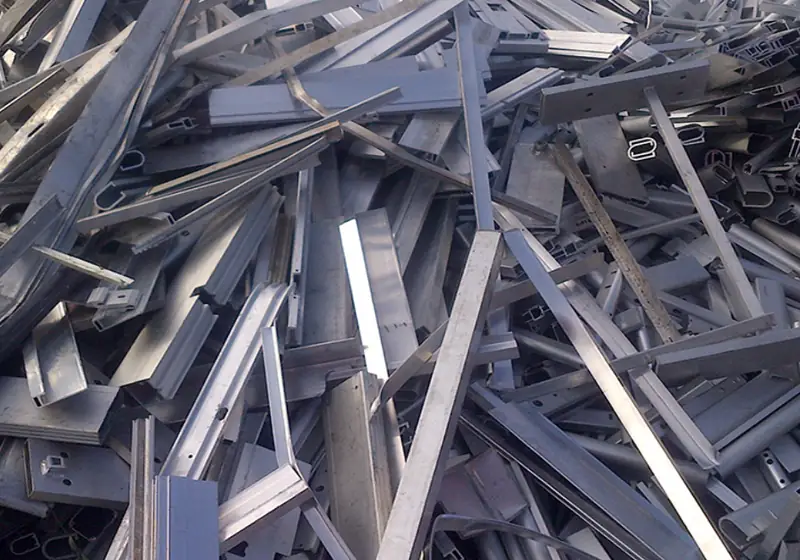
Incoming-material example: loose aluminium profiles and offcuts before compaction.
Why A Side Turn-Out Metal Baler Was Selected
The defining feature of the Side Turn-Out Metal Baler is its bale-discharge arrangement. After the configured compression sequence, the completed bale is turned out at the side of the chamber for collection. This differs from a side push-out arrangement, where a pushing mechanism ejects the finished package.
That distinction matters when planning the working area. The site needs suitable clearance for the turn-out movement and a defined collection position, coordinated with loading and subsequent bale handling. A clear discharge path supports a repeatable material flow, but the discharge direction alone does not establish the machine's hourly capacity or finished density.
PLC Automatic Control For A Repeatable Baling Sequence
The supplied configuration uses PLC automatic control for the configured machine cycle. In this application, automatic sequencing coordinates the prescribed compression and discharge operations once the required starting conditions are satisfied. It gives the customer a consistent control framework for repeated baling work.
Fully automatic control should not be confused with an unattended recycling plant or automatic material feeding. No conveyor, remote-control feature or unattended-operation capability has been specified for this case. Loading, collection, supervision and maintenance must follow the supplied machine documentation and the site's approved procedures.
Processing Output Of 2,000–2,500 kg Per Hour
The reported operating output is 2.0–2.5 tonnes of aluminium profiles per hour. Useful production depends on the actual feed and the complete workflow, including material preparation, filling, compression, side turn-out and timely bale removal. A steady supply of suitable prepared material is therefore important when evaluating whether a comparable installation can meet its intended processing target.
For a new project, agree a representative material trial and measurement period. Record the mass processed and elapsed operating time, together with the handling steps included in the assessment. Do not substitute an unloaded machine cycle for an hourly production measurement. The article How To Match Material Size, Press Chamber Dimensions And Bale Requirements When Selecting A Metal Baler? offers a related selection framework.
Aluminium Bale Density Up To 1,000 kg/m³
The customer reports bale density reaching up to 1,000 kg per cubic metre. Density expresses the relationship between bale mass and external package volume; it is different from hourly throughput or individual bale weight. A density figure on its own does not establish package dimensions or the number of bales produced per hour.
When checking density for another project, weigh the finished bale and measure its external length, width and height using an agreed method. For dimensions recorded in metres, density in kg/m³ equals mass in kilograms divided by length × width × height. Material composition, profile geometry, filling conditions and the finished package all affect the result. The images below illustrate compressed material; no individual photographed bale is presented as a separately verified density measurement.
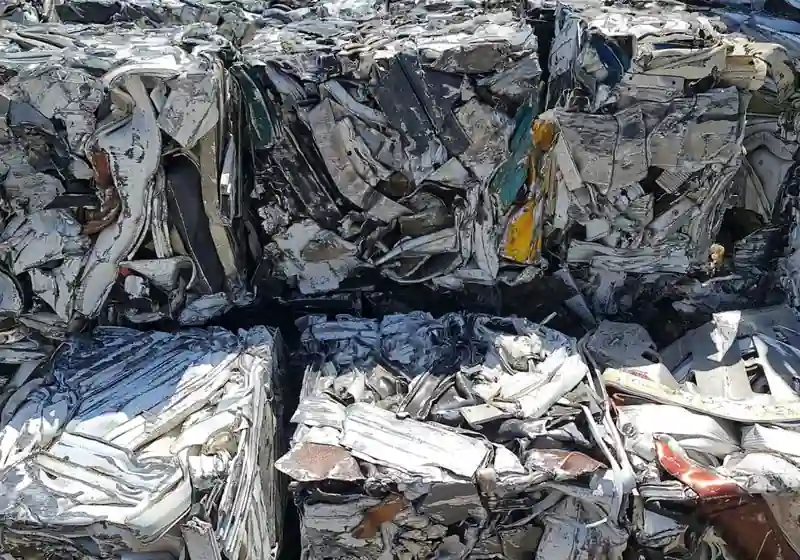
Finished-material example:
aluminium scrap consolidated into compact packages.
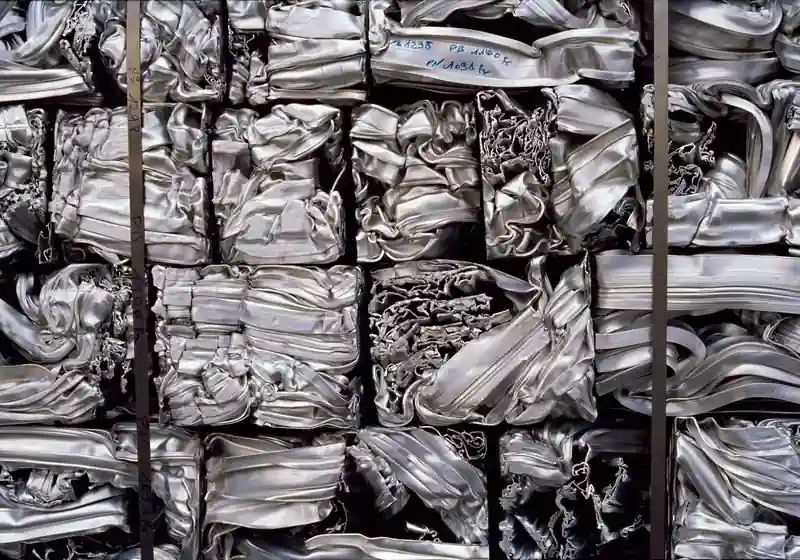
Finished-material detail: compressed aluminium profiles retained in strapped packages.
Two Additional Balers Ordered After Two Months
After using the first machine for two months, the UAE customer placed a repeat order for two more balers of the same configuration. The repeat purchase demonstrates the customer's confidence in continuing with the selected baling solution and gives this case a concrete follow-up outcome beyond the initial equipment selection.
The order adds two machines to the original purchase. It does not, by itself, establish that all three are installed and operating together, nor does it justify multiplying the initial hourly output into a verified combined production figure. No customer quotation, financial payback period or measured cost-saving percentage has been supplied.
Planning A Similar Aluminium Recycling Application
For a comparable installation, provide photographs of the loose material, maximum piece dimensions, wall thickness range, daily quantities and intended operating hours. Include the receiving recycler's bale requirements, available power and a layout showing both loading and side collection areas. These details allow the equipment configuration and handling plan to be evaluated together.
The 160-Ton Forward-Out Aluminium Profile Baler In Japan case describes another aluminium-profile application with a different discharge arrangement. It is useful for comparing layout choices, not for assuming identical capacity or density across different machines and feeds.
Customer Case FAQ
What Material Does The UAE Customer Bale?
The principal material is aluminium profile scrap, including extrusion sections and offcuts. Other material streams need a separate suitability assessment rather than being assumed to have the same processing result.
What Are The Reported Output And Density?
The project reports 2,000–2,500 kg/hour processing output and bale density up to 1,000 kg/m³. Output is mass processed over time; density is mass per unit bale volume. They should be recorded and compared separately.
Did The Customer Purchase Additional Equipment?
Yes. After two months of use, the customer ordered two additional machines of the same configuration. This repeat order is the reported evidence of the customer's positive evaluation of the original baler.
