High-Output Iron Chip Briquetting for a Customer in Russia
This Russian customer project uses a horizontal briquetting line to process iron chips into compact cylindrical briquettes. The supplied project figures specify a processing capacity of 4,000–6,000 kg/hour and a briquette density of 5,000 kg/m³, equivalent to 5 ton/m³.
The project is intended for an operation handling a substantial flow of machining chips. Its focus is to coordinate material feeding, hydraulic compaction and finished-briquette collection so that loose chips can be handled in a more organised form throughout the recycling workflow.
Project Configuration
Equipment: Horizontal iron chip briquetting line
Reported briquette density: 5,000 kg/m³ (5 ton/m³)
Finished form: Cylindrical iron chip briquettes.
Capacity and density are the project data supplied for this case, rather than independently verified universal ratings. Actual throughput and briquette density depend on chip size and shape, material cleanliness, residual-fluid condition, feeding consistency, press configuration and operating settings. Briquette density should not be confused with the bulk density of briquettes loosely packed in a container.
The Challenge: Managing a Large Flow of Loose Iron Chips
Loose machining chips need suitable collection, transfer and storage arrangements. At a processing requirement of 4,000–6,000 kg/hour, feeding and receiving operations must be planned alongside the press. Interruptions in material supply, unsuitable foreign objects or a blocked discharge area can prevent a line from working consistently.
The customer needed a briquetting arrangement that addressed both output and material handling. Converting the loose iron chips into compact packages provides a defined product for collection, movement and subsequent recycling, while keeping the incoming and outgoing material routes organised.
The Solution: Horizontal Briquetting with a Coordinated Material Route
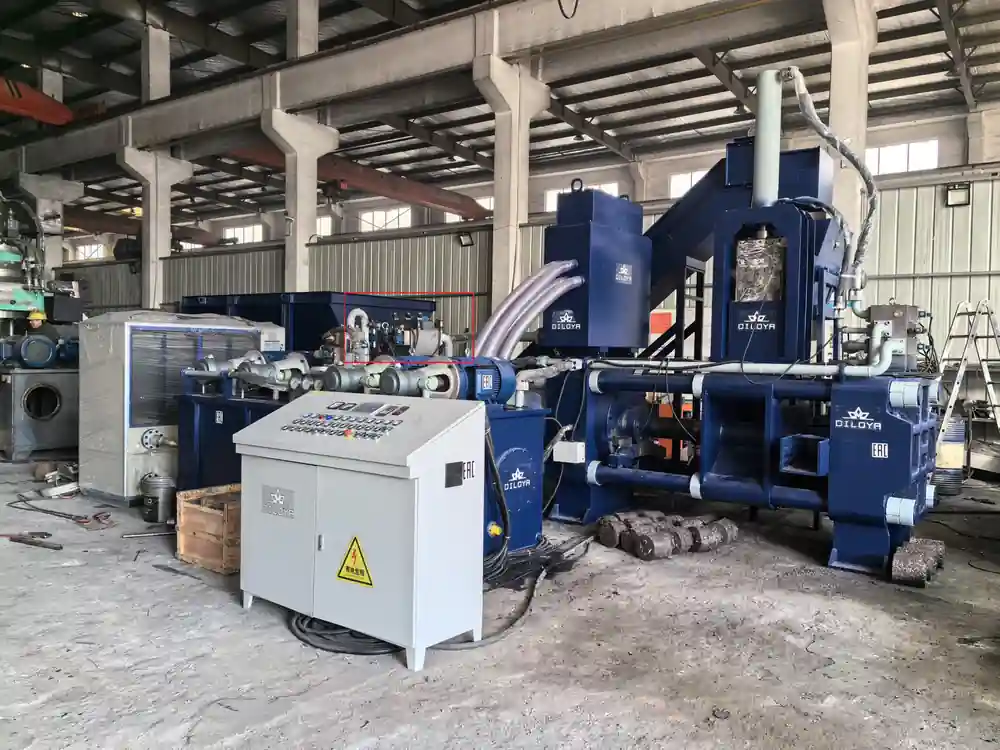
The equipment photograph shows the horizontal press arrangement together with its associated feeding, hydraulic and control equipment. The material route connects chip supply to compression and finished-briquette collection. This allows the layout to be assessed as a complete process rather than selecting a press on output alone.
For this type of project, DILOYA considers the incoming chip condition, required hourly rate, intended briquette specification, available space and downstream handling requirements. The Horizontal Briquetting Press page provides related equipment information.
Raw Material and Finished Briquette Structure
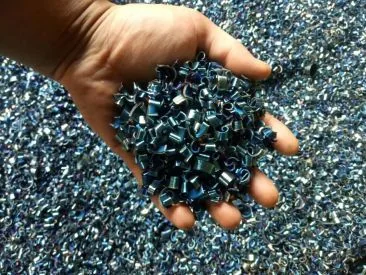
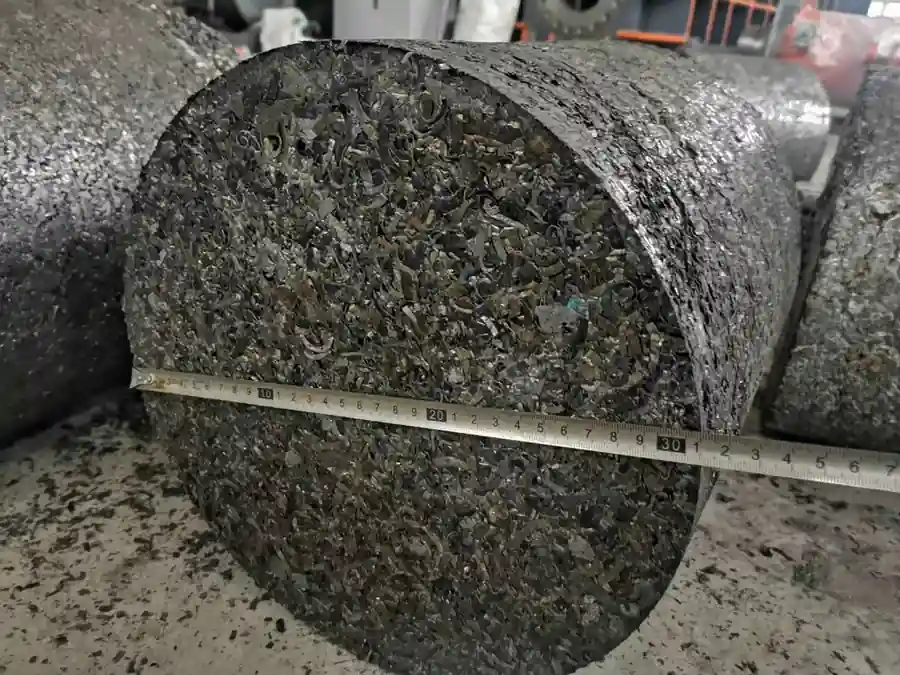
The first photograph below shows loose iron chips before compaction. The second provides a close-up of a finished briquette, where the compressed chip structure is visible. The measuring tape in the photograph is not used here to assign a certified briquette dimension; dimensions should be confirmed against the actual machine configuration and measured output.
Key Advantages of the High-Output Horizontal Briquetting Line
1. Output Matched to a Substantial Chip Stream
The stated capacity of 4,000–6,000 kg/hour is equivalent to 4–6 tonnes per hour. It provides a project-specific basis for sizing chip collection, feeding and finished-product handling. Achieving a consistent operating rate requires these supporting steps to keep pace with the press, with sufficient access for monitoring and routine maintenance.
2. Dense, Defined Briquettes
The project's reported density of 5,000 kg/m³ reflects the compact form of the finished iron chip briquettes. Compression reduces void space within the chip material and produces packages that are easier to identify and handle than the loose feed. The actual volume-reduction ratio must be established from the measured bulk density of the incoming chips.
3. More Organised Storage and Transfers
Finished briquettes can be collected as batches in designated receiving areas or suitable containers. A defined output form can simplify transfers between processing, storage and dispatch, reducing the need to repeatedly move loose chips. Collection arrangements must account for briquette weight, safe lifting methods and site access.
4. Practical Preparation for Transport
Briquetting can help when loose-chip volume limits storage or loading efficiency. Compact packages provide a more concentrated form for dispatch and can make material organisation more straightforward. Actual transport savings depend on incoming chip density, packaging, loading practices and vehicle payload limits; they are not determined by briquette density alone.
5. More Controlled Downstream Material Supply
Cylindrical briquettes offer a defined form for batch handling and subsequent recycling. Where the downstream process accepts briquettes, a consistent package can assist controlled charging. The receiving recycler or furnace operator should confirm acceptable dimensions, cleanliness and charging conditions. Briquetting by itself does not remove all contamination or guarantee a particular melting yield.
6. Cleaner Material Handling
Collecting compact briquettes rather than repeatedly transferring loose particles can reduce opportunities for chip scattering and material left behind during normal handling. This supports orderly housekeeping around the receiving and transfer points. No specific reduction in labour, waste or handling cost is claimed for this project without supporting measurements.
Finished Briquettes from the Project
The project photograph below shows a batch of finished cylindrical briquettes arranged in the working area. It illustrates the output form and collection scale. Storage and movement should still follow site-specific safety arrangements, with suitable containment or supports where needed to prevent cylindrical briquettes from rolling.

Planning a Similar Iron Chip Briquetting Line?
Send DILOYA representative chip photographs or samples, chip dimensions, residual-fluid condition, the required hourly output, target briquette specification, available installation space and local power supply. A material trial can help establish attainable throughput and briquette density for the actual feed. Any required chip preparation, contaminant removal or fluid-management equipment should be evaluated explicitly as part of the proposed system.
Explore the Horizontal Briquetting Press or the full Briquette Press range, and discuss your material-flow requirements with DILOYA.