High-Density Copper Cloves Briquetting for a Customer in India
This Indian customer project uses a DILOYA briquetting system to convert loose copper cloves into compact cylindrical briquettes. The project data supplied for the case indicates a processing capacity of 2,000–2,500 kg/hour and a briquette density of up to 7.8 ton/m³.
The objective is to combine productive material processing with a more manageable output form. Instead of handling small, loose copper particles throughout storage and transfer, the operation can collect and move the material as defined briquettes.
Project Overview
Solution: Hydraulic copper briquetting
Reported briquette density: Up to 7.8 ton/m³ (7,800 kg/m³).
The capacity and maximum density are project figures provided for this case. They are not universal performance guarantees. Actual results depend on particle size, feed cleanliness, moisture or residual-fluid condition, feeding consistency, press configuration and operating settings. Briquette density is also different from the bulk density of loosely packed briquettes in a container.
The Challenge: Handling Loose Copper Cloves
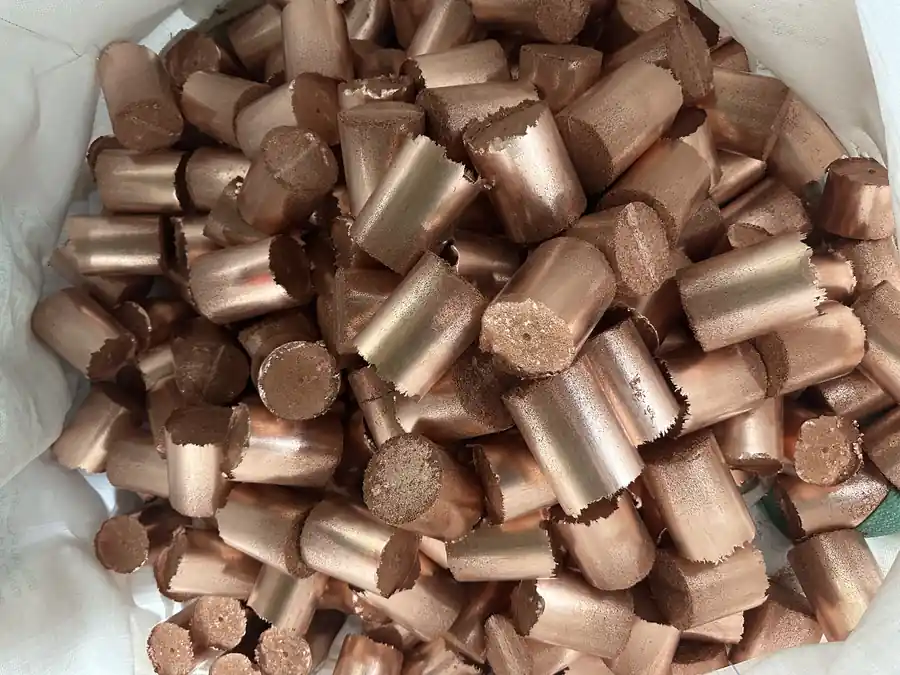
The supplied raw-material photograph shows small copper particles before compaction. Although the material is valuable, loose particles require controlled collection and transfer. Repeated handling can create opportunities for scattering, material left in containers and unnecessary housekeeping around the processing area.
A recycling workflow must also coordinate feed supply with the receiving and storage arrangements. The customer needed a solution that could process the material at the stated hourly rate while producing briquettes suitable for organised collection and subsequent recycling logistics.
The Briquetting Solution
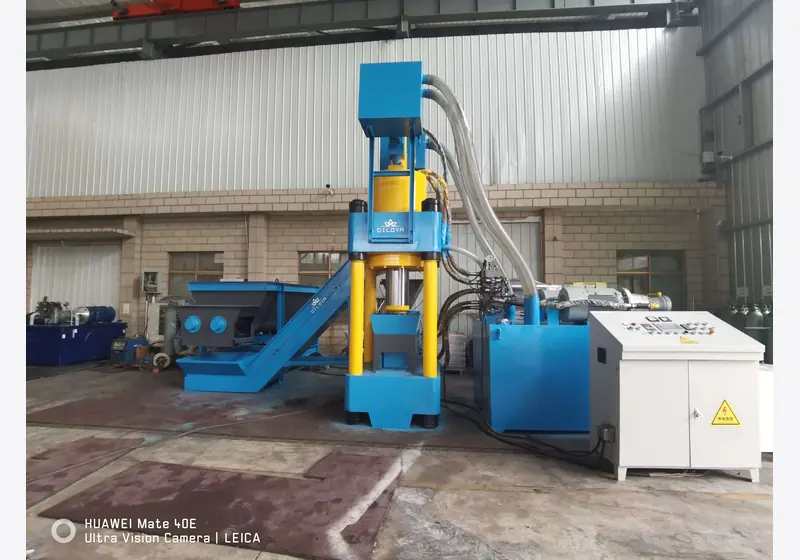
The equipment photograph shows the press, feed arrangement, hydraulic equipment and control station. The system compresses the copper feed into cylindrical briquettes, with material feeding and finished-briquette collection considered as connected steps in the operating workflow.
The configuration should be selected around the actual copper feed, desired production rate and the receiving process. See the Vertical Briquetting Press and the wider Briquette Press range for related equipment information.
Before and After Briquetting
The photographs below show the loose copper cloves before compression on the left and the finished cylindrical copper briquettes on the right. They illustrate the change in material form; they do not independently establish a density measurement, recovery rate or transport saving.
Key Advantages of the Copper Cloves Briquetting Solution
1. High-Density Output
The project's reported briquette density of up to 7.8 ton/m³ highlights the degree of compaction achievable with the specified material and configuration. Compressing the particle feed into a defined briquette reduces internal void space and creates a compact material form. The actual volume reduction must be evaluated against the measured bulk density of the incoming copper feed.
2. Processing Capacity Matched to the Material Flow
A reported capacity of 2,000–2,500 kg/hour provides a project-specific basis for planning the supply of copper feed and collection of finished briquettes. Reliable operation still requires a consistent feed and a receiving arrangement that does not obstruct discharge. An hourly capacity figure should therefore be considered together with the complete workflow, not as an isolated press specification.
3. More Organised Storage and Material Handling
Briquettes provide a defined output that can be collected in suitable containers and moved as batches. This can simplify material organisation and make routine transfers more controlled than repeatedly handling small loose particles. Container choice, lifting limits and safe handling practices remain part of the site layout.
4. Practical Transport Preparation
Compaction can be useful when loose-material volume limits storage or vehicle loading. Dense briquettes offer a more concentrated form for packaging and dispatch. Any freight benefit depends on the original feed density, container packing and applicable payload limits; higher briquette density does not automatically mean that more weight can legally be transported.
5. Less Scattering During Transfer
Changing the material from loose particles to compact briquettes can reduce opportunities for scattering during normal transfer and collection. This supports cleaner material handling and more straightforward housekeeping. Actual material-loss reductions have not been quantified for this project.
6. A Defined Form for Downstream Recycling
Consistent briquette geometry can assist batch handling and controlled feeding into a receiving recycling process. Suitability for a particular furnace or remelting operation must be agreed with the downstream user. Briquetting does not purify copper, remove every contaminant or by itself guarantee a higher metal recovery rate.
Planning a Similar Copper Briquetting Project?
Share your copper cloves photographs or samples, particle-size range, feed condition, hourly output target, briquette requirements, available space and local power supply. DILOYA can assess the press arrangement, feeding method, controls and discharge route around your material and operating requirements. A representative material trial is useful for confirming capacity and briquette density before finalising a configuration.