A customer in Belgium selected a dual-outlet clothes baler so that one machine could produce two different bale-weight specifications, such as 5 kg and 10 kg packs. The main objective was packaging flexibility: serving different order sizes without purchasing a separate baler for each weight. The customer reports reduced equipment purchasing costs from this two-in-one arrangement.
This case is therefore about choosing a flexible packaging asset, not simply repeating one fixed bale weight. The machine gives the customer two package options within a shared equipment setup. The 5 kg and 10 kg values are the examples supplied for the two-weight concept; final package specifications and acceptance requirements should be recorded for the actual order.
Belgium Project Brief: Two Bale Weights, One Machine
Customer location: Belgium.
Equipment: dual-outlet clothes baler.
Packaging concept: two selectable bale-weight specifications on one machine.
Example weights: 5 kg and 10 kg per pack.
Primary benefit: fewer separate machine purchases to support two package specifications.
Application context: clothing and suitable textile or wiping-rag packaging.
Production planning: select the package specification required by each order rather than treating all orders as one format.
When One Textile Stream Needs Two Sales Formats
A textile packer may receive orders for a smaller handling unit alongside orders for a larger package. These requirements are different even when the underlying material grade is the same. Treating every order as a single pack size can mean repacking material later or operating separate equipment for the two formats.
For this Belgian customer, the dual-outlet concept addresses that packaging choice at the baler. A smaller specification, illustrated by a 5 kg pack, and a larger specification, illustrated by a 10 kg pack, can be planned as distinct products. Which buyers prefer either size depends on the customer's actual orders; no retail or export market has been assumed for this project.

Material example: prepared textile pieces before weighing, compression and packing.
How The Dual-Outlet Arrangement Adds Flexibility
The equipment family is listed as the Double Bale Weight Bagging Baler. Its two outlet options support two customer-defined package specifications. The selected route and matching packing arrangement are used for the order being produced.
Two outlets should not be confused with two independent production lines. The supplied information does not establish simultaneous production of a 5 kg pack and a 10 kg pack, nor does it establish twice the capacity of a single-outlet machine. The actual switching method and discharge sequence must follow the configuration supplied with the baler.
Package weight, physical dimensions and bag size also need to be considered separately. Different fabrics can occupy different volumes at the same weight, and material rebound influences the finished package. Each format therefore needs an agreed specification rather than a weight label alone.
Reducing Duplicate Equipment Purchases
The customer's stated purchasing advantage comes from using one machine for two packaging requirements. Instead of buying one dedicated baler for the smaller format and another for the larger format, the dual-outlet arrangement provides both options in one equipment investment.
The business comparison should cover what is actually included: the baler, both outlet arrangements, suitable packaging interfaces and any required weighing or handling equipment. Reduced purchase cost does not mean a confirmed 50% saving; prices and accessory requirements were not supplied, so no percentage or monetary saving is claimed.
A shared machine may also simplify equipment placement and reduce duplicated support arrangements, but the complete operating plan still needs feeding space, packing materials, finished-stock handling and maintenance access. These practical considerations should be included in the purchase decision rather than counted as measured savings without evidence.
Planning Orders Around Two Package Specifications
Define the order before packing. Identify the textile grade, required package weight and appropriate bag or containment specification. Label the two formats clearly so that the smaller and larger packs remain distinct in production and stock records.
Group compatible batches. Where practical, organize orders by material and package format to avoid unnecessary interruptions. The best batch size depends on demand and the actual changeover process; no switching time or automatic recipe system has been specified for this customer.
Confirm the selected outlet. Use the outlet and packaging arrangement approved for the intended format. The supplied machine instructions determine the permitted selection and operating sequence; this article is not an instruction to adjust or enter moving machinery.
Verify the completed package. Check weight, closure and labeling against the order specification. A scale visible in an equipment photograph does not establish weighing tolerance, automatic dosing accuracy or legal-for-trade certification. These need confirmation for the actual installation.
From Loose Fabric To Contained Packages
The general packaging concept remains straightforward: prepared material is measured for the selected format, compressed and delivered through the appropriate outlet into the agreed packing arrangement. The finished unit is closed, checked and identified before it enters storage or dispatch.
The baler changes the handling form of suitable textiles; it does not sort garments by grade, wash used clothing or cut fabric into wiping pieces. Material preparation and product quality need to be managed before the packaging stage. The supporting photographs below show contained textile packages, not verified examples of a particular 5 kg or 10 kg weight.
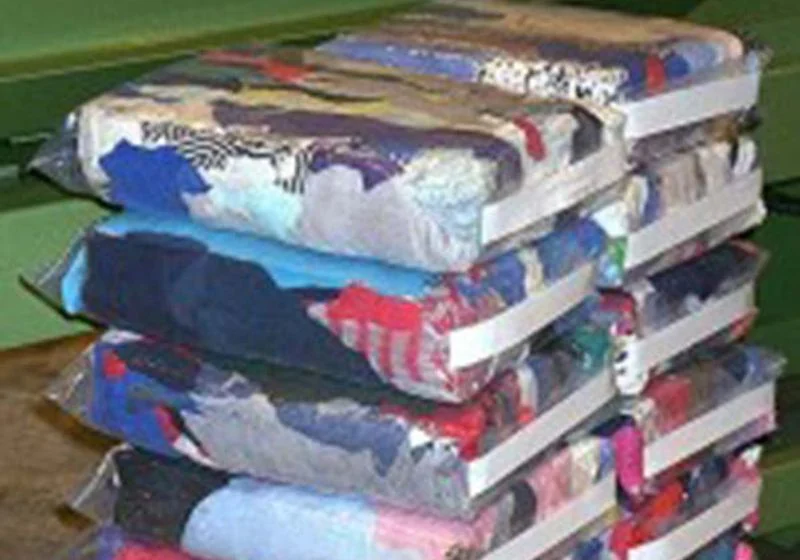
Packaging example: compressed textile units contained in bags and straps.
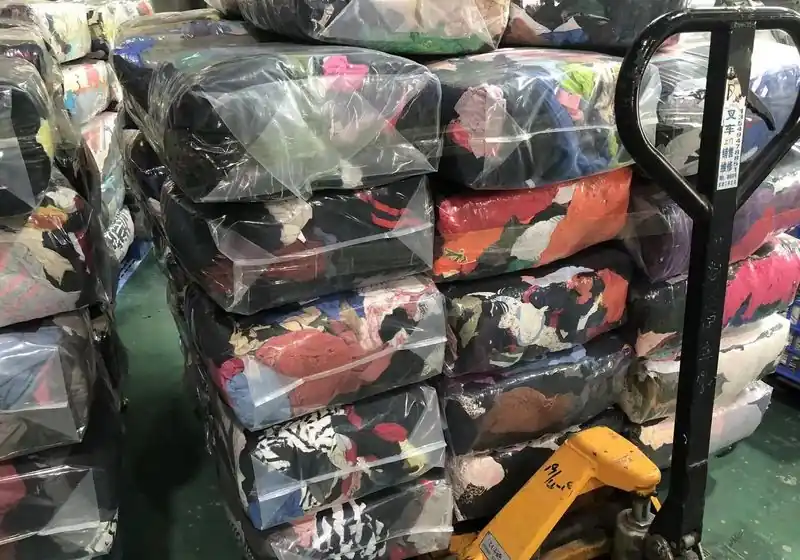
Handling example: contained fabric packages arranged for subsequent movement.
The Trade-Off: Shared Equipment Needs Shared Scheduling
One machine serving two formats also means the customer's production schedule must accommodate both. If both formats require independent operation at the same time, or if uninterrupted backup capacity is essential, two dedicated machines may need a separate assessment. The dual-outlet approach is most useful when one shared production arrangement fits the actual order pattern.
No hourly bale count, mass throughput, control-system type, pressing force or pack dimensions were supplied for this Belgian project. Those details are not borrowed from another case. Capacity should be established with representative material and the intended mix of small- and large-format orders.
How This Differs From The Croatia 10kg Case
The 10kg Wiping Rags Baler In Croatia case focuses on a single 10 kg specification, weighing-based quantity control and reported production of 60–80 bales/hour. This Belgian case instead focuses on two selectable weights and avoiding separate equipment purchases.
The Croatian production rate and weighing arrangement are not specifications for the Belgian machine. The connection between the cases is the packaging application, while their equipment-selection priorities are different: consistent single-format output in one case, flexible two-format production in the other.
Customer Case FAQ
Can One Machine Produce Both 5 kg And 10 kg Packs?
The supplied concept supports two different bale-weight specifications on one dual-outlet machine, with 5 kg and 10 kg given as examples. Confirm the selected weights, bag dimensions and acceptance requirements when ordering.
Does Dual Outlet Mean Both Pack Sizes Are Produced Simultaneously?
Not necessarily. Two outlet options do not establish simultaneous independent production. The supplied control and discharge arrangement determines how each specification is selected and processed.
How Does This Reduce Purchasing Cost?
The customer can use one machine for two package requirements rather than purchase a separate baler for each format. Actual savings depend on the final equipment and accessory quotations; no numerical saving has been supplied.
What Information Is Needed For A Similar Purchase?
Provide representative material, the two target weights, packaging dimensions, order quantities, required operating hours and the expected frequency of format changes. Include any need for simultaneous output, backup capacity and specified weight tolerance so the shared-machine approach can be evaluated properly.
