A customer in Poland uses a heavy-duty double-main-cylinder metal baler with PLC automatic control and remote control for ferrous scrap recycling. The stated materials include light-gauge iron and steel scrap, waste reinforcing bars and end-of-life vehicle scrap prepared for baling. The customer reports output of up to 15 tonnes per hour. This is the reported upper project figure, not a guarantee that every incoming grade or loading pattern achieves the same rate.
Project Requirements: Compacting Irregular Ferrous Scrap
Light sheet metal and vehicle body scrap can occupy substantial space relative to their mass, while reinforcing bars and irregular offcuts create a different loading challenge. The project brings these material groups into a heavy-duty baling application to form compact packages for subsequent handling, storage and shipment. The suitability of each batch still depends on the actual dimensions, thickness, composition and preparation of the scrap.
The equipment is linked to the Heavy Duty Metal Baler product family. Its two main cylinders are part of the final compression arrangement. “Double main cylinder” identifies that structure; it should not be confused with a claim that the machine automatically doubles the output of another model.

Equipment overview: heavy-duty scrap metal baler with an open loading chamber and PLC control cabinet.
Material Scope And Feed Preparation
Light-Gauge Iron And Steel Scrap
Thin sheet, fabrication offcuts and other light ferrous grades need a loading process that fills the chamber effectively without introducing unsuitable objects. Irregular shapes and inconsistent loose volume can change the mass handled per cycle. The Light Scrap Metal application page provides related material context. The photographs in this case illustrate compressed ferrous packages rather than a laboratory identification of every constituent grade.
Waste Reinforcing Bars
Reinforcing bars must be assessed against the machine's loading envelope and permitted material specification. Excessive length, tightly tangled sections or heavy solid pieces should not be assumed suitable merely because the baler is described as heavy duty. Where material needs cutting or other preparation, that work should be planned separately. A baler should not be advertised as a shear unless the supplied configuration actually includes a cutting function.
Prepared Vehicle Scrap
The vehicle-scrap application concerns material prepared and cleared for the approved recycling process, not an instruction to load an untreated complete vehicle. Hazardous components and residual contents must be dealt with through the site's appropriate preparation procedures before baling. The receiving requirements, allowable piece dimensions and handling arrangements should be defined for the actual feed. No unprovided vehicle-processing rate is inferred from the overall 15 t/hour project figure.
Double Main Cylinders And The Compression Task
The main compression stage reduces the loose material into a defined package inside the chamber. A heavy-duty structure, hydraulic system and wear-protection arrangement need to be selected together for the intended duty. Cylinder count alone does not specify force, density or usable capacity; chamber dimensions, incoming material and the complete cycle also matter.
The supplied chamber and bale photographs show the transition from loose, irregular material to a compressed package. They do not provide an independently measured density or bale weight, so no such figures have been added. For a similar project, the buyer should state the desired package dimensions and weight range alongside the required hourly output.
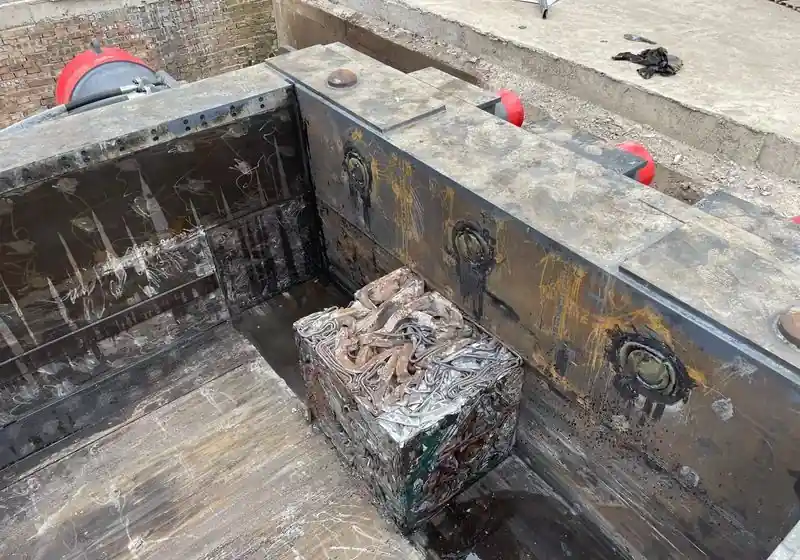
Compressed ferrous package shown inside the baling chamber.
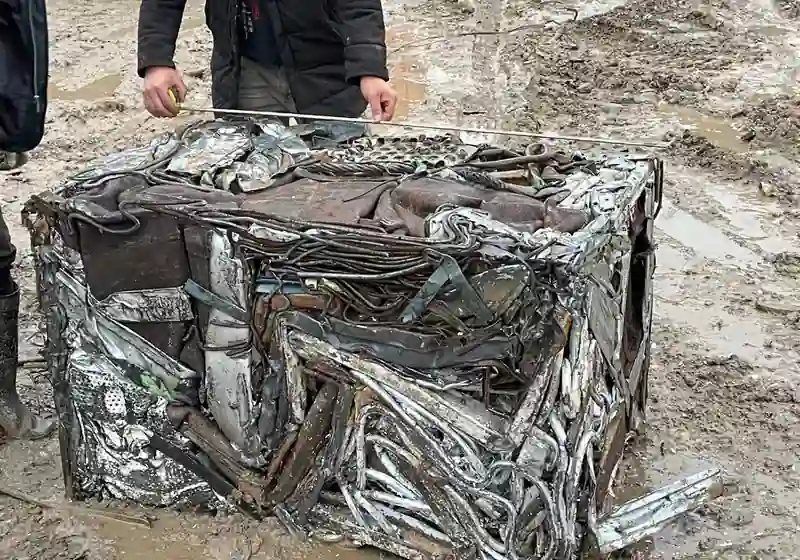
Finished bale inspection: the photograph shows a dimension check, not a published dimensional specification.
PLC Automatic Control And Remote Operation
The customer identifies PLC automatic control and remote control as part of this installation. The PLC supports the configured machine sequence, while the remote-control arrangement allows authorized operating commands from the designated operating position. The actual functions, operating modes, interlocks and reset requirements must follow the supplied control documentation.
Remote control does not remove the need for a controlled working area or a clear separation between personnel and moving equipment. Loading, pressing and finished-bale collection must be coordinated with the site procedure. No remote range, unattended-operation capability or additional safety certification is claimed here because those details were not supplied.
Reported Production: Up To 15 Tonnes Per Hour
Hourly output should be understood as a result of the whole process: representative material supply, loading, the configured compression cycle, bale collection and the availability of the downstream handling area. A brief unloaded cycle or a single favourable batch is not the same as sustained output measured over a defined operating period.
The project figure is therefore recorded as “up to 15 t/hour,” with no fabricated breakdown by sheet scrap, rebar or vehicle scrap. When comparing another installation, record the weighed quantity and elapsed test period, and identify which handling interruptions are included. For further selection principles, see How to Match Material Size, Press Chamber Dimensions and Bale Requirements When Selecting a Metal Baler?
Bale Handling And Finished Material
The supporting photographs illustrate grab handling and examples of compacted ferrous scrap. Regular packages provide a basis for organized weighing, stock identification and shipment planning, but the handling method must suit the actual bale and site equipment. Storage stability, access and permissible loading limits remain part of the operating plan.
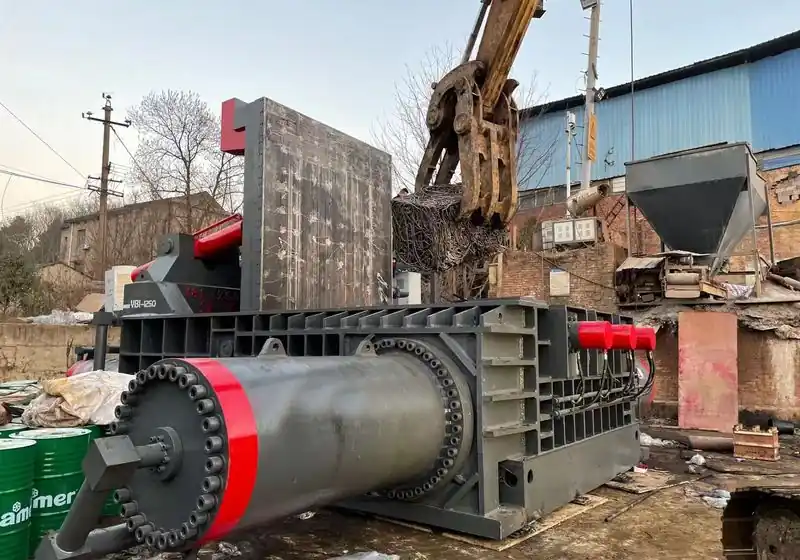
Handling example: grab collection of a compacted ferrous-scrap bale.
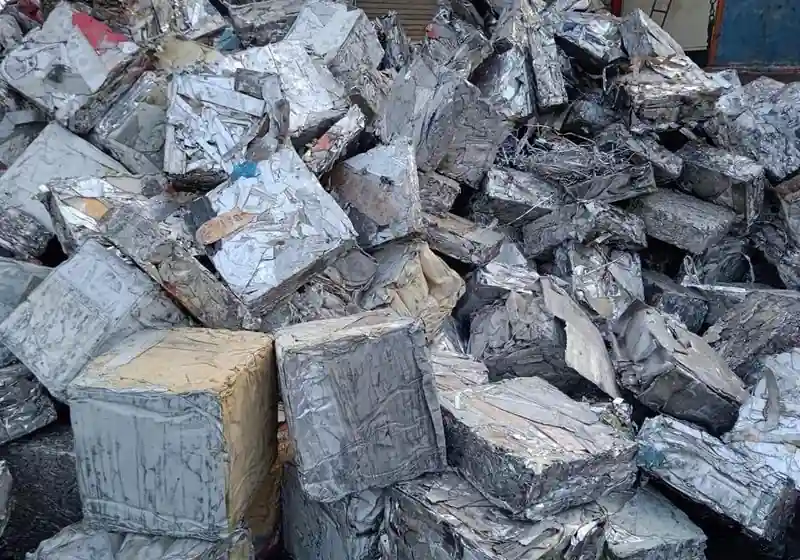
Finished material example: compressed light-steel scrap packages.
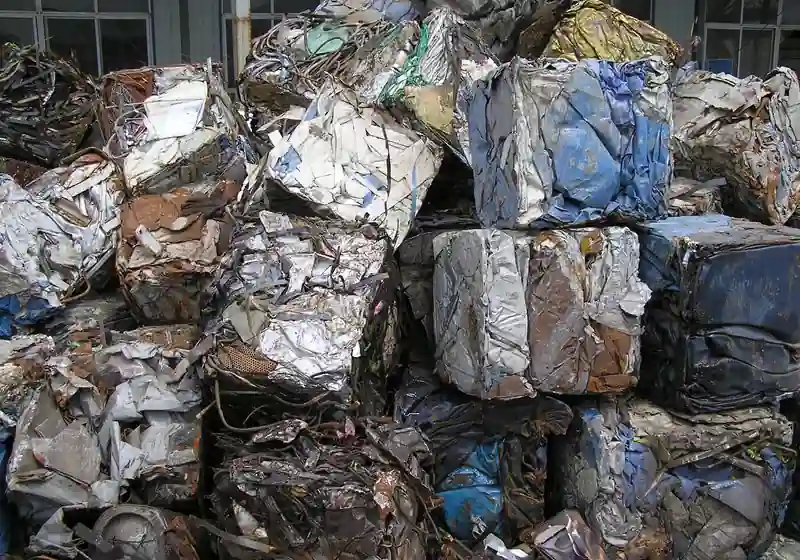
Finished material example: compacted sheet-metal and body-panel scrap.
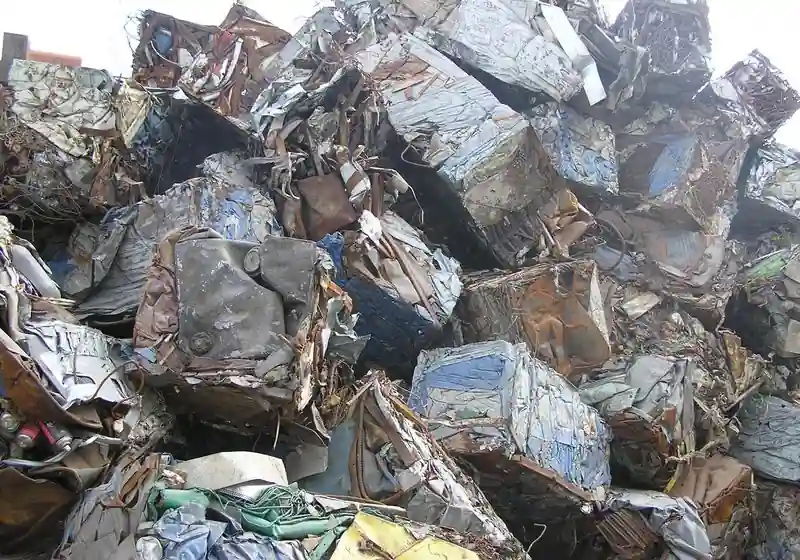
Finished material example: ferrous bales gathered for subsequent handling.
Planning A Comparable Installation
Provide the material grades, maximum piece dimensions and thickness, delivery pattern, daily mass, required processing hours, bale requirements and available loading equipment. Include the power supply, chamber access, bale collection space and intended use of remote control. These details allow the machine and its handling arrangement to be assessed as a working system rather than selected from a capacity headline alone.
Maintenance and inspection provision should also be agreed at the planning stage. Use the exact model documentation for hydraulic fluid, filters, cooling, lubrication, wear components and control checks. Do not transfer a service interval or a pressure setting from an unrelated machine.
Project FAQ
What Does The 15 t/hour Figure Mean?
It is the customer's reported upper hourly output for this project. Actual production varies with the prepared material, loading consistency, cycle and bale removal; no separate guaranteed figure has been provided for each feed category.
Does Remote Control Make The Baler An Unattended Machine?
No such claim is made. Remote control is an operating feature used within the authorized control arrangement and site procedures. The operator responsibilities and permitted modes remain those defined for the supplied machine.
How Is This Different From The Indonesian Vertical Baler Case?
The Polish project uses a double-main-cylinder heavy-duty metal baler for a ferrous-scrap application and reports hourly output. The Heavy-Duty Vertical Metal Baler In Indonesia uses a vertical tying arrangement and reports individual bale weight. Those are different equipment layouts and different performance measurements.