This Indonesian customer uses a heavy-duty vertical metal baler with bale tying to compact aluminium profiles, stainless steel scrap and aluminium beverage cans. The reported finished-bale weight range is 600–1,500 kg per bale. This is a package-weight range, not an hourly production rate, and it should not be interpreted as the weight produced from every material or every loading cycle. Material type, preparation, package dimensions and filling conditions affect the final result.
Project Background: Turning Bulky Scrap Into Manageable Packages
Long aluminium profiles, irregular stainless steel offcuts and loose beverage cans create different handling challenges. Profiles leave voids between sections, thin-walled cans occupy considerable loose volume, and stainless steel scrap varies in shape and stiffness. The common task is to reduce the loose volume and form packages that can be identified, weighed and handled within the customer's recycling workflow.
The selected equipment belongs to the Vertical Metal Baler product family. Its upright pressing arrangement and bale-tying application distinguish it from a small general-purpose packaging press. The project is presented here using the customer's supplied material description, reported bale-weight range and photographs; no unprovided model number, pressure, hourly capacity or savings percentage has been added.

Equipment overview: heavy-duty vertical metal baler and hydraulic power unit.
Incoming Materials: Aluminium Profiles And Beverage Cans
The raw-material photographs show loose aluminium profile scrap and used beverage cans. These feeds differ in size, shape and loose packing behaviour, so they should be evaluated separately when setting the loading method and finished package requirements. The customer also identifies stainless steel as an application material; the gallery is not intended to claim that every metal grade can be identified visually from a photograph.
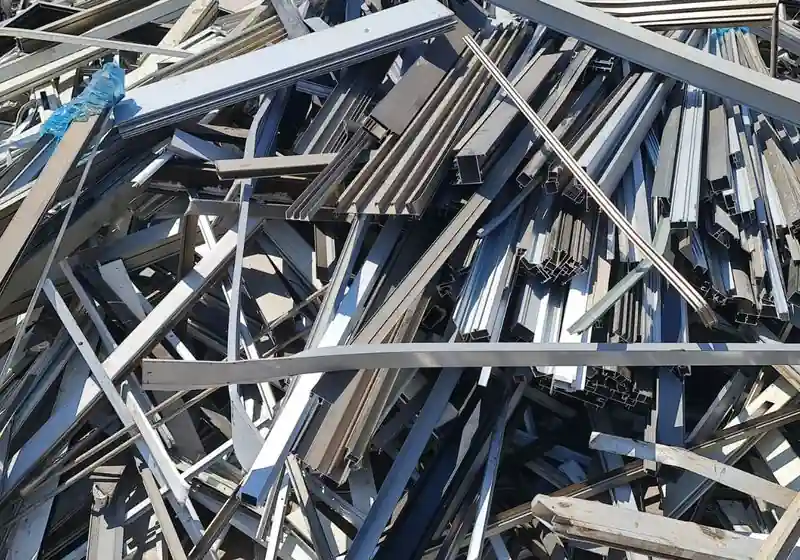
Raw material: loose aluminium profiles and extrusion offcuts before compression.
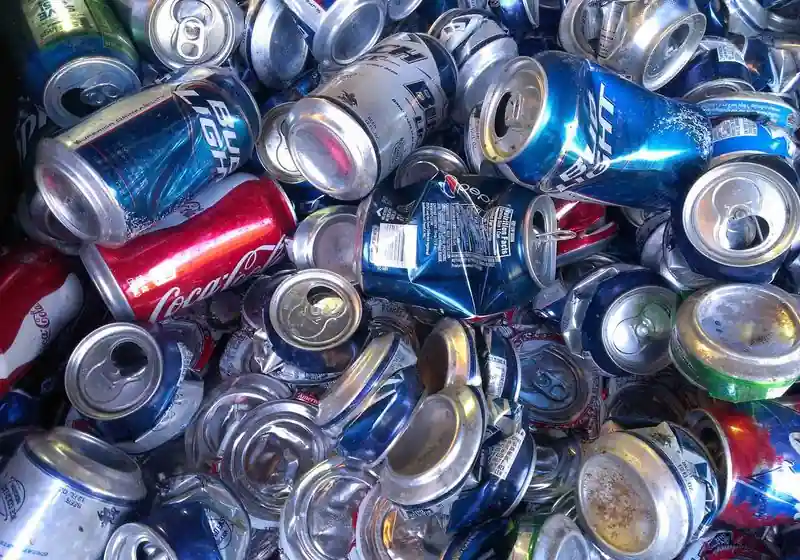
Raw material: aluminium used beverage cans before baling.
Aluminium Profile Scrap
Profiles and extrusion offcuts need a loading arrangement compatible with their length, cross-section and spring-back behaviour. The machine should not be treated as a cutting system: any oversized or unsuitable sections require separate assessment and preparation. Material separation is also important where different alloys, surface treatments or contaminants affect the receiving recycler's specification. The Aluminium Profiles application page explains the relationship between the feed and the baling configuration.
Stainless Steel Scrap
Stainless steel material should be reviewed for grade, dimensions, thickness and suitability for the selected machine. The fact that the project covers stainless steel does not establish suitability for every solid or heavy stainless component. For this application, material grades should remain segregated where the downstream buyer requires separate quality streams. Further material-selection context is available under Stainless Steel Scrap.
Aluminium Used Beverage Cans
Loose cans are a different feed from long profiles and should have their own preparation and bale-acceptance conditions. The Aluminium UBC page covers this material category. Sorting, residual-liquid management and the exclusion of unsuitable containers belong in the agreed preparation process; unidentified sealed containers and aerosols should not be assumed to be ordinary beverage-can feed.
Vertical Compression And Bale Tying
The heavy-duty vertical layout compacts prepared material in an upright chamber. Bale tying or strapping forms part of the finished-package arrangement, helping retain the compressed material during subsequent handling. The exact tying specification, number of ties, package dimensions and discharge method must follow the supplied machine documentation and the intended handling plan. They cannot be determined reliably from a general photograph alone.
A practical workflow is to prepare the specified material, load within the machine's permitted envelope, complete the approved compression and tying sequence, and move the finished package using suitable handling equipment. These steps should be organized by trained personnel under the site's operating procedures. Long material should not be forced into the machine simply to avoid preparation, and different scrap grades should not be mixed merely because the press can compact them.
Reported Bale Weight: 600–1,500 kg Per Package
The customer's reported range describes individual bale mass across this application. A profile bale and a beverage-can bale can differ in weight even when the equipment is the same. Package dimensions, material composition, the amount loaded, retained void space and the final compression conditions all influence the mass of the discharged bale.
For production records, weigh each package with the approved scale and identify the material stream. If density is required by a buyer, calculate it using the measured mass and external bale dimensions; weight alone is not a density figure. The guide Hydraulic Can Baler Pressure And Bale Density: A Practical Guide explains this distinction. The 600–1,500 kg range is not a universal specification for every vertical baler.
Finished Bale Gallery
The four supplied result images show tied profile packages, stacked profile bales and compressed can bales. The captions describe what is visible without assigning an unmeasured weight or an unsupported density to an individual photograph.
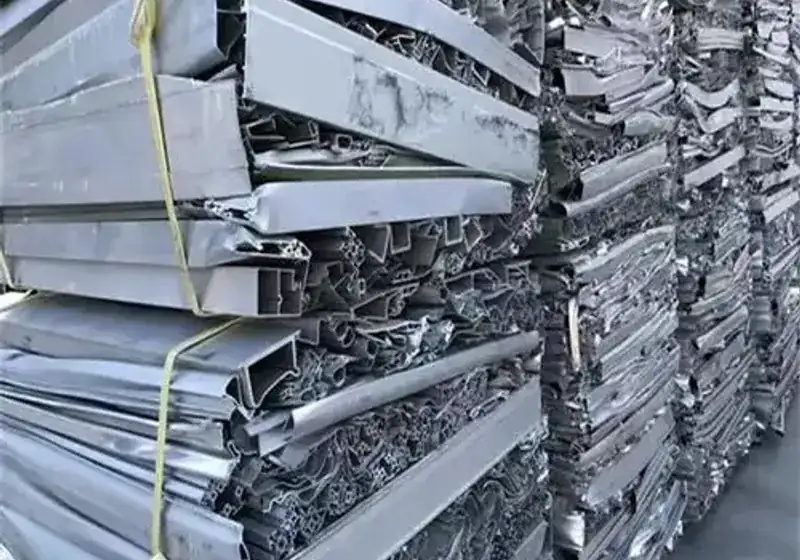
Result 1: tied aluminium profile packages, showing the compressed profile sections.
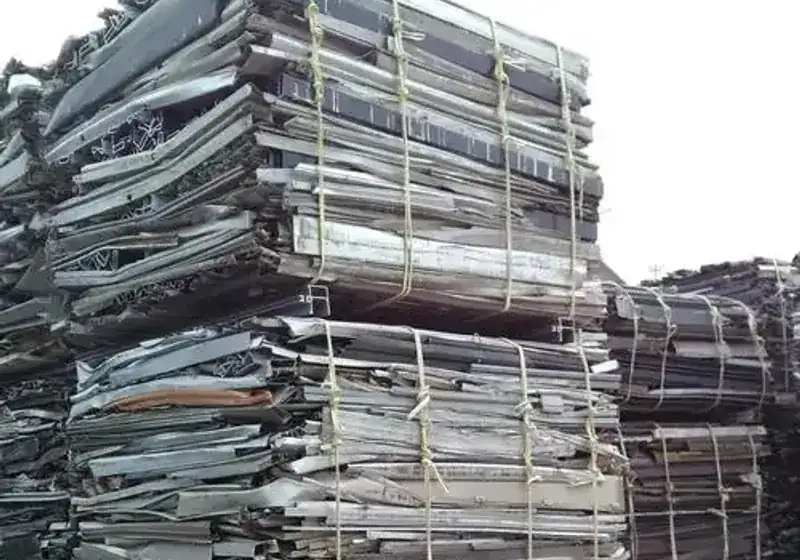
Result 2: stacked aluminium profile bales prepared for subsequent handling.
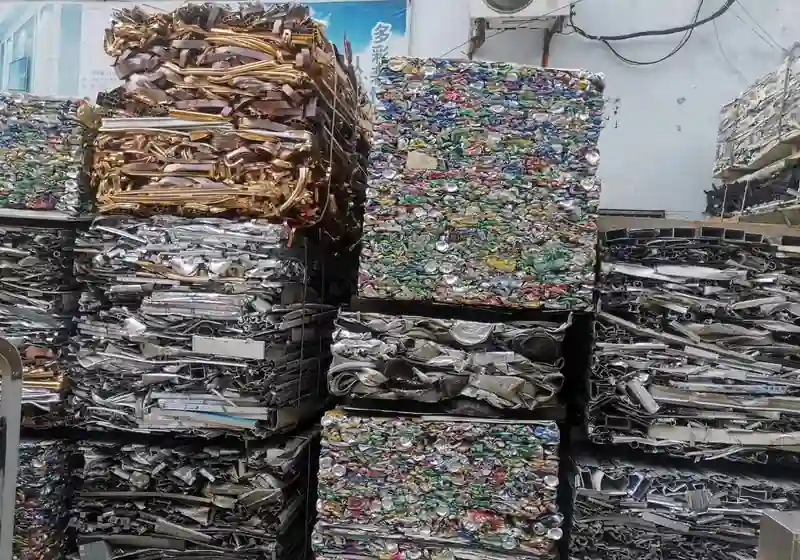
Result 3: examples of separately baled profile material and beverage cans.
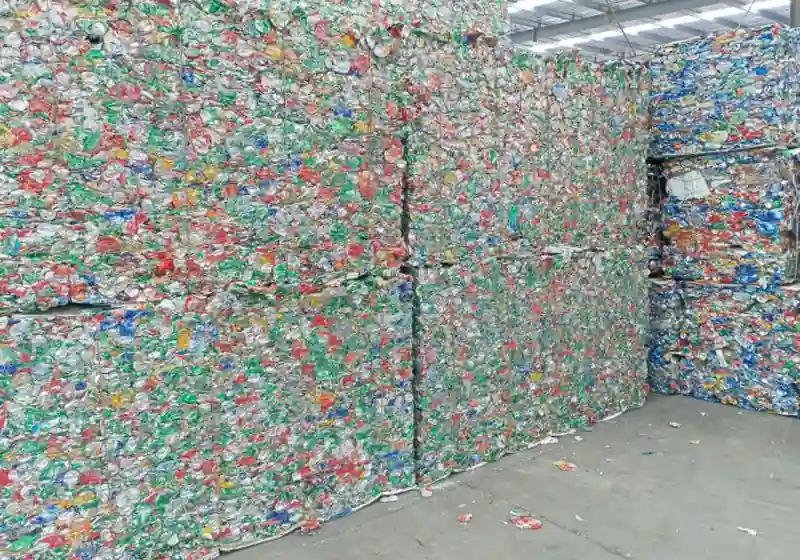
Result 4: compressed aluminium can bales arranged in a storage area.
Storage, Handling And Shipment Planning
Converting loose material into defined packages provides a basis for more orderly inventory, weighing and loading. The practical benefit depends on the package dimensions, handling equipment and the receiving recycler's requirements. Storage layouts must account for stable stacking and access; vehicle loading must consider both the available space and permitted payload. No fixed storage reduction or freight-saving percentage is claimed for this project because those measurements were not supplied.
For a similar installation, specify the material grades, maximum incoming dimensions, daily quantity, required processing hours, acceptable bale dimensions and weight, available power, loading equipment and discharge space. DILOYA can then assess the appropriate vertical configuration rather than selecting a machine solely from the desired bale weight.
Project FAQ
Can One Machine Cover Aluminium Profiles, Stainless Steel And Cans?
This customer's stated application covers those three material groups. Each feed still requires a suitability check against the selected machine and should remain separated where material quality requires it. This is not a claim that all sizes or grades can be loaded without preparation.
Does Every Bale Weigh 1,500 kg?
No. The reported project range is 600–1,500 kg per bale. Individual results depend on the material and package conditions; no material-by-material weight breakdown was provided.
What Is The Main Difference From A Heavy-Duty Horizontal Scrap Baler?
This project uses an upright pressing and tying arrangement. A double-main-cylinder horizontal machine follows a different compression and handling layout. See the separate Heavy-Duty Double Main Cylinder Metal Baler In Poland case for a ferrous-scrap application, rather than assuming the two projects share the same bale or output specification.