A Colombian customer selected a high-output three-ram, big-hopper shear baler to compact empty aluminium beverage cans. The machine uses three hydraulic cylinders to compress material from three directions, together with a large loading hopper and compression chamber. The reported project figures are up to 90 bales per hour and up to 4,000 kg per hour, with PLC automatic control and remote control.
Colombia UBC Baling Project At A Glance
Customer location: Colombia.
Feed material: empty aluminium beverage cans, also known as used beverage cans (UBC).
Equipment configuration: high-output three-ram big-hopper shear baler.
Compression arrangement: three hydraulic cylinders acting in three directions.
Loading and compression: large feeding hopper and large compression chamber, with bale formation within one configured machine cycle.
Controls: PLC automatic control and remote control.
Reported bale production: up to 90 bales/hour.
Reported mass throughput: up to 4,000 kg/hour, equivalent to 4 tonnes/hour.
These figures describe the supplied customer application. A machine force rating, motor power, chamber dimensions, finished bale dimensions, bale weight and bale density have not been provided. None of those specifications is inferred from the equipment photographs or from the two maximum production figures.
Material Requirement: Empty Aluminium Beverage Cans
The feed for this installation is empty aluminium beverage cans. Loose cans occupy substantial handling space relative to their mass, and a baling line needs to coordinate collection, material preparation, feeding and finished-package removal. The aim is to turn the prepared can stream into defined packages suitable for the customer's subsequent recycling workflow.
The incoming feed should match the agreed specification for the selected machine. Aluminium cans should be distinguished from steel cans and unrelated scrap where separate grades are required. Residual liquids, unsuitable containers and contamination need to be addressed through the approved preparation process. A can baler is not a method for accepting unidentified sealed or pressurized containers. The Aluminium UBC application page provides related material context.
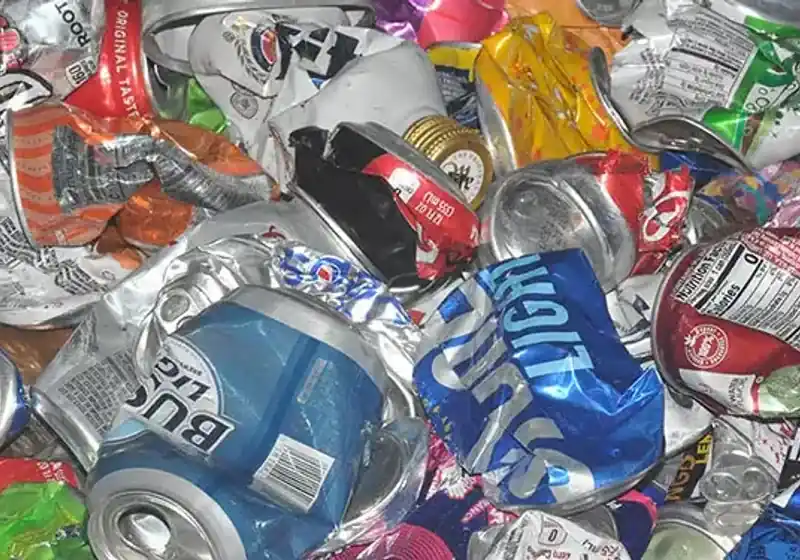
Feedstock example: empty aluminium beverage cans prepared for the UBC baling application.
Three-Direction Compression With Three Hydraulic Rams
The customer's selected design uses three hydraulic cylinders to apply compression in three directions. The configured sequence consolidates the can feed and forms the finished bale within the machine, rather than requiring transfer to a separate press for another forming stage. In this case, “one-cycle forming” describes completion within the configured baling sequence; it does not mean every ram moves in a single simultaneous stroke.
This equipment family is represented by the Three Rams Shear Baler. The compression sequence, feeding limits and discharge conditions need to follow the documentation for the actual supplied configuration. The presence of “shear baler” in the equipment name should not be used to imply an unspecified capacity for cutting heavy steel, reinforcing bars or other materials outside this empty-can application.
Large Hopper And Compression Chamber
A large loading hopper provides a receiving space for the prepared can feed before compression. The large compression chamber accommodates the material charge used by the configured baling cycle. Together, these features connect upstream material delivery with the machine's internal forming sequence.
Hopper and chamber size alone do not establish useful hourly production. The actual incoming bulk volume, consistency of feeding and removal of completed bales all affect the working rhythm. When specifying a similar installation, confirm the required hopper interface and material supply method. No particular automatic conveyor-feeding arrangement is claimed here solely from the fact that the machine has a large hopper.
The Hopper Type Shear Baler page provides further equipment context. A project comparison should use the actual can feed and complete handling layout, not just the visual size of the loading opening.
PLC Automatic Control And Remote Control
The supplied machine has PLC automatic control and remote control. The PLC coordinates the configured compression and discharge sequence, while the remote provides the functions authorized for the designated operating position. Automatic sequencing is intended to make repeated baling operations consistent within the supplied control arrangement.
Neither automatic control nor a remote handset removes the need for supervision, guarding and controlled access to the loading and discharge areas. Operating modes, interlocks, permitted commands and restart procedures must follow the supplied machine documentation. No unattended-operation capability, internet connection or remote operating range has been assumed.
Up To 90 Bales Per Hour And 4,000 kg Per Hour
The two reported output figures measure different aspects of production. Up to 90 bales/hour is a count of completed packages over time; up to 4,000 kg/hour is the mass processed over time. A useful production record should identify the feed condition and measurement period for each result.
Because the supplied figures are maxima, they should not be divided to create a declared single-bale weight, nor should the bale-count maximum be converted into a guaranteed cycle time. The information supplied does not confirm that both maxima were measured simultaneously under identical conditions. For another application, assess representative cans over an agreed operating period, including the material-handling steps relevant to the requested output.
Finished Aluminium Can Bales And Discharge Handling
The supporting photographs show compressed can packages at the outlet and on a roller collection section. They illustrate the formed packages and discharge-side handling arrangement. The images do not establish a measured bale density, weight or external dimension.
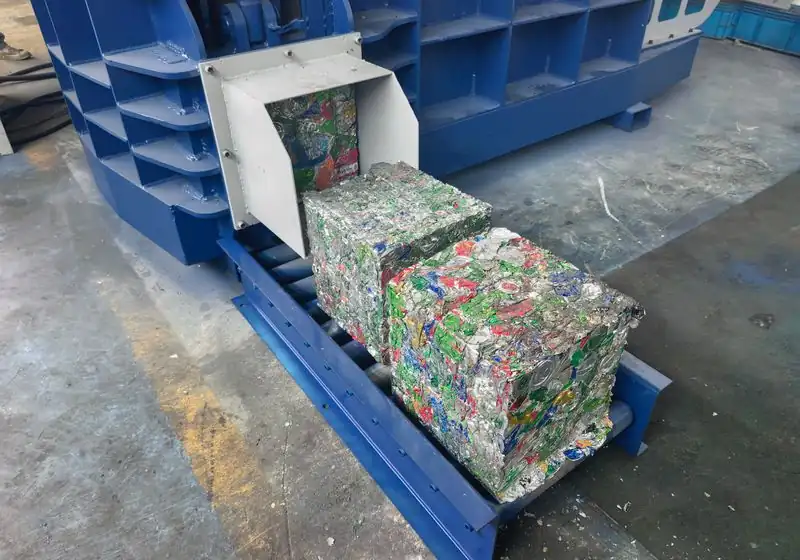
Finished packages: compressed aluminium cans presented on the roller collection section.
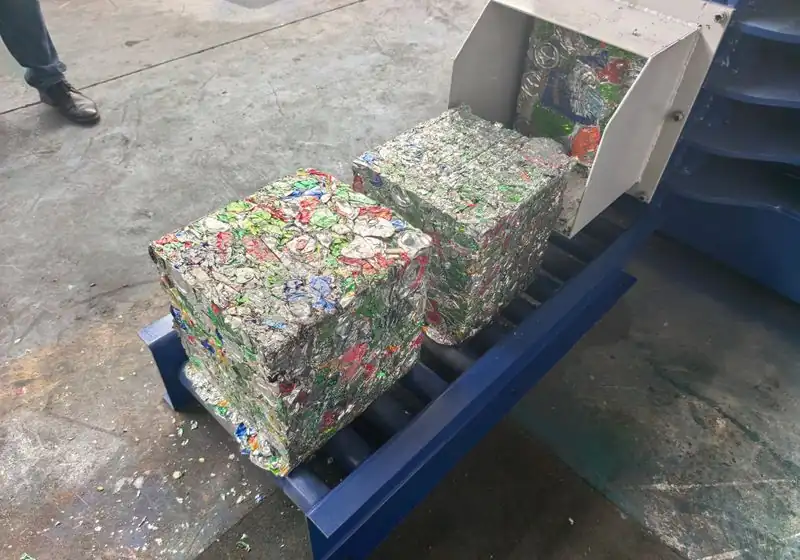
Discharge detail: formed UBC packages at the machine outlet.
Finished packages need a collection plan that keeps the discharge route clear and supports weighing, stock identification and onward handling. Actual storage and transport outcomes depend on package geometry, handling equipment and the receiving buyer's specification. No unsupported freight-saving percentage, storage-volume reduction or financial payback claim has been added.
Information Needed For A Similar UBC Baling Project
Provide photographs of the empty cans, the expected daily mass, the collection method, operating hours and contamination conditions. Include the receiving recycler's bale specification, available power and a layout showing feeding and finished-bale removal. These details help determine whether a three-ram big-hopper configuration is appropriate for the required operating flow.
The How To Match Material Size, Press Chamber Dimensions And Bale Requirements When Selecting A Metal Baler? article explains the related selection questions. For this Colombian project, the key reported combination is empty aluminium cans, three-direction compression, a large hopper and chamber, PLC automatic control and remote operation.
Customer Case FAQ
What Does “Three Rams” Mean In This Project?
The machine uses three hydraulic cylinders to compress the prepared can feed from three directions within the configured forming sequence. It is not a statement that the machine forms three bales simultaneously.
Are 90 Bales/Hour And 4,000 kg/Hour The Same Measurement?
No. One counts completed bales; the other measures processed mass. Both are reported maxima, and a verified individual bale weight or fixed cycle time cannot be established by combining them without matching production records.
Does Fully Automatic PLC Control Mean Unattended Feeding?
No. It describes the specified automatic control sequence. Feeding arrangements, supervision and authorized remote functions must be confirmed for the actual supplied installation.
