An Australian customer selected a waste tire baler with stated bale weights of 1,000–1,500 kg and production of 2–3 bales per hour. The machine compresses suitable waste tires into retained units, changing their handling form from loose individual tires into consolidated bales.
The project focuses on volume reduction and organized movement of waste-tire stock. Baling is a packaging and handling operation: it does not turn tires into rubber granules or replace a downstream recovery process.
Australia Customer Project Brief
Customer location: Australia.
Equipment: Waste Tire Baler.
Material: suitable waste tires assessed for the supplied chamber and machine configuration.
Stated bale weight: 1,000–1,500 kg.
Stated output: 2–3 bales per hour.
Handling objective: consolidate bulky tires into retained packages for organized storage and movement.
Why Compress Loose Tires?
Loose tires create an irregular stock form with substantial void space. Moving them individually also means repeating the same handling task many times. Compression brings an assessed charge together, and the specified retaining arrangement holds the finished bale after pressing.
A more regular bale can provide a clearer unit for counting, stock identification and dispatch planning. The actual volume reduction depends on the tire mix and the agreed package specification; no fixed compression ratio or freight-saving percentage was supplied.
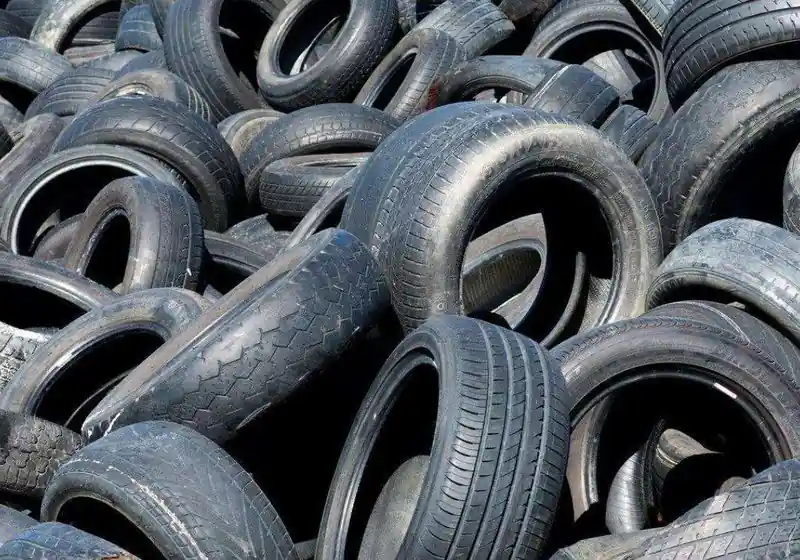
Waste-tire material example before baling.
Large Bale Weight, Controlled Handling
The supplied 1,000–1,500 kg range describes heavy bales intended for suitable mechanical handling. Each finished unit must be handled according to its actual weight, geometry and approved handling arrangement. Bale retention and stability are important parts of the package specification, not accessories to be selected from appearance alone.
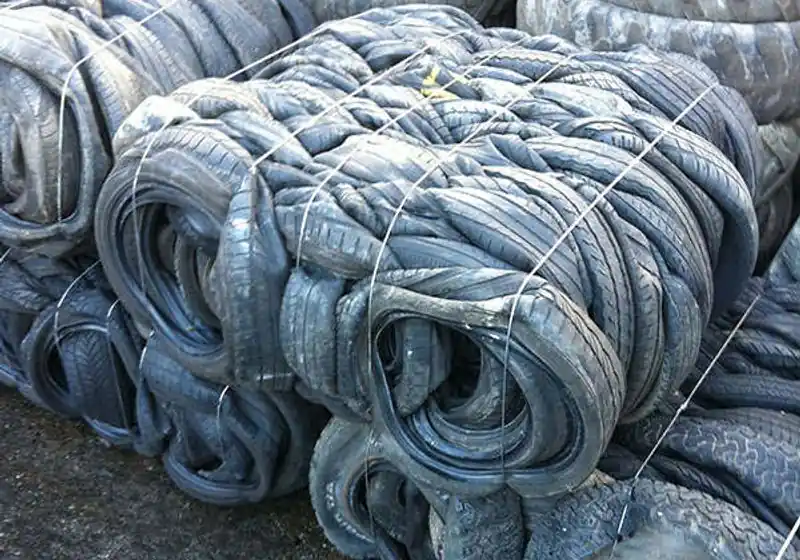
Example of tires consolidated into a retained bale.
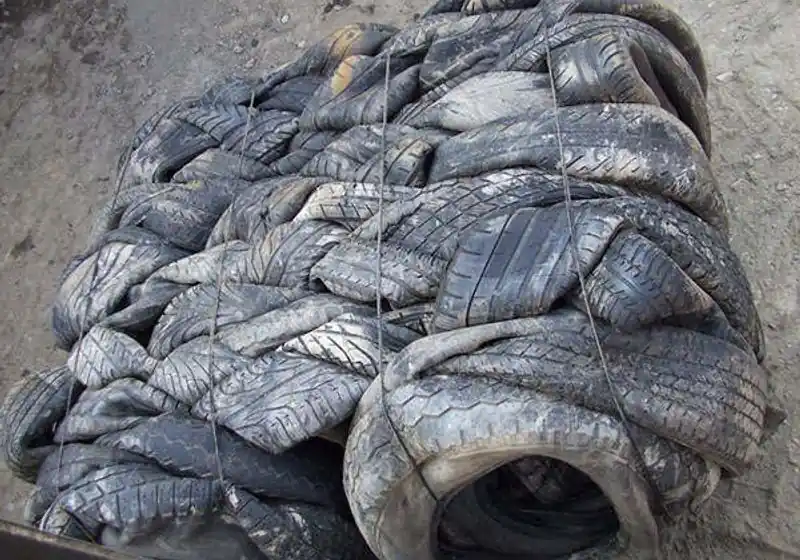
A second view of the compressed package form.
From Loading To Finished Bale
At a process level, suitable tires are selected for the agreed feed specification, loaded into the chamber and compressed. The bale is secured using the machine's approved retaining method, then released and removed following the supplied operating procedure. The process description is an overview, not instructions for operating or servicing the machine.
Tires can rebound after compression, so the retaining system and the complete release procedure need to match the actual machine and material. The supporting photos illustrate bale forms; they do not establish the tie specification, pressing force or operating sequence of this installation.
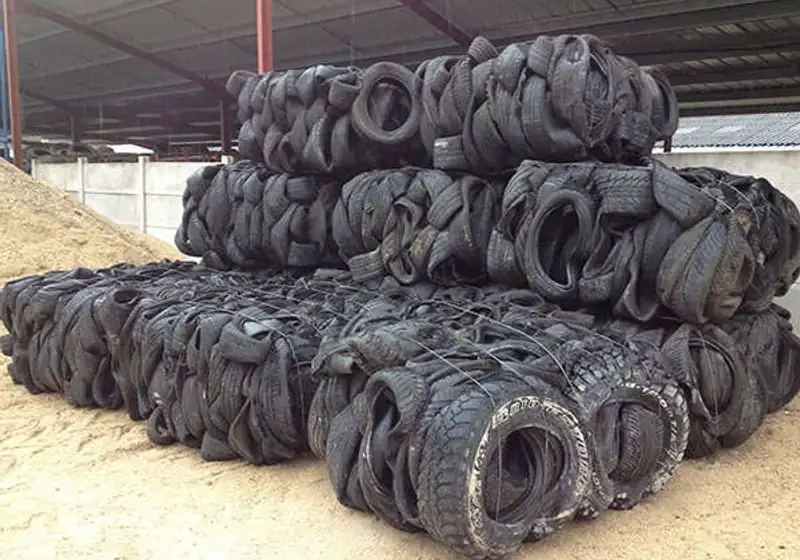
Grouped bale example; the image is not a recommended storage layout.
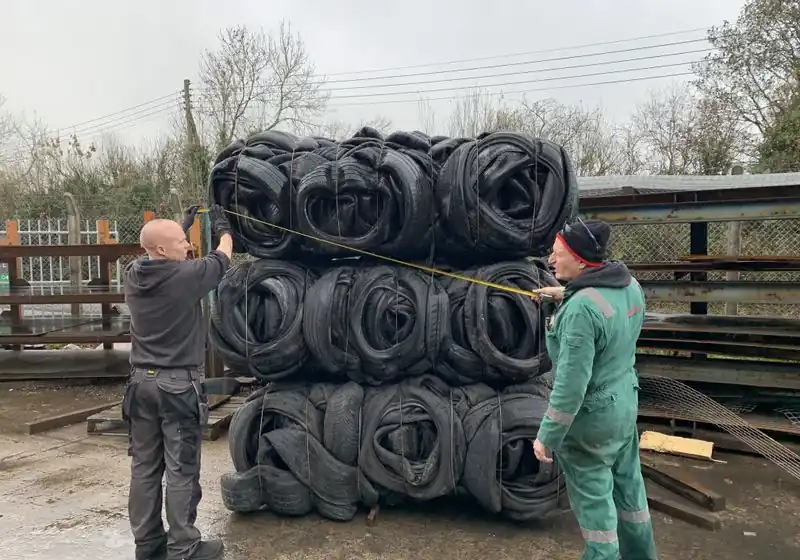
Bale-dimension checking example. No numerical dimensions are inferred from the tape in the photo.
Understanding The 2–3 Bales-Per-Hour Rate
The customer's stated rate is 2–3 bales per hour. Usable output includes loading, compression, retention and removal of each heavy bale. Tire size, feed consistency and the handling arrangement can influence the achieved production rate.
The upper bale weight and upper hourly bale count are separate supplied limits; they are not multiplied here into a guaranteed maximum mass throughput. An operating test should confirm the combination achieved with representative material.
Storage And Transport Planning
Consolidated bales can help organize the transfer from production to storage and dispatch. Their suitability for a particular vehicle, storage arrangement or receiving process must be checked separately. Baling does not, by itself, establish approval for a particular shipment or disposal route.
The provided brief does not specify bale dimensions, tire-size limits, a control-system type or automatic tying. These details should be confirmed before selecting a comparable machine. For a similar application, provide representative tires, intended bale weight and dimensions, expected operating hours and the available removal equipment.
Customer Case FAQ
What Bale Weight Was Supplied?
The stated range is 1,000–1,500 kg per bale, with the actual finished weight dependent on the charge and production specification.
How Many Bales Can The Machine Produce?
The supplied project rate is 2–3 bales per hour. The complete cycle and actual tire mix determine sustained output.
Is A Tire Baler The Same As A Shredder?
No. This case concerns compression into retained bales. Shredding or granulation is a separate process.
