An Estonian customer selected a Wood Shavings Animal Bedding Bagging Baler for compressing and packing light, bulky materials, including wood shavings and alfalfa hay. The project has a stated output of 200 bags per hour and uses fully automatic PLC control for the machine cycle. The application brings two related packaging needs together: wood shavings prepared for animal bedding, and suitable alfalfa hay prepared as forage.
Both materials occupy considerable space when loose. Compressing them into contained rectangular packages makes the product easier to organize, handle and distribute. The packaging machine changes the form of the material; the bedding or forage grade is determined by the material supplied to it.
Estonia Project Overview
Customer location: Estonia.
Equipment: Wood Shavings Animal Bedding Bagging Baler.
Materials: wood shavings, alfalfa hay and other suitable materials assessed for the selected configuration.
Applications: animal bedding and forage packaging, using separate appropriate material streams.
Stated production capacity: 200 bags per hour.
Machine control: fully automatic PLC control.
Turning Loose Wood Shavings Into Bedding Packages
The wood-shavings application starts with prepared bedding material. Loose flakes are fed to the packaging process, compressed into a more compact shape and transferred into the selected bagging arrangement. The contained product can then be closed, identified and moved to the finished-goods area.
For this customer, the objective is not a rigid metal bale or a briquette. It is a compact bagged product that keeps lightweight material together during handling. The supplied images illustrate loose shavings, clear-bag packages and printed bedding packs, showing the transition from bulk material to a packaged product.
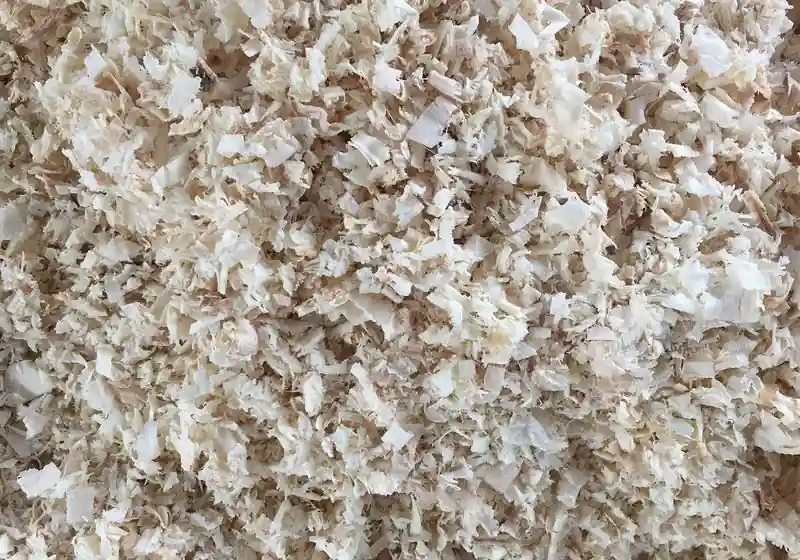
Wood shavings before compression: a lightweight, bulky material for the bedding-packaging application.
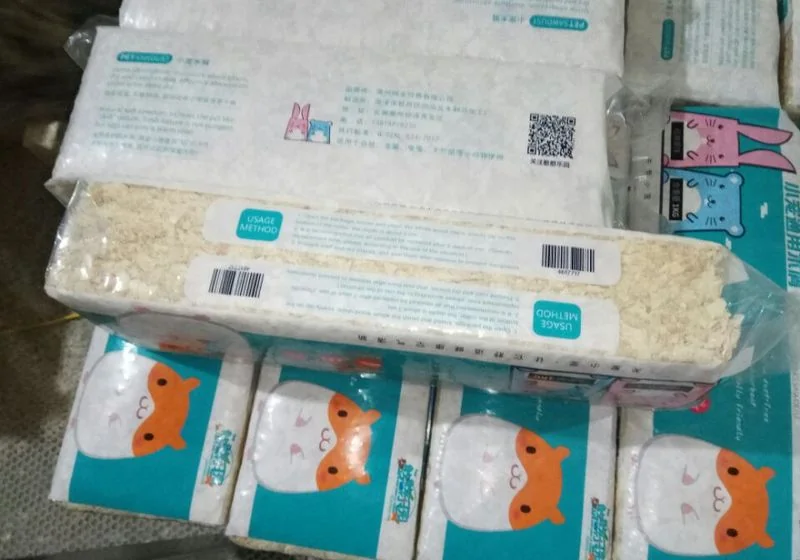
Printed bedding-package example supplied with the project.
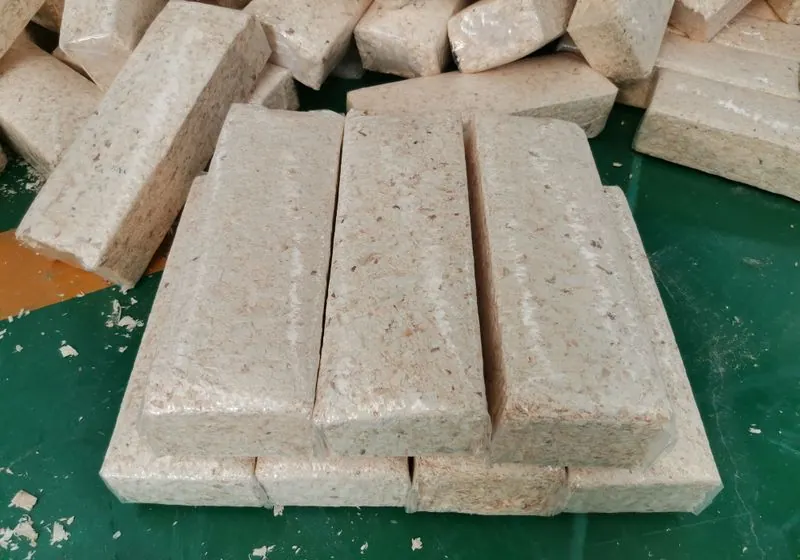
Clear bags show the compact rectangular form of the compressed shavings.
Alfalfa Hay: A Separate Forage-Packaging Application
The customer also identified alfalfa hay as a material for compression and bagging. Here the finished product is forage rather than wood-based bedding. The two newly supplied photographs show compressed alfalfa retained in clear bags, with the stems and leafy material visible through the packaging.
Wood shavings and alfalfa should therefore be described and labeled as different products, not a mixed feed material. Material preparation, package specification and production planning need to match each application. A setting suitable for one material is not automatically the correct setting for the other.
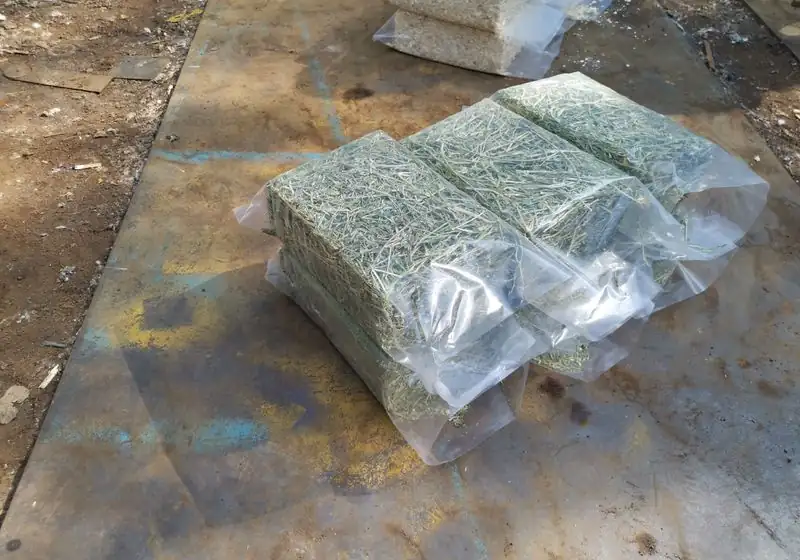
Alfalfa hay package example: forage material compressed and contained in bags.
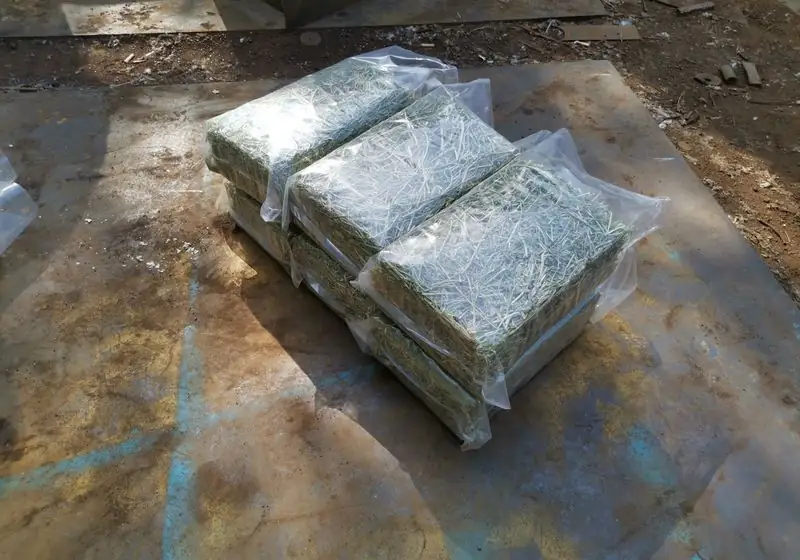
A second view of the supplied alfalfa hay packages; no package weight is inferred from the photograph.
PLC-Controlled Compression And Bagging Cycle
The machine uses fully automatic PLC control to coordinate its operating sequence. At a process level, the packaging workflow comprises prepared-material feeding, delivery to the compression chamber, compression, transfer into the bagging arrangement and return for the next cycle. The exact sequence and permitted adjustments follow the supplied machine configuration and operating instructions.
The main equipment photograph shows an inclined conveyor and the baler assembly. Steady material delivery helps keep the packaging stage supplied. PLC automation coordinates the machine cycle, while operators still oversee material supply, package quality and finished-product handling.
Fully automatic PLC control should not be read as confirmation of every possible downstream accessory. Automatic bag placement, sealing, labeling and palletizing have not been separately specified for this project. The complete line scope must identify which of these operations are included.
Understanding The 200-Bag-Per-Hour Figure
The stated project capacity is 200 bags per hour. Sustained output depends on the material being processed, the package specification, feed consistency and the time required for the configured packing and handling operations. The figure is not a claim that every material and every bag size will achieve the same rate.
No confirmed bale weight or package dimensions were supplied. Accordingly, the hourly bag count is not converted into kilograms per hour. Weight markings on the illustrated printed bags are examples of the photographed packaging, not a specification for all packages produced by the Estonian customer's machine.
Packaging For Storage And Dispatch
Compression reduces the loose volume of the material, while the bag contains the compressed product for subsequent handling. Rectangular packages can be arranged into orderly stacks and production batches. These are practical packaging advantages; no transport-cost reduction percentage or compression ratio has been supplied for this case.
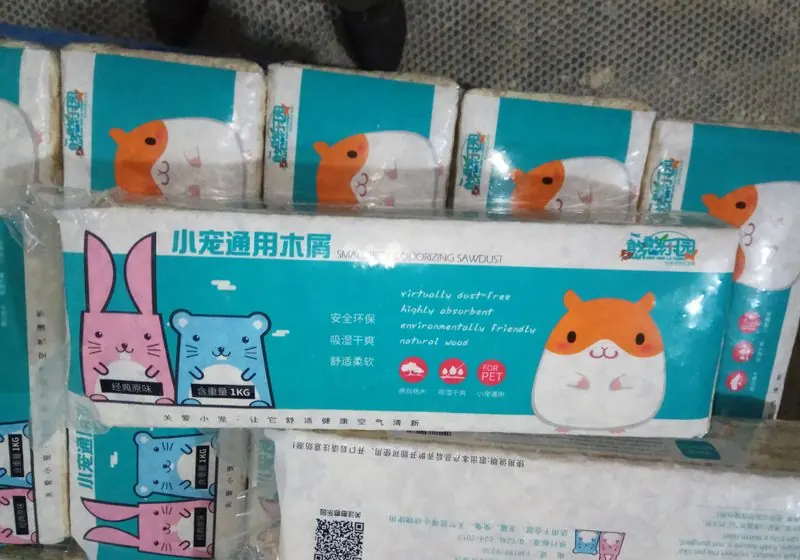
Printed packaging example; label claims are not machine performance specifications.
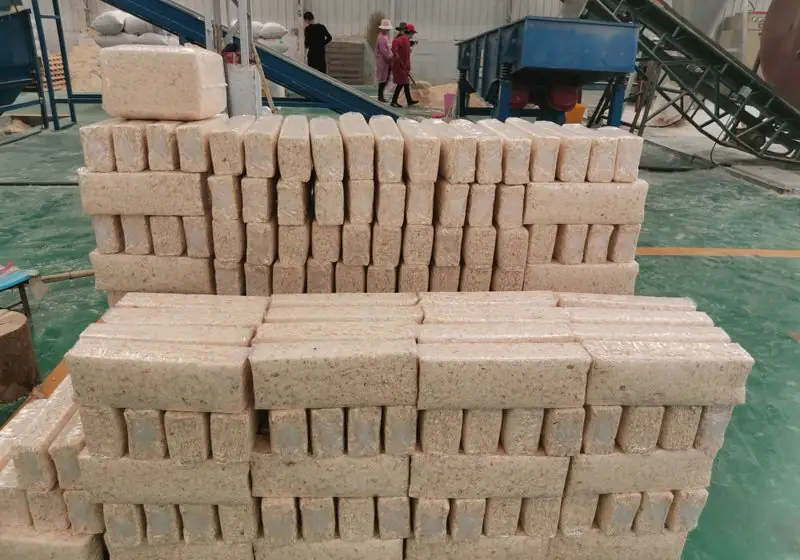
Finished wood-shavings package examples arranged for handling and storage.
One Packaging Concept, Material-Specific Preparation
This Estonian project focuses on automated packaging of bulky bedding and forage materials. Its value lies in coordinating material feeding and compression with the bagged-product format, rather than simply applying pressure to loose material.
For a similar installation, the essential starting points are representative material samples, target package weight and dimensions, bag requirements, expected hourly output and the desired scope of automation. Bedding and forage specifications should be assessed separately. Compression and bagging do not replace the upstream preparation needed for the intended end use.
Customer Case FAQ
What Materials Are Covered By This Project?
The customer identified wood shavings and alfalfa hay. Wood shavings are described here as bedding material, while alfalfa hay is described as forage. Other materials require assessment against the actual machine configuration.
What Is The Production Capacity?
The stated capacity is 200 bags per hour. The achievable sustained rate depends on the selected material, bag specification and complete feeding and packing arrangement.
Is The Baler Automatically Controlled?
Yes. The customer specified fully automatic PLC control for the machine cycle. The scope of separate bag-closing and downstream handling equipment should be confirmed independently.
Does The Case Specify A Fixed Bag Weight?
No fixed bag weight was provided. The photos illustrate packaging formats and must not be used to infer a universal weight, density or mass throughput for this installation.
