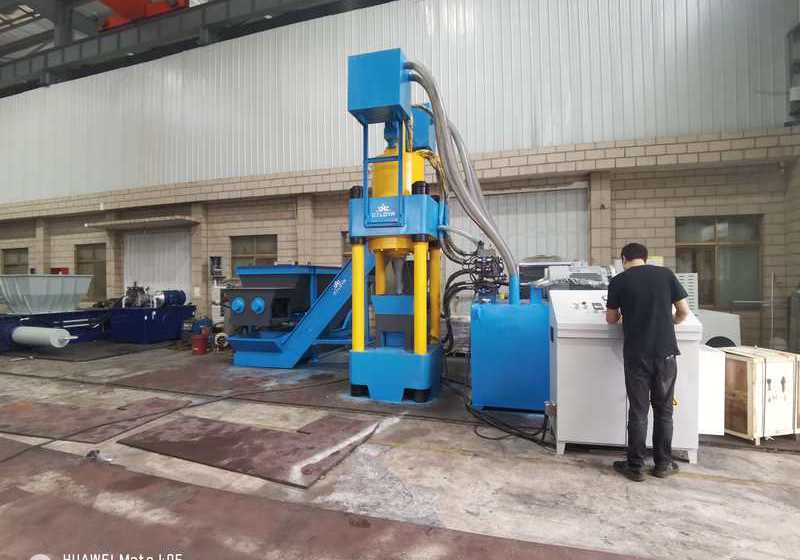
Vertical Briquetting Press
Vertical Hydraulic Briquetting Press for Metal Chips
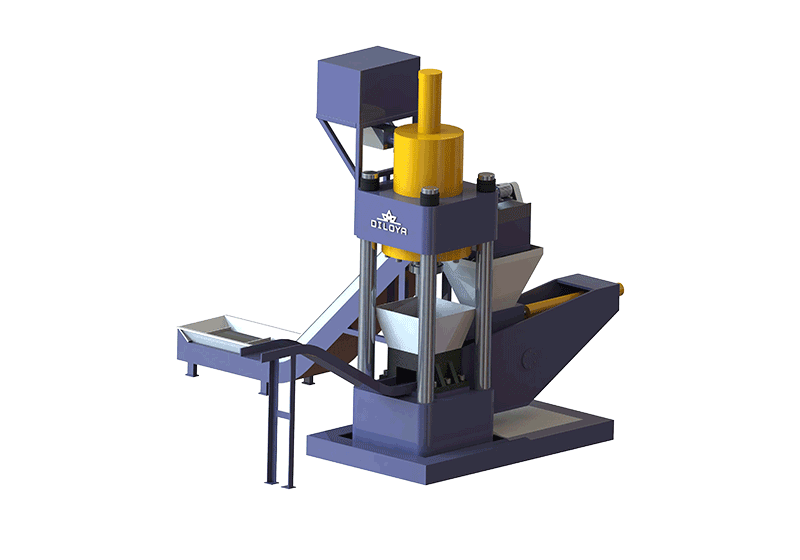
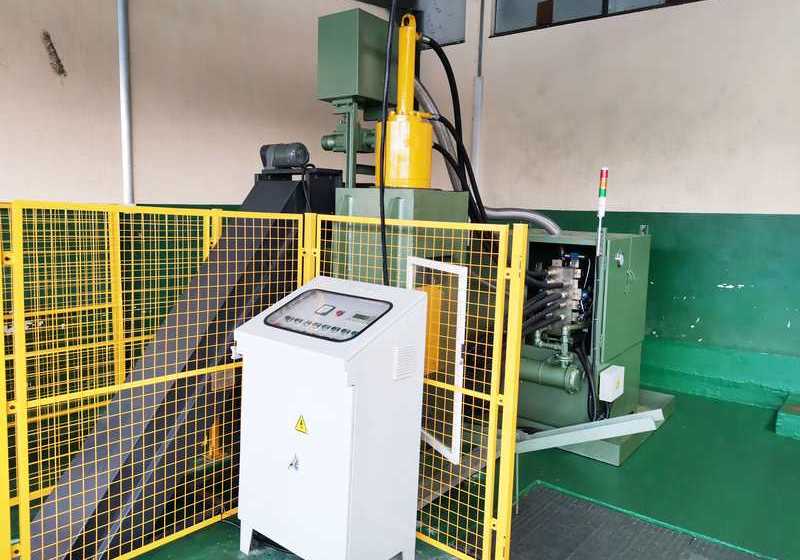
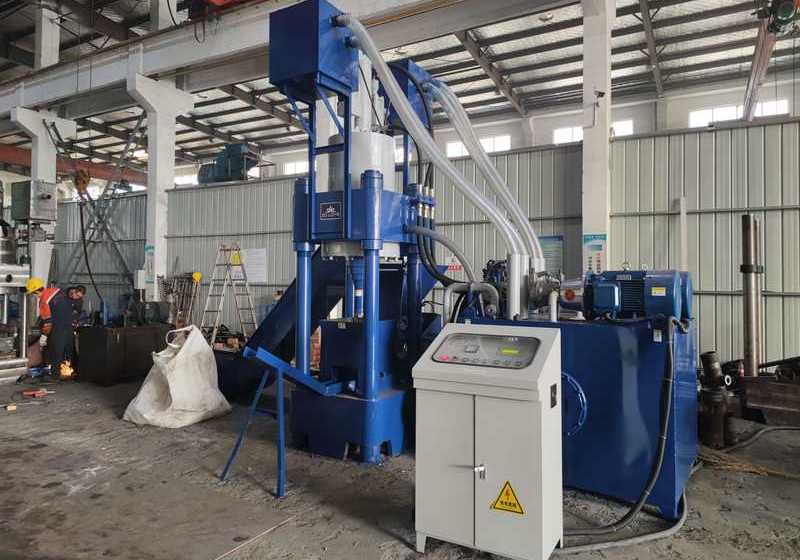
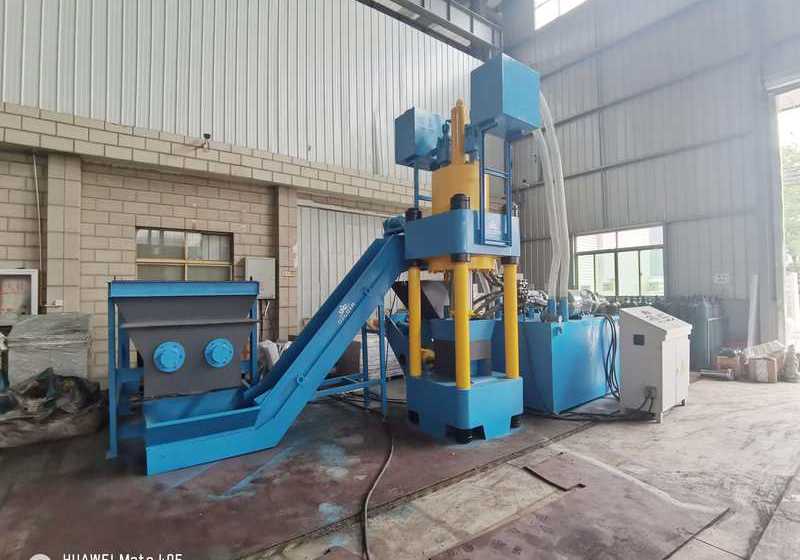
The DILOYA Vertical Briquetting Press uses a vertical hydraulic ram to cold-compress sorted aluminium, copper, brass, cast-iron and other suitable machining chips into dense briquettes. Its upright press layout supports organized chip recovery at workshops and recycling plants.
- Design
- Vertical Design
- Output Capacity
- 300-5000kg/Hour
- Pump Brand
- JiangSu HengYuan
- Control
- PLC/Manual Control
- Power supply
- Customized
- Motor Power
- 15-75kw
Description
The DILOYA Vertical Briquetting Press packages loose machining chips through top-down hydraulic compression. Its vertical ram applies force to material held in a forming chamber, producing compact briquettes without melting. The machine is designed for suitable, sorted non-ferrous and ferrous chips generated by CNC machining, drilling, milling and turning operations.
1> Vertical Pressing Cycle
Prepared chips are delivered to the chamber by the selected feeding method. The ram descends to compress the charge into a briquette, then retracts so the formed block can be discharged and the next charge can enter. Feeding, discharge and automation differ by model. A conveyor, chip breaker or fluid recovery system is optional unless specified in the equipment scope.
2> Feedstock and Results
Aluminium shavings, copper and brass chips, cast-iron chips and other compatible turnings may be processed when their size and condition suit the selected chamber. Long tangled strands may require cutting; mixed metals, hard foreign objects and excessive coolant should be controlled. Briquette density, hourly output and fluid expression depend on chip properties, press force and operating settings.
3> Planning the Installation
Selection should consider chip samples, target briquette dimensions, operating volume, available headroom, power supply, feed height, collection arrangement and service access. DILOYA can configure hydraulic force, chamber dimensions, controls and accessories accordingly. The vertical arrangement should be evaluated for the full installation footprint, not just the press base.
Advantage
> Vertical hydraulic force: top-down pressing forms repeatable briquettes from prepared chips.
> Cold process: compaction requires no melting stage.
> Upright machine arrangement: provides a distinct layout option where site floor plan and headroom permit.
> Multiple chip grades: suitable aluminium, copper, brass and ferrous materials can be handled in separate runs.
> Reduced storage volume: compressed blocks take less handling space than loose swarf.
> Better material control: regular output is simpler to count, weigh and move.
> Automation choices: feed and discharge equipment can be coordinated with press cycling.
> Configurable duty: force, chamber, controls and optional fluid collection can match the actual material.
Parameter
Please find below specification of different models:
| Model | BP150 | BP250 | BP360 | BP500 | BP630 |
|---|---|---|---|---|---|
| Briquette Size | Φ80x(50-70)mm | Φ100x(60-80)mm | Φ120x(70-90)mm | Φ140x(80-100)mm | Φ160x(90-110)mm |
| Briquette Weight | Steel: 1.1-1.6kg Copper/Brass: 1.5-2.1kg | Steel: 2.4-3.2kg Copper/Brass: 3.3-4.2kg | Steel: 4.1-5kg Copper/Brass: 5.4-6.8kg | Steel: 5.5-6.9kg Copper/Brass: 7.4-9.2kg | Steel: 8.1-9.9kg Copper/Brass: 11-13.6kg |
| Output Capacity | Steel: 0.2-0.3t/h Copper/Brass: 0.3-0.4th | Steel:0.7-0.9t/h Copper/Brass: 1-1.3/h | Steel: 1.2-1.5t/h Copper/Brass: 1.5-2t/h | Steel: 1.6-2t/h Copper/Brass: 2.2-2.6t/h | Steel: 2.5-3t/h Copper/Brass: 3.3-3.8t/h |
| Motor Power | 22kw | 18.5kw | 30kw | 2x22kw | 2x30kw |
| Cycle Time | 20s | 12s | 12s | 12s | 12s |
| Control | PLC Control | PLC Control | PLC Control | PLC Control | PLC Control |
| Cooling System | Oil Chiller/Fan Cooling | Oil Chiller/Fan Cooling | Oil Chiller/Fan Cooling | Oil Chiller/Fan Cooling | Oil Chiller/Fan Cooling |
| Main Cylinder | 1500kn | 2500kn | 3600kn | 5000kn | 6300kn |
| Speed Cylinder | 200kn | 300kn | 300kn | 300kn | |
| Feed Cylinder | 80kn | 80kn | 100kn | 120kn | 150kn |
| Push Cylinder | 200kn | 200kn | 230kn | 300kn | 500kn |
We can customize the baler machine according to your special requirements.
Application
The DILOYA BP Series vertical briqeutting press can process below materials:
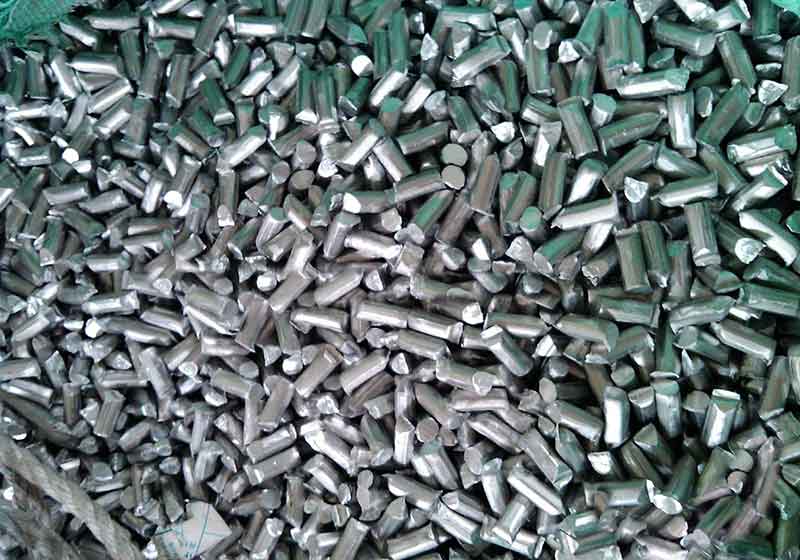
Aluminium Granules
Aluminium granules are small, flowable particles produced by shredding, screening or size reduction. DILOYA aluminium granule briquetting machines compress this loose material into dense, consistent cylindrical blocks for cleaner handling, compact storage, economical transport and controlled furnace feeding.
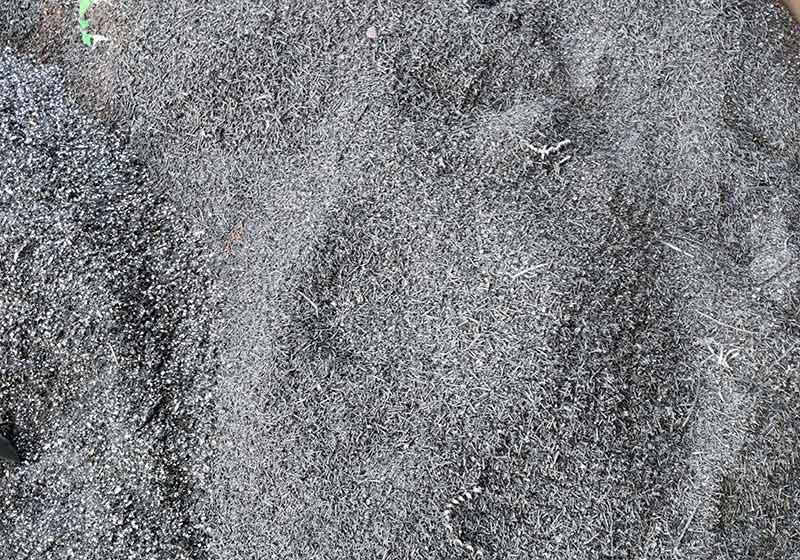
Cast Iron Chips
Cast iron chips are fine, brittle machining residues that are abrasive, dusty and difficult to store or charge in loose form. DILOYA hydraulic briquetting presses compress grey-iron and ductile-iron swarf into dense cylindrical briquettes while recovering part of the retained cutting fluid for cleaner handling, efficient transport and controlled foundry feeding. This application is intended for briquetting only.
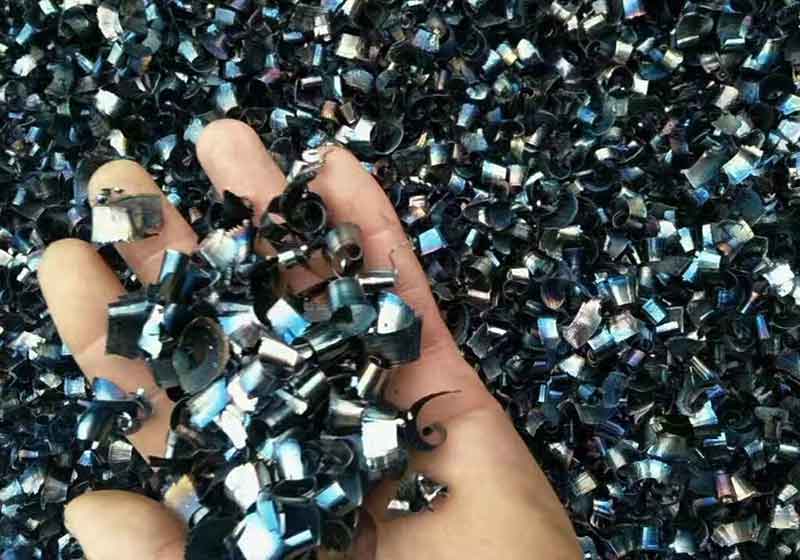
Steel Chips
Steel chips from turning, milling, drilling and sawing are loose, oily and difficult to handle efficiently. DILOYA hydraulic briquetting presses compress carbon-steel, cast-iron and alloy-steel swarf into dense cylindrical briquettes, recovering part of the retained cutting fluid while improving storage, transport and furnace feeding. This application is intended for briquetting only.
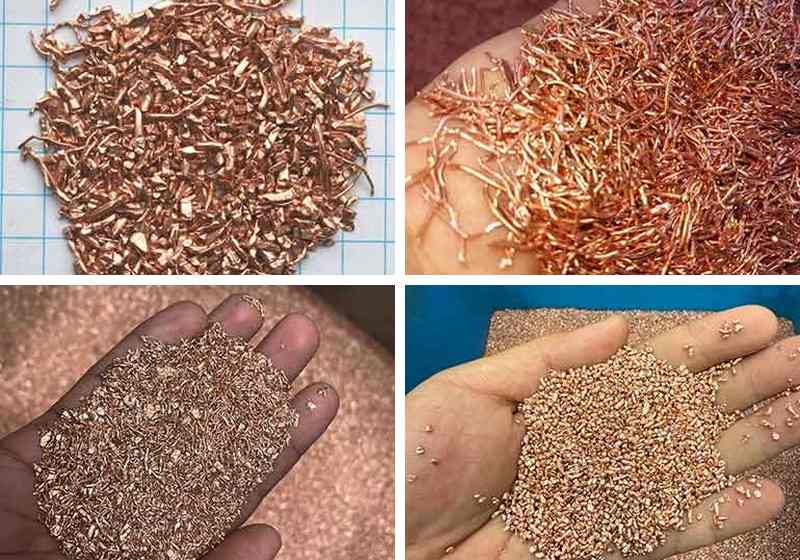
Copper Granules
Copper granules recovered from cable processing and wire chopping are valuable but easy to spill, oxidize and lose during handling. DILOYA hydraulic briquetting presses compact clean copper particles into dense binder-free cylinders for secure storage, efficient shipment, accurate weighing and controlled furnace charging. This Copper&Brass Scrap application is intended for briquetting only.
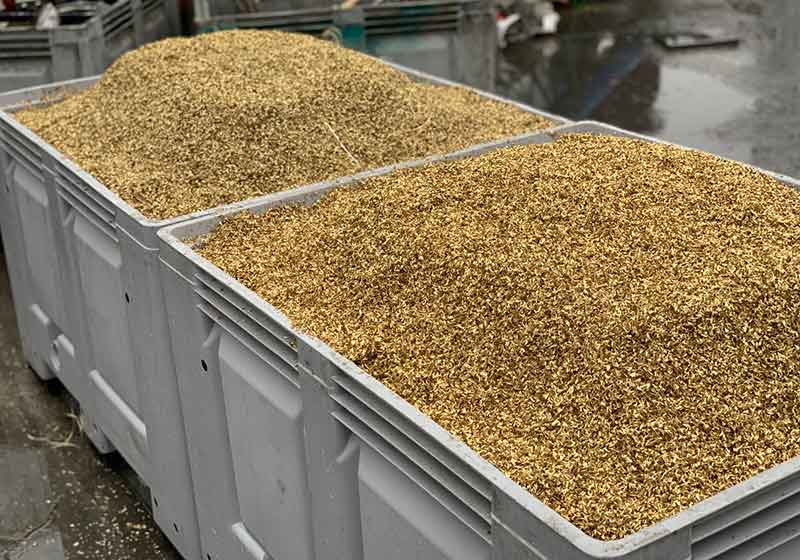
Brass Chips
Brass chips from machining valves, fittings and alloy components are loose, oily and difficult to transport efficiently. DILOYA hydraulic briquetting presses compress sorted brass swarf into dense binder-free cylinders, recovering part of the retained cutting fluid while improving grade control, storage, shipment and furnace charging. This Copper&Brass Scrap application is intended for briquetting only.
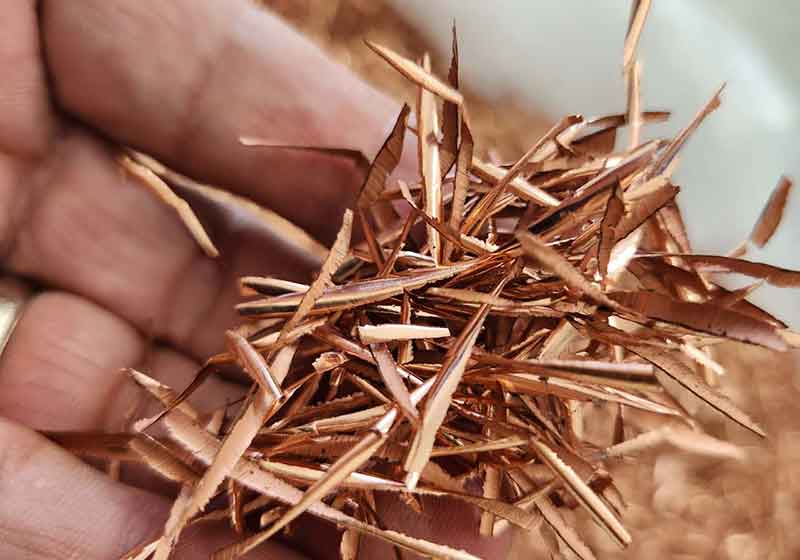
Copper Chips
Copper chips from turning, milling and drilling are valuable but bulky, oily and easy to lose during handling. DILOYA hydraulic briquetting presses compact separated copper machining chips into dense binder-free cylinders while recovering part of the retained fluid for efficient storage, shipment and remelting. This Copper&Brass Scrap application is intended for briquetting only.
FAQ
Which metals can be considered for briquetting?+
Assess the alloy and the chip form together. Aluminium curls, copper granules and cast-iron chips are all metallic feed, but can differ in filling behaviour and pressing duty. Copper Cloves Briquetting Solutions illustrates one copper project; its reported density cannot be transferred to other alloys or interpreted as a universal press specification.
Provide alloy, chip size, bulk density and fluid condition. Hardness, spring-back and contamination affect the required preparation and pressing duty. Separate assessments may be needed when changing between substantially different materials.
What is different about briquetting granules and short free-flowing chips?+
Short free-flowing chips can simplify presentation, but they do not remove the need to match the hopper and pressing duty. Density, hardness and fluid condition still differ between granular metals. Short Metal Chips Briquetting Solution provides a relevant process reference; confirm the actual stream instead of assuming every granular feed needs identical equipment.
Match hopper geometry, screw feeding and pressing duty to the actual material. A line that performs well with one granular feed may require changes for another. Confirm acceptable fines and contaminants before selection.
How are briquette diameter and dimensions chosen?+
Choose briquette dimensions from the receiver's handling and process requirements, then confirm that the feed and press can achieve them consistently. Diameter alone does not describe a package: length, mass, strength and retained fluid may also matter. An attractive sample size is not enough if it does not suit the customer's actual collection and charging route.
A larger briquette is not automatically better or heavier across different alloys. Confirm the useful dimensions after discharge and any permitted variation. Tooling choices and changeover requirements should be defined before ordering rather than assumed universally interchangeable.
Why do briquette density and strength vary?+
Briquette density and handling strength are related but distinct results. A dense unit may still have unacceptable edges or break during transfer, while different alloys need separate assessment. Record both dimensions and mass at a defined stage and test the handling that matters; do not transfer a maximum density from another material.
Assess what the receiving process actually needs: manageable handling, density, dimensional stability or another property. Trials should measure the finished product under agreed conditions. Do not assume a catalogue density or an attractive sample proves the result for every production stream.
Which parts influence briquetting wear and maintenance?+
Briquetting maintenance depends on the tooling, guides, hydraulic system and the abrasiveness and consistency of the feed. A change in product quality can reflect material variation as well as wear. How to Maintain an Aluminium Chips Briquetting Machine? explains a preventive approach: preserve operating records and investigate before compensating with unauthorised settings.
Use the model-specific maintenance and spare-parts instructions. Unexpected wear can indicate unsuitable feed or a technical issue rather than a need for unauthorised pressure changes. Plan approved replacements and record their condition to support reliable operation.
Related products
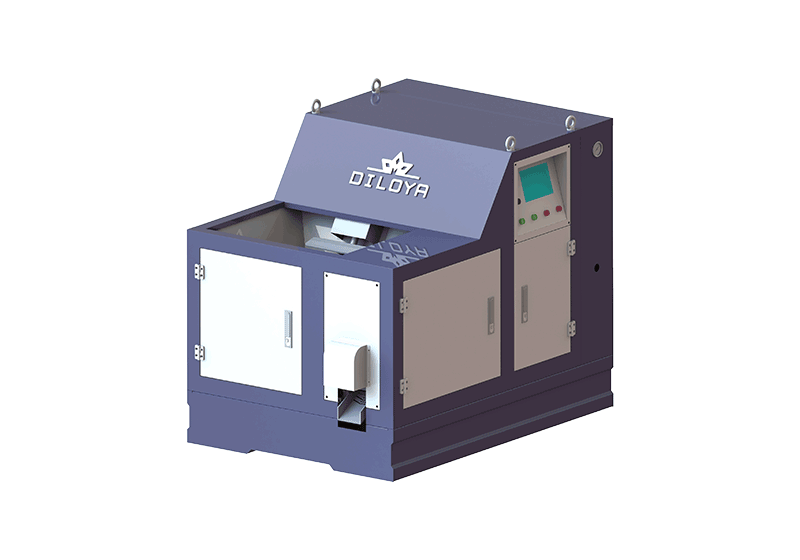
Small Briquetting Press
The DILOYA Small Briquetting Press cold-compresses loose metal chips into compact briquettes without melting. Designed for machining centers and workshops, it can process suitable aluminium, copper, brass and iron chips while occupying relatively little floor space and using a power system sized for small-scale chip recovery.
View details +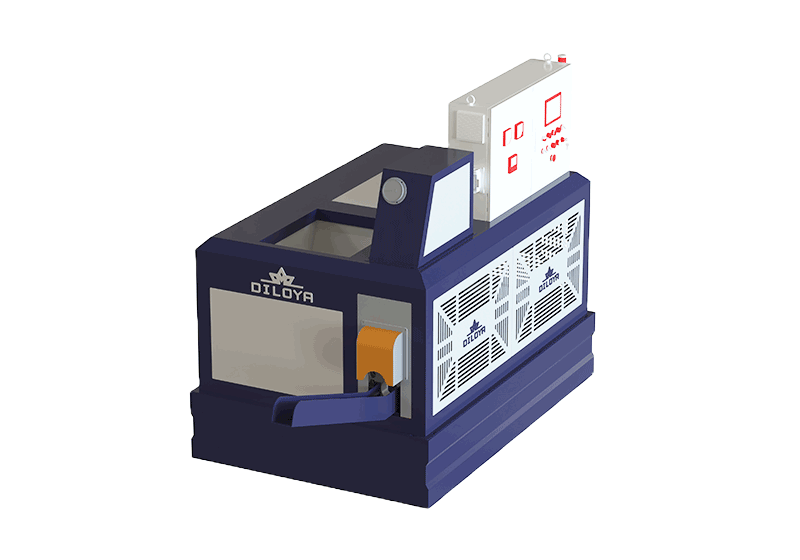
Integrated Briquetting Press
The DILOYA Integrated Briquetting Press combines chip feeding, hydraulic compaction, briquette discharge and coordinated controls in one metal-chip recovery system. It turns sorted aluminium, copper, brass, cast-iron and other suitable machining chips into compact briquettes for easier handling and recycling.
View details +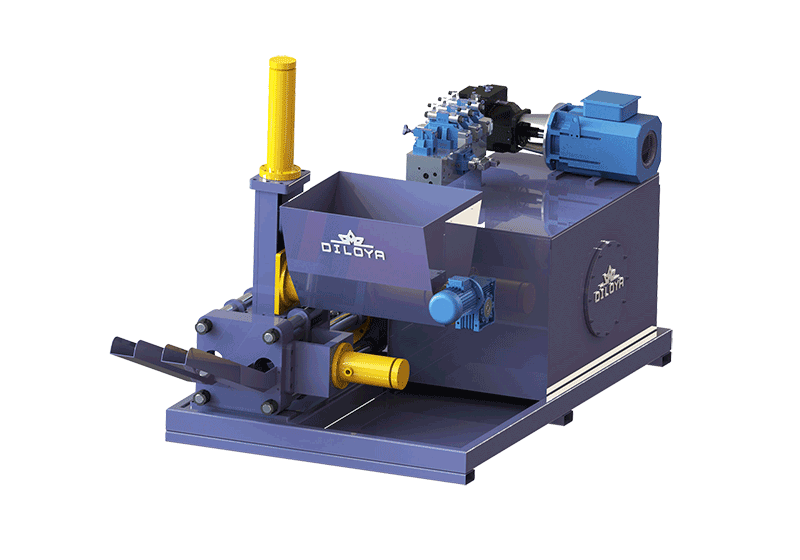
Double Outlet Briquetting Press
The DILOYA Double Outlet Briquetting Press cold-compresses suitable metal chips into dense briquettes and uses two discharge outlets to support a planned collection flow. It is configured for recycling operations that need steady feeding and efficient removal of finished blocks.
View details +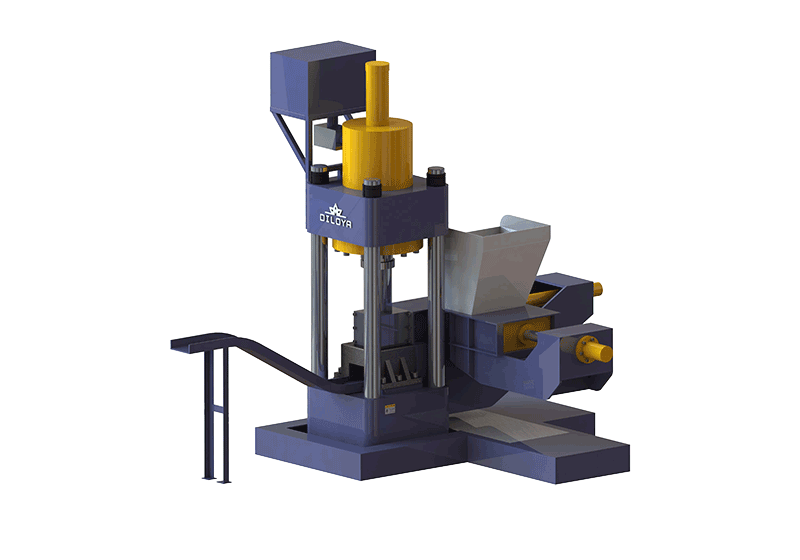
Vertical Pre-Press Briquette Press
The DILOYA Vertical Pre-Press Briquette Press adds a pre-compression stage before final vertical hydraulic pressing. It is designed to control bulky or springy, prepared metal chips and form consistent briquettes for handling and recycling.
View details +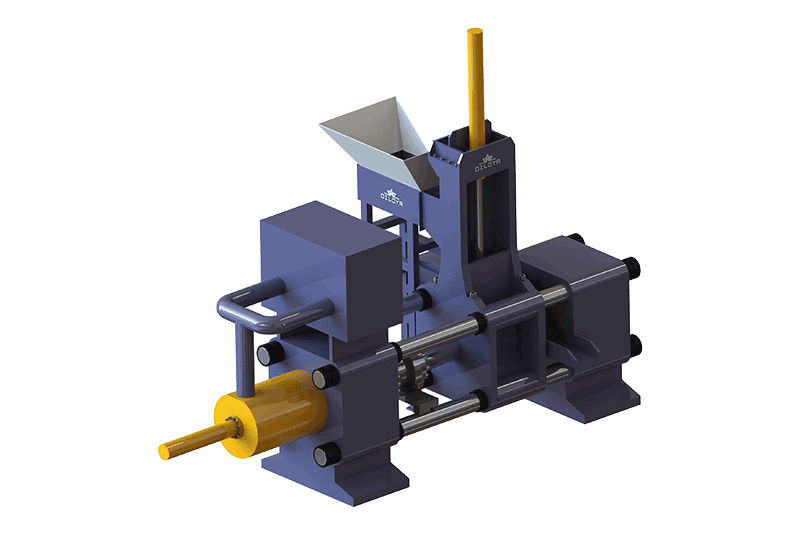
Horizontal Briquetting Press
The DILOYA Horizontal Briquetting Press uses horizontal hydraulic compression to turn sorted machining chips and swarf into dense, manageable briquettes. It can be configured with controlled feeding, discharge and optional chip preparation for metalworking or recycling lines.
View details +Customer Cases
View all cases + Copper Cloves Briquetting Solutions
An Indian copper cloves briquetting project with a reported capacity of 2,000–2,500 kg/hour and briquette density up to 7.8 ton/m³ for organised handling, storage and recycling.
View case + Double Outlet Aluminium Chip Briquetting Press In Greece
A Greek customer requires 600–800 kg/hour aluminium chip processing. The recommended double-outlet press uses PLC automation, with a stated rate of 5–6 briquettes/minute.
View case + Big Output Horizontal Briquetting Line
A Russian iron chip briquetting project with a reported output of 4,000–6,000 kg/hour and briquette density of 5,000 kg/m³, supporting organised handling, storage and recycling.
View case +Leave A Message
Let's Figure Out The Best Solutions!
Tell us what you need.
Share your material, target hour capacity and other requirements. Our engineering team will reply with a suitable solutions.