Vertical Gantry Shear
Vertical Gantry Shear for Mixed Steel Scrap
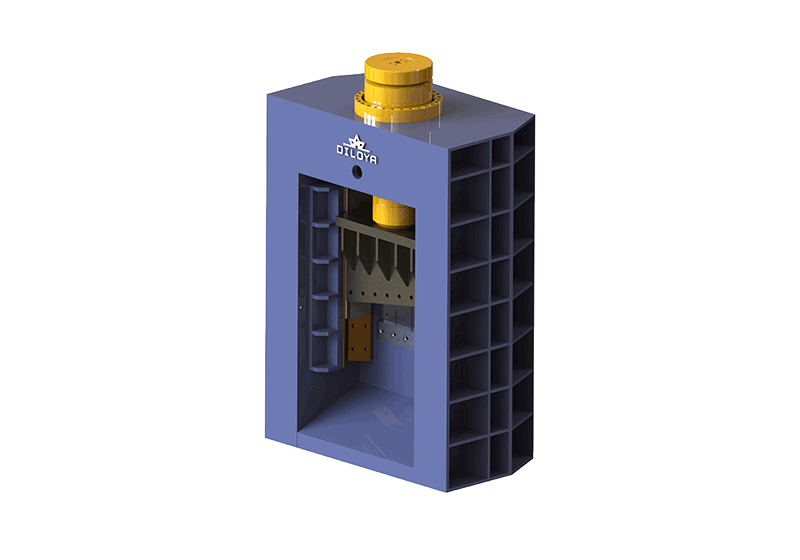
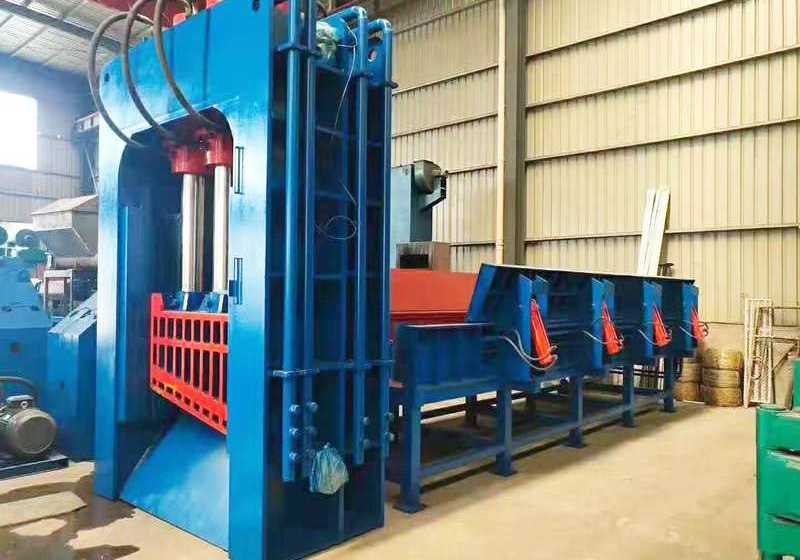
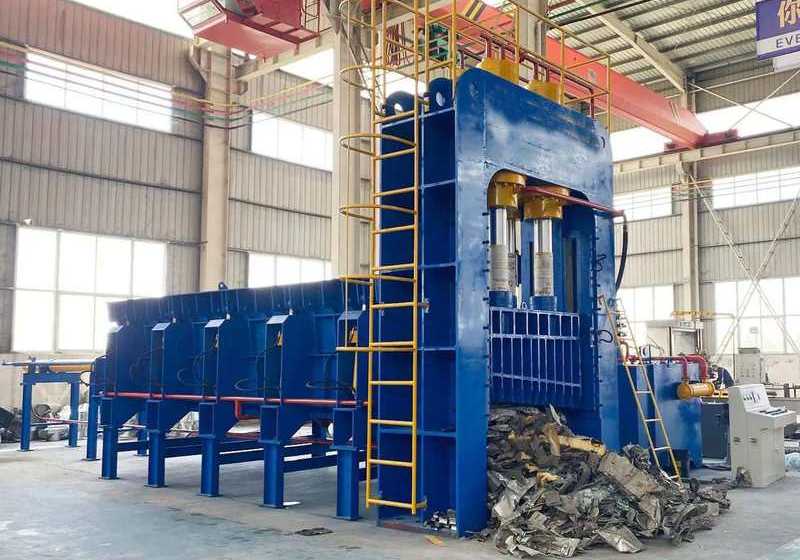
The DILOYA Vertical Gantry Shear applies a vertically moving hydraulic blade within a gantry-style structure to cut a broad range of compatible steel scrap. Designed for demanding recycling-yard duty, it combines a large feed opening with high-capacity cutting potential. The selected model, material section and operating cycle determine achievable production output.
- Design
- Vertical Type
- Productivity
- 3-20tons/Hour
- Control
- PLC Automatic Control
- Motor Power
- 22-275kw
- Brand Name
- DILOYA
- Pump Brand
- JiangSu HengYuan
Description
The DILOYA Vertical Gantry Shear cuts metal scrap with a hydraulic blade that travels vertically through a gantry-supported cutting zone. Its open working arrangement can accommodate a wide range of appropriately sized steel pieces, making it a choice for recyclers handling varied feedstock rather than one uniform offcut stream. The press, hold-down and feed arrangement differ by model.
1> Vertical Cutting Sequence
A grab or other handling system loads sorted scrap into the feed area. The material is positioned and restrained as specified, then the blade descends to make the cut before returning for the next stroke. Cut pieces are discharged for further sorting, loading or furnace preparation. Material must remain within the rated opening, cross-section and cutting-force envelope.
2> Range and Production
Potential materials include steel plate, profiles, pipes, bars and other structural or demolition offcuts after hazardous items and inappropriate attachments have been removed. A broad cutting range does not mean every thickness or alloy can be processed. Throughput depends on feed geometry, handling speed, cut length, stroke time and operator workflow; DILOYA should confirm a realistic duty cycle from representative samples.
3> Design for the Yard
Model selection should cover gantry opening, blade width, hydraulic force, foundation, cooling, controls, loading access and discharge route. DILOYA can configure the system around the customer's scrap mix, target output and available site area while maintaining safe access for blade service and inspection.
Advantage
> Vertical blade travel: provides a direct cutting action through the supported gantry zone.
> Broad feed capability: appropriately sized plate, profiles, pipe and structural scrap can be assessed.
> High-capacity potential: the machine can be configured for demanding yard production schedules.
> Large loading area: supports grab-fed handling of varied scrap shapes.
> Controlled work zone: hold-down, feed and discharge can be arranged around the selected model.
> Project-specific specification: opening, blade force, hydraulic power and foundation are engineered from actual materials.
Parameter
Please find below specification of different models:
| Model | LMS125 | LMS160 | LMS200 | LMS315 | LMS400 | LMS500 |
|---|---|---|---|---|---|---|
| Blade Length | 800mm | 800mm | 1000mm | 1200mm | 1400mm | 1600mm |
| Max. Shear Froce | 1250kn | 1600kn | 2000kn | 3150kn | 4000kn | 5000kn |
| Press Force | 630kn | 800kn | 1000kn | 2x630kn | 2x630kn | 2x800kn |
| Motor Power | 30kw | 37kw | 45kw | 2x37kw | 2x37kw | 2x45kw |
| Cutting Frequency | 2-3times/Min | 2-3times/Min | 2-3times/Min | 2-3times/Min | 2-3times/Min | 2-3times/Min |
| Output Capacity | 1-2tons/h | 2-3tons/h | 3-4tons/h | 4-5tons/h | 5-6tons/h | 7-9tons/h |
| Control | PLC Control | PLC Control | PLC Control | PLC Control | PLC Control | PLC Control |
| Cooling System | Oil Chiller | Oil Chiller | Oil Chiller | Oil Chiller | Oil Chiller | Oil Chiller |
We can customize the baler machine according to your special requirements.
Application
The DILOYA LMS Series Vertical gantry shear can cut below materials:
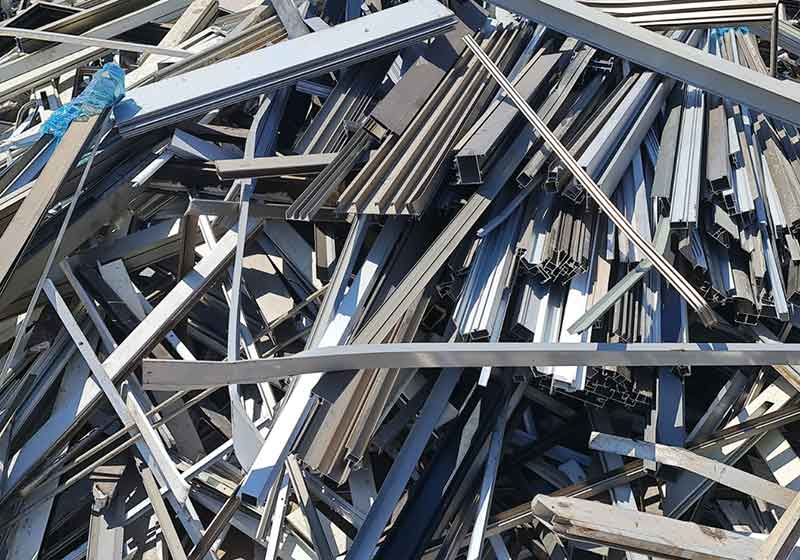
Aluminium Profiles
Aluminium profiles and extrusion offcuts are long, hollow and difficult to stack efficiently. DILOYA hydraulic metal balers compress window frames, structural sections and production offcuts into dense, stable bales for safer handling, lower storage and transport costs, and consistent delivery to aluminium recyclers and remelting plants.
Light Scrap Metal
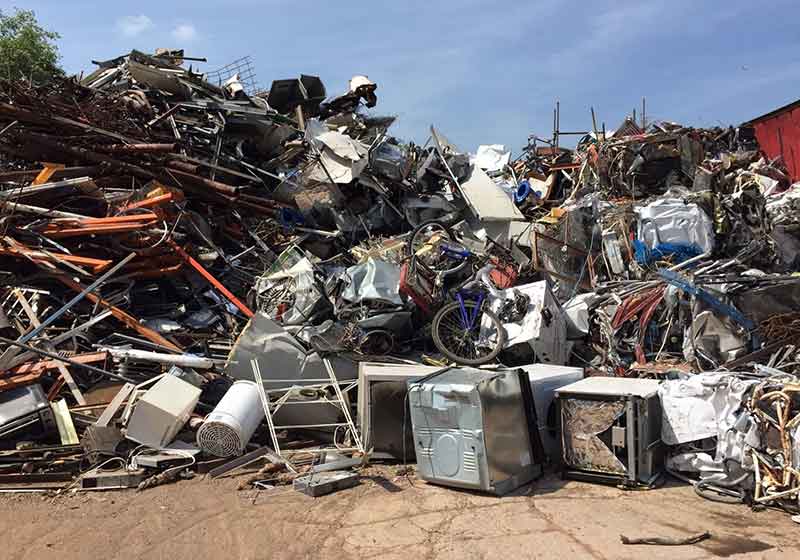
Light scrap metal includes thin-gauge steel sheet, press-shop offcuts, panels and other bulky ferrous pieces. DILOYA hydraulic metal balers compress this loose, springy material into dense rectangular bales for controlled storage, efficient loading and economical transport. This application is intended for baling only.
Heavy Scrap Metal
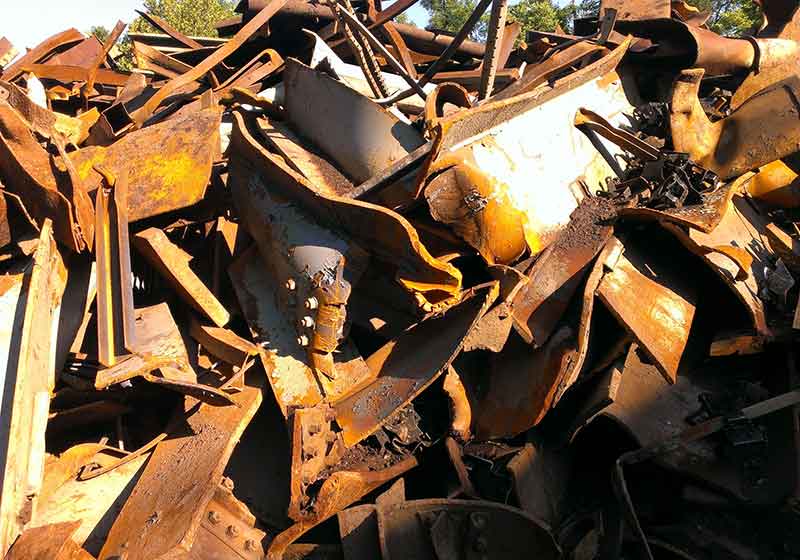
Heavy scrap metal includes thick steel plate, beams, channels, pipe, fabrication offcuts and dismantled machinery structures. DILOYA hydraulic scrap shears pre-compress and cut this oversized ferrous material into controlled furnace-ready lengths for safer stockpiling, efficient loading and reliable downstream melting. This application is intended for shearing only.
Steel Bar
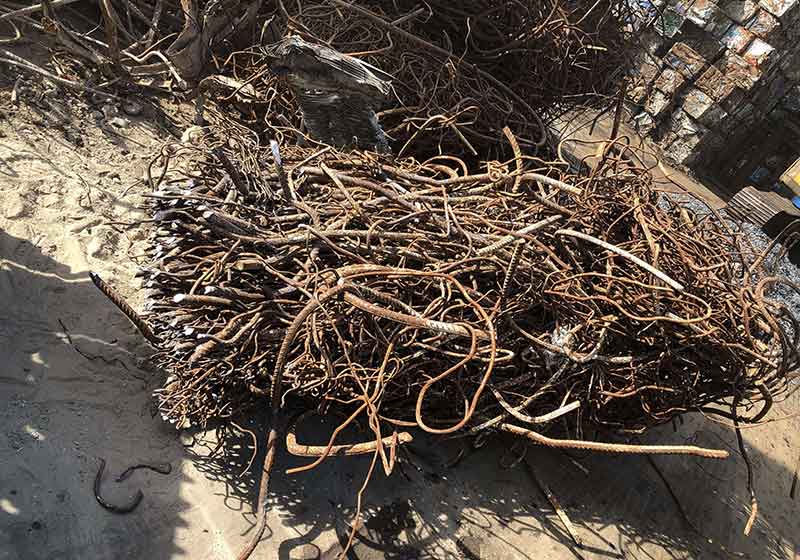
Steel bar scrap includes reinforcing bar, round bar, bent rod, short offcuts and tangled demolition rebar. DILOYA processes long or rigid bars with hydraulic scrap shears for controlled cut lengths, while shorter and bendable material can be compressed into dense transport bales with hydraulic metal balers. The correct route is selected from bar diameter, length, condition and downstream requirements.
FAQ
How should I compare alligator, gantry and other scrap-shear designs?+
Compare shear designs by their material-control and loading method before comparing force. Alligator Shear may address a different feed and handling duty from Vertical Gantry Shear. The right design is the one that accepts the approved sections consistently and delivers the required cut scrap without excessive repositioning or downstream waiting.
Compare each design against the same questions:
- What feed shape can it accept within its approved limits?
- How is material supported and controlled?
- How much repositioning is required?
- What finished size and sustained output are needed?
- How will cut scrap be removed?
Consider maximum section dimensions, material control during cutting, feeding effort, output size and the complete operating cycle. Submit representative scrap information so the proposed design can be assessed for the real workload and required protective arrangements.
Which ferrous scrap can be considered for hydraulic shearing?+
Describe ferrous scrap by grade, section and condition rather than simply calling it steel. Plate, pipe, profiles and mixed fabricated pieces can require different presentation and control. Alligator Shear and Vertical Gantry Shear should be evaluated against explicit approved sections; neither product category establishes unrestricted cutting capability.
Send information about the actual scrap stream rather than describing it only as steel. The proposed machine should have a clear accepted-material specification, including exclusions and any preparation required before loading.
How much cutting force does my material require?+
Cutting force must be assessed from the actual cross-section and material, not its outside dimensions alone. A hollow tube and a solid bar of the same diameter create different duties. Supply the difficult normal sections and known material properties so the proposed shear can be assessed as a complete blade, structure and hydraulic combination.
- Material grade or known strength.
- Solid, hollow or built-up cross-section.
- Maximum wall or plate thickness and width.
- How the piece is presented to the blades.
- Required cut length and sustained production.
Provide section drawings, thickness, alloy and maximum dimensions. The machine supplier should define approved material limits for the selected shear. Avoid treating a force number as permission to cut any object that fits.
How does loading affect shear productivity?+
A shear only produces when approved scrap is ready for the next cut and the discharge route is available. Repositioning awkward pieces or removing rejected loads can dominate the elapsed cycle. Measure loading effort with the real material-handler arrangement instead of inferring production from the speed of an unloaded cutting stroke.
Define the loading arrangement and operating area as part of selection. Compare output under realistic feeding conditions, including any preparation and collection steps. A no-load stroke rate is not equivalent to processed tonnes per hour.
How is the finished cutting length selected?+
Choose the finished length from the receiver's acceptance specification, then establish how the feeding arrangement can achieve it with irregular scrap. Maximum permissible size and preferred average size are not necessarily the same requirement. Agree allowed variation and the measurement method rather than treating a selected feed increment as a promise of identical pieces.
- Obtain the receiving process's maximum and preferred dimensions.
- Identify the feed geometries the machine must handle.
- Confirm the selected feeding and length-control method.
- Agree permitted variation and how irregular pieces are assessed.
- Test representative output where consistency is essential.
Confirm any allowable tolerance and the expected variation for irregular scrap. A target length does not guarantee identical pieces when feed geometry varies. Test representative material if output-size consistency is critical.
Related products
Three Rams Shear Baler
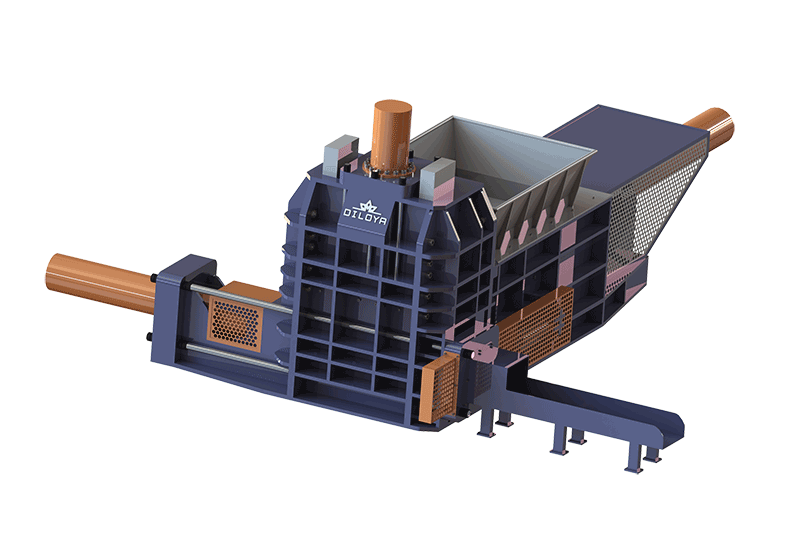
The DILOYA Three Rams Shear Baler combines staged hydraulic compression, shearing and bale discharge to turn loose metal scrap into compact, uniform bales for recycling, storage and transport.
View details +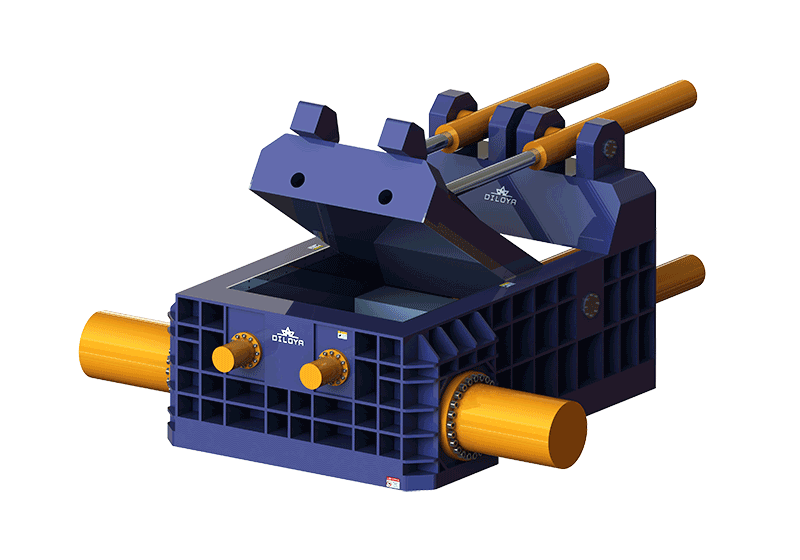
Heavy Duty Metal Baler
The DILOYA Heavy Duty Metal Baler uses two main hydraulic cylinders to compact bulky scrap metal into dense, rectangular bales. Finished bales are removed by grab for storage, loading and downstream recycling.
View details +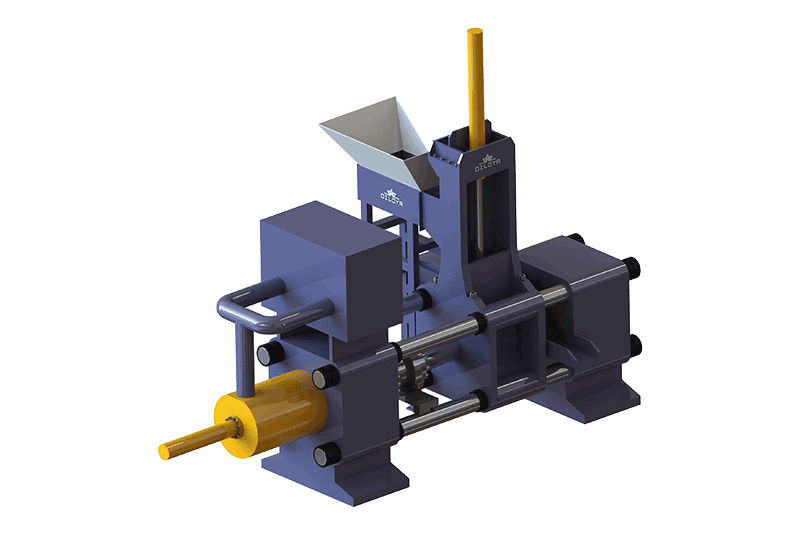
Horizontal Briquetting Press
The DILOYA Horizontal Briquetting Press uses horizontal hydraulic compression to turn sorted machining chips and swarf into dense, manageable briquettes. It can be configured with controlled feeding, discharge and optional chip preparation for metalworking or recycling lines.
View details +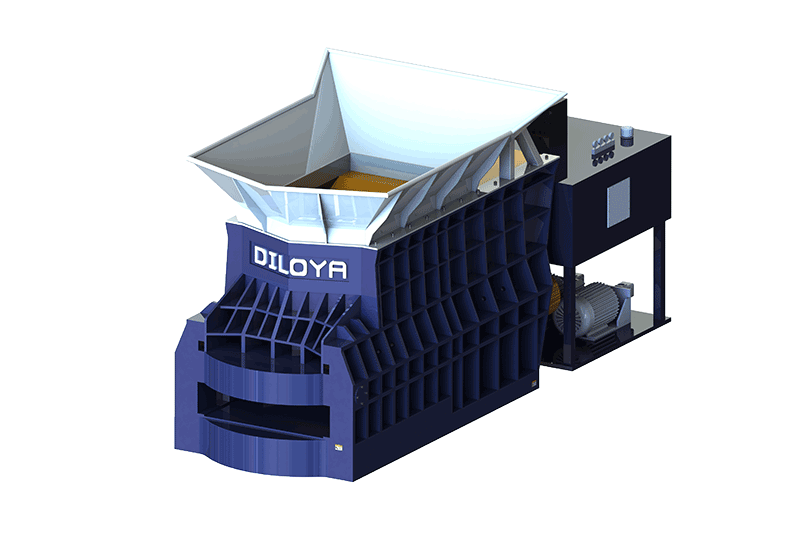
Horizontal Container Shear
The DILOYA Horizontal Container Shear uses a box-style receiving chamber to contain, compress and shear bulky steel scrap in a planned production sequence. Its horizontal layout is intended for high-volume scrap yards that need strong cutting performance while using the available site area efficiently. Heavy plate, structural sections and other compatible ferrous scrap are assessed against chamber dimensions and cutting force.
View details +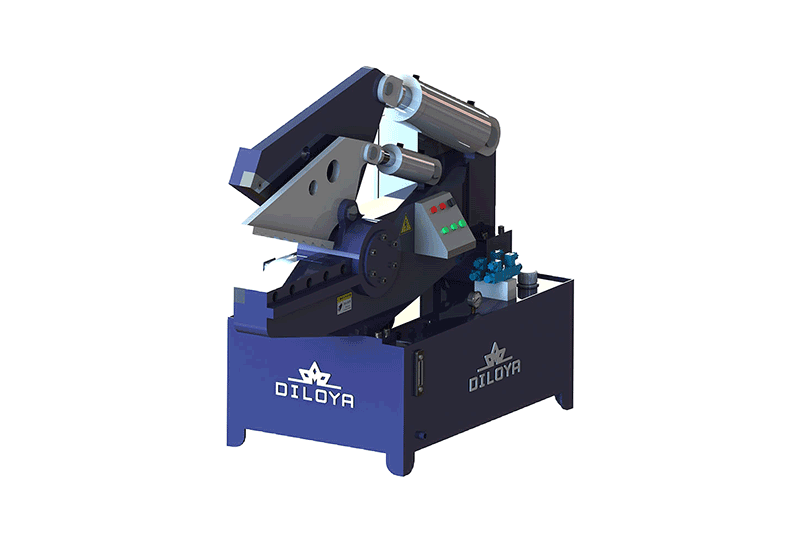
Integrated Alligator Shear
The DILOYA Integrated Alligator Shear refines the conventional alligator-shear arrangement into a more compact, coordinated machine package. It cuts suitable scrap bars, profiles, tubes and production offcuts while reducing the installation space and external component layout required by a traditional setup. The exact integrated functions and cutting range depend on the selected model.
View details +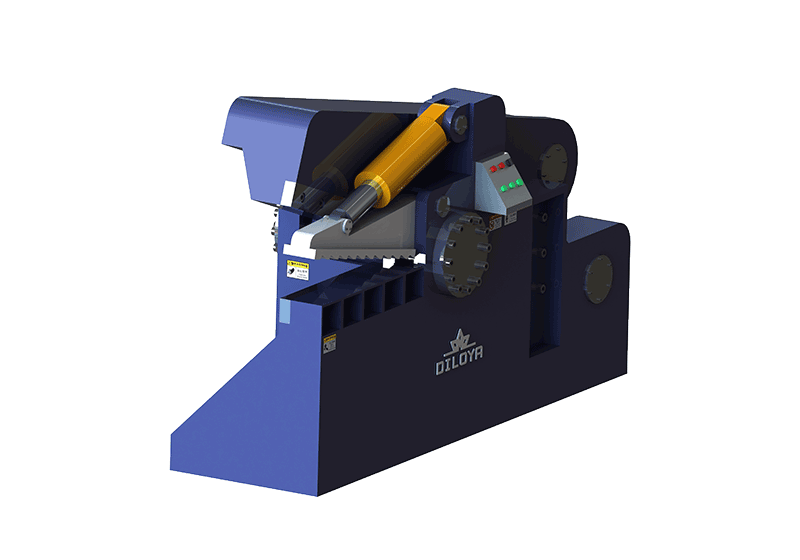
Alligator Shear
The DILOYA Alligator Shear is a conventional hydraulic pivot-jaw scrap cutter built for stable, repeatable cutting of suitable metal sections. Its robust frame and straightforward cutting arrangement serve scrap yards, fabrication shops and recycling operations preparing bars, pipes, profiles and offcuts for the next handling or processing stage.
View details +Customer Cases
View all cases + Alligator Shear For Aluminium Ingot Cutting In South Africa
A South African customer uses a conventional Alligator Shear for aluminium ingots, with reported output of 800–1,000 kg/hour and 8–12 cutting strokes/minute.
View case + Horizontal Steel Bar Container Shear For Heavy Scrap In Singapore
Singapore customer case: a horizontal box shear for waste rebar and heavy structural steel, with reported output of 10–15 t/hour, PLC automation and remote control.
View case + Heavy-Duty Double Main Cylinder Metal Baler In Poland
A Polish customer's heavy-duty double-main-cylinder scrap baler combines PLC automatic control and remote control, with reported output up to 15 t/hour.
View case +Leave A Message
Let's Figure Out The Best Solutions!
Tell us what you need.
Share your material, target hour capacity and other requirements. Our engineering team will reply with a suitable solutions.