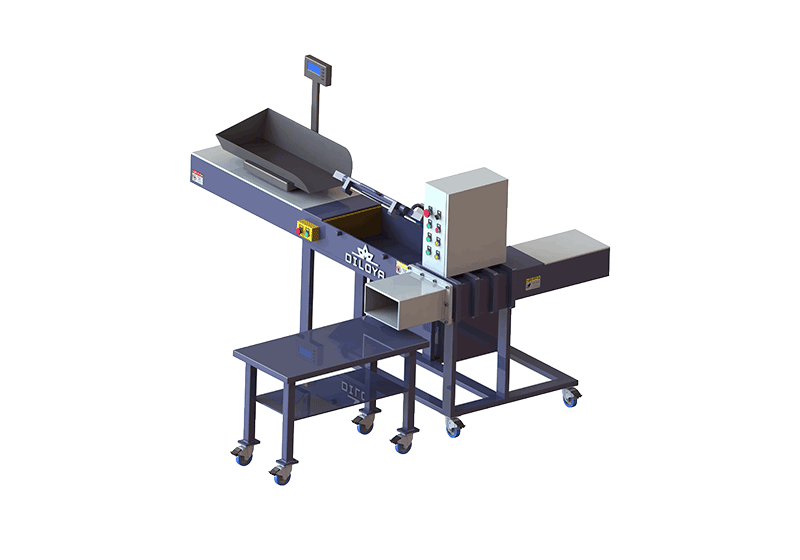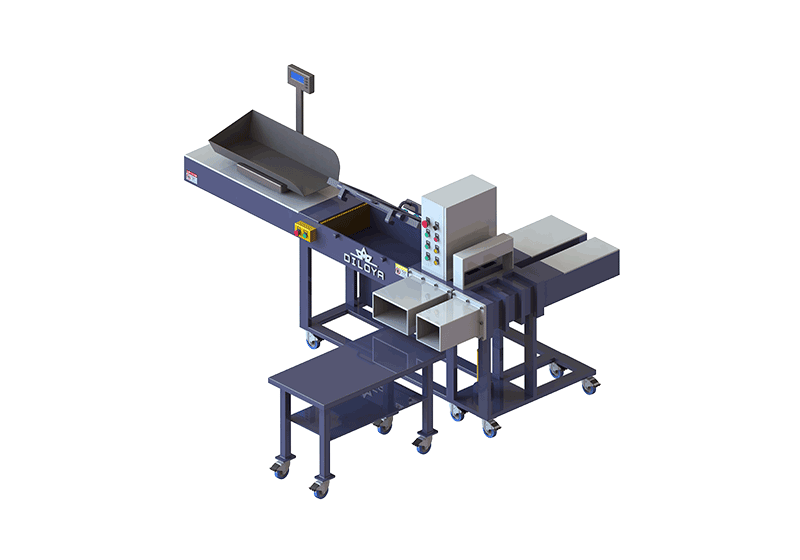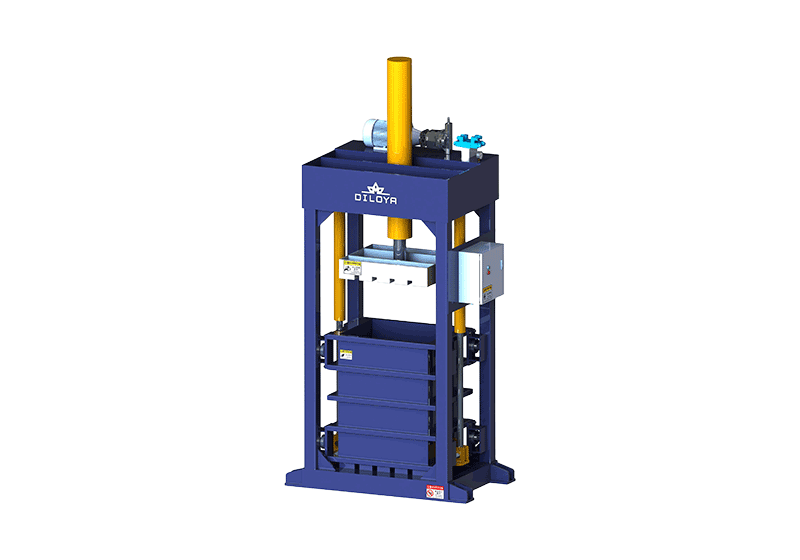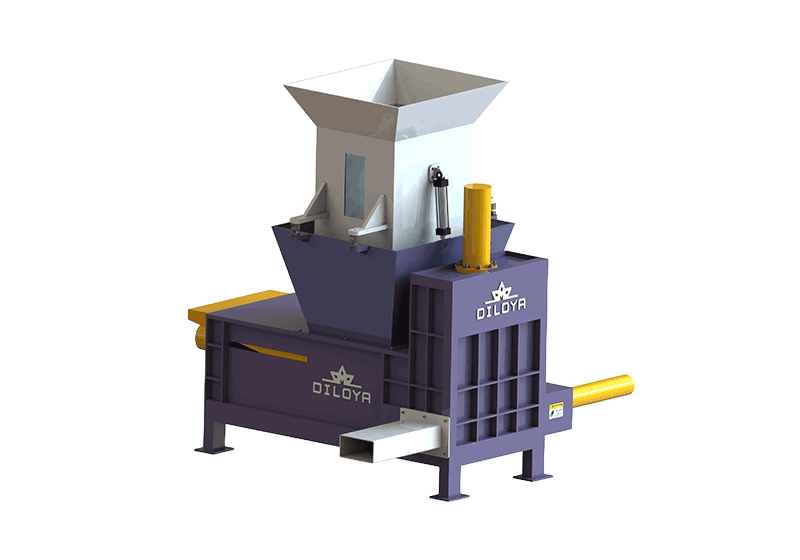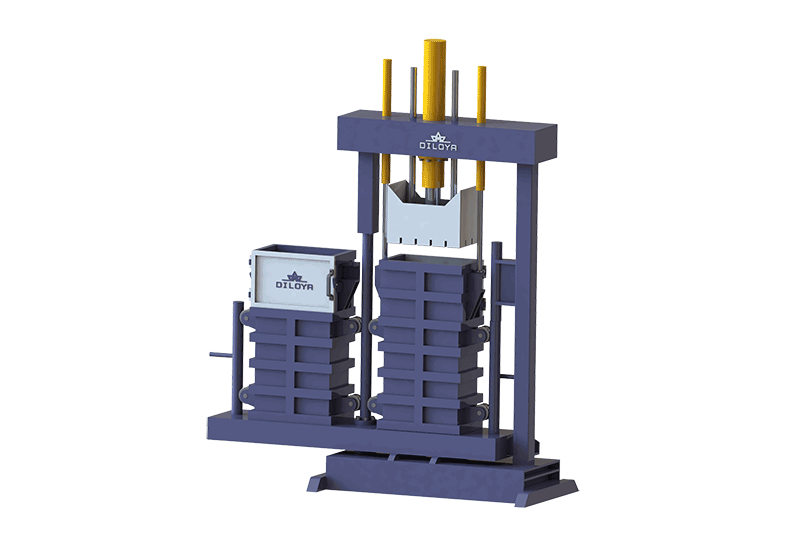
Twin-chamber textile baler illustration with swivelling chamber arrangement

Twin Chamber Swiveling Baler

Twin Lift-Box Swiveling Baler for Used Textiles

The DILOYA Twin Chamber Swiveling Baler combines two lift-box chambers in a swiveling layout for used clothes, textile waste and other compatible soft materials. While one chamber is pressing, the other can be prepared for loading or bale removal according to the machine's safety sequence. This overlap supports higher practical throughput than a comparable single-chamber workflow; an optional conveyor can streamline incoming material handling.

Design
Twin Chamber
Bale Weight
40-120kg/Bale
Applciation
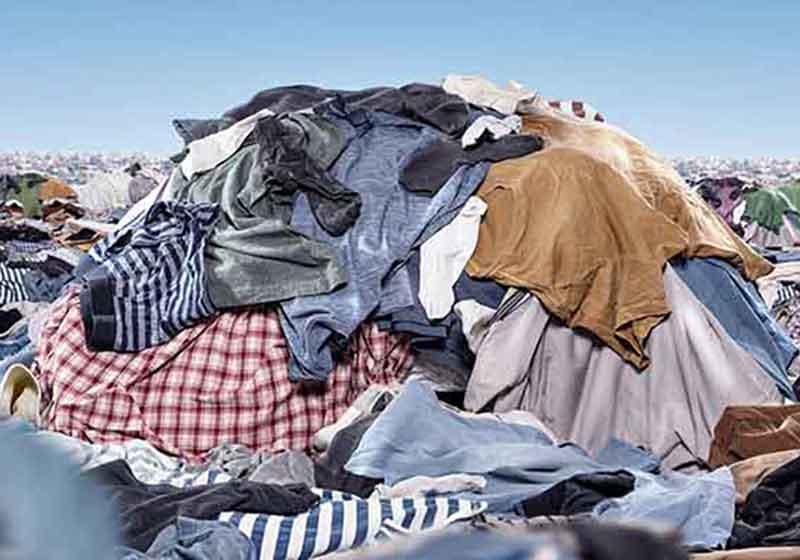
Old Clothes
Control
Electrical Button Control
Power supply
Customized
Motor Brand
Taizhou Taida

Description

The DILOYA Twin Chamber Swiveling Baler is a vertical hydraulic textile press built around two lift-box chambers. The two positions allow loading and bale handling to be planned around the press stroke, reducing idle time associated with a single chamber. It is intended for used-clothing sorters, textile recyclers and collection centers that process a steady flow of garments or fabric waste.

1> Alternating Chamber Workflow

Sorted textiles are loaded into one chamber while the other is positioned for compression or bale tying. The swiveling arrangement indexes the selected chamber beneath the hydraulic platen according to the guarded operating sequence. After compression, the box is lifted as designed to expose the bale for tying and discharge. The exact overlap between steps, interlocks and operator positions must follow the machine specification; a second chamber does not make every task simultaneous.

2> Materials and Feeding

Used garments, textile offcuts and similar soft materials should be sorted by grade and cleared of hard or hazardous contaminants. An optional conveyor can move material from sorting stations to the loading position and reduce repeated manual transfers. Conveyor speed, loading height and accumulation space should be matched to the press cycle, rather than assuming the conveyor alone will increase the press's rated capacity.

3> Designing for Output

DILOYA can configure chamber dimensions, lift mechanism, swivel drive, pressing force, tie channels, controls and optional conveyor around the customer's bale specification and site layout. Material spring-back, worker access, finished-bale handling and the receiving market's packaging requirements determine the practical throughput and bale stability.
Advantage

> Two lift-box chambers: support alternating loading, compression and bale handling.

> Reduced idle time: prepared material can be staged while the other chamber completes a cycle, subject to safety interlocks.

> Lift-box tying access: helps operators secure regular textile bales after compression.

> Optional conveyor feeding: can organize the flow from sorting stations to the baler.

> Textile logistics: compact, tied packages are easier to weigh, store and ship than loose clothing.

> Configurable workflow: chamber, controls and material handling are selected for site volume and bale requirements.

Parameter

10-15bales/hourPlease find below specification of different models:

Parameter table
ModelVLDB30VLDB40VLDB60
Chamber Size700x400x1000mm760x520x1100mm900x600x1200mm
Bale Size700x400x(400-800)mm760x520x(500-900)mm900x600x(600-1000)mm
Bale Weight

40-80kg

70-120kg

90-150kg

Motor Power7.5kw11kw15kw
Output Capacity10-15bales/hour10-15bales/hour10-15bales/hour
ControlButton ControlButton ControlButton Control
Main Cylinder300kn400kn1200kn
Lift Cylinder80kn100kn150kn

We can customize the baler machine according to your special requirements.

10-15bales/hour

Application

The DILOYA VLDB Series Twin Chamber Swiveling baler can press below materials:

FAQ

Why use a vertical baler for used clothes and textiles?+

For textile businesses, a useful bale is compact enough for logistics while preserving the sale grade and the customer's ability to handle and open it. Compression is only one part of that package. Assess a suitable arrangement such as Vertical Lifting Chamber Baler against actual garments or offcuts and the finished wrapping requirement.

The right package depends on the business. A used-clothing exporter may prioritise bale dimensions, wrapping and product presentation; a textile-recycling operation may prioritise consistent material grades and efficient handling of offcuts.

  • Specify whether the load consists of complete garments, fabric pieces, yarn waste or a mixture.
  • Choose a bale that the warehouse and customer can move and open conveniently.
  • Check the final package after release, tying and wrapping, not only while compressed.

Baling does not sort, clean or sanitise the textiles, so upstream quality control remains important.

Do used-clothing bales need wrapping as well as tying?+

Ties retain a bale; wrapping serves the specified containment and presentation role. Neither automatically performs the other's function. Establish the opening method, cover material and strap arrangement with the completed clothing package, and confirm whether wrapping is a separate operator task or included equipment.

Specify the complete package:

  • Outer cover or sleeve material and dimensions.
  • Whether straps or wires are outside or inside that cover.
  • The required label or batch identification.
  • How the customer will open the bale.

Wrapping is not automatically waterproof, airtight or sufficient to restrain an expanding bale. Confirm its performance with the final compressed product. If a particular wrapping stage is required, establish whether it is included with the machine or performed separately.

How should vertical-baler output be calculated?+

Calculate vertical-baler output from completed accepted bales over elapsed production time, then use actual average bale mass for the mass rate. Repeated loading, tying and removal can dominate that time. A short ram cycle is therefore not sufficient evidence of the hourly production one operator can sustain.

Illustrative calculation: if four accepted bales averaging 100 kg are completed in one hour, the measured output for that trial is 400 kg/hour. Those example values are not a DILOYA machine rating.

Repeatability depends on material, operator routine and handling. Do not multiply an empty hydraulic stroke rate by a bale weight to claim capacity. Trials for clothes, tyres or fibres should use the actual intended product and all included tasks.

What space is needed around a vertical baler?+

Allow for the full height and access envelope of the selected machine, not only the base shown on a catalogue drawing. Loading, door movement, ejection and servicing each require working space. Check the proposed arrangement with the actual incoming stock and handling equipment before committing a workshop location.

  • Machine height and any moving upper components.
  • Door opening and approved loading access.
  • Tying and wrapping tasks.
  • Ejection and the equipment used to move the bale.
  • Hydraulic, electrical and maintenance access.

Tyre bales or large fibre packages can require more handling space than the machine base suggests. Provide a dimensioned plan with ceiling height, columns and vehicle routes. The installation drawing and site assessment should confirm suitability before delivery, including the supporting floor or foundation where required.

How should finished vertical bales be ejected and moved?+

Bale removal is part of the designed machine cycle and working envelope. Match the approved ejection method to actual package mass, stability and available handling equipment. Vertical Lifting Door Baler is one arrangement to assess, but its name does not establish clearances or authorise manual intervention in the release area.

  1. Confirm where the bale is supported during the approved discharge sequence.
  2. Provide the specified handling equipment and clearances.
  3. Keep people outside the hazardous ejection and release area.
  4. Move and store the package according to the site handling plan.

This is a planning outline, not a replacement for the selected machine's instructions. Do not enter the chamber, manually release a jammed bale or improvise lifting arrangements during operation.

Related products

Wiping-rag bagging baler illustration with manual loading tray and discharge table

Wiping Rags Baler

The DILOYA Wiping Rags Baler compresses sorted used wiping rags and industrial cleaning cloths into bagged, manageable packages. A controlled feeding and pressing cycle reduces the volume of loose fabric, while the bag helps contain the material during storage and transport. Chamber size, bale weight, bag dimensions and discharge arrangement are selected for the actual cloth mix and downstream handling plan.

View details +
Dual-outlet wiping-rag baler illustration with two bagging channels

Double Bale Rags Wiper Baler

The DILOYA Double Bale Rags Wiper Baler uses a dual-outlet bagging arrangement to produce two specified package sizes or weights from sorted used rags and industrial wiping cloths. The operator can select the appropriate discharge route and packaging program for customer orders. Hydraulic compression and controlled discharge form compact, bagged units, while actual weight consistency depends on feed composition, weighing method and machine settings.

View details +
Vertical lifting-chamber baler illustration with open upper access

Vertical Lifting Chamber Baler

The DILOYA Single Chamber Old Clothes Baler uses a single vertical compression chamber and a lift-box arrangement to package used garments, waste textiles, wool and other suitable soft materials. Raising the box gives operators access to the compressed package for tying and removal. The resulting compact bales reduce loose storage volume and make weighing, handling, transport and distribution more orderly.

View details +
Hay and animal-bedding bagging baler illustration with upper feed hopper

Animal Bed/Feeding Baler

The DILOYA Animal Bed/Feeding Baler packages suitable alfalfa hay for feed and clean sawdust or wood shavings for animal bedding. A weighing-based filling system targets consistent bale weight, followed by hydraulic compression and bagging for orderly storage and distribution. On a suitable configuration, output can reach up to 200 bales per hour; actual rate depends on material density, moisture, target weight, bag size and feeding conditions.

View details +

Customer Cases

View all cases +
Vertical old clothes baler with a hydraulic press assembly and side-mounted control cabinet45kg / 100lbs Old Clothes Baler In The UK

A UK customer uses a 45kg-class old clothes baler for used clothing and rags, with stated output of 8–12 bales/hour to reduce storage volume and support transport efficiency.

View case +
DILOYA wiping rags bagging baler with weighing platform, weight indicator and discharge opening10kg Wiping Rags Baler In Croatia

A Croatian industrial wiping-rag producer uses weighing-controlled 10 kg packaging, with reported output of 60–80 bales/hour for wiping cloths and suitable used clothing.

View case +
DILOYA dual-outlet clothes and textile bagging baler with a weighing display and packing tableDual-Outlet Clothes Baler In Belgium: Two Weights-One Baler

Belgian customer uses one dual-outlet clothes baler for two package-weight options, such as 5 kg and 10 kg, reducing the need to purchase separate machines.

View case +

Leave A Message

Let's Figure Out The Best Solutions!

Tell us what you need.

Share your material, target hour capacity and other requirements. Our engineering team will reply with a suitable solutions.

01Call DILOYA+86 152 2134 765002Email our teaminfo@diloya.com
We use your details to respond to this enquiry. Read our Privacy Policy.