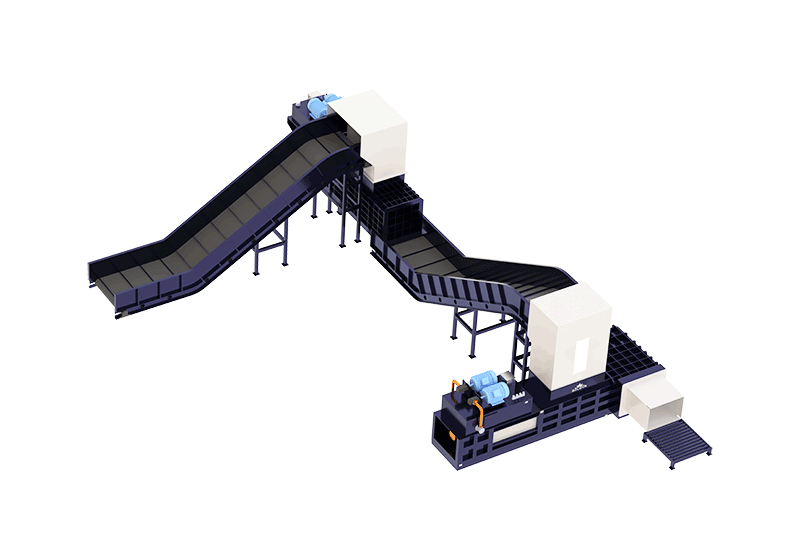
Grid cutting, compression and bagging for original hay and straw bales
The DILOYA Alfalfa Hay Straw Cutting Bagging Baler processes original square or round bales of alfalfa hay, oat straw, wheat straw and other suitable fibrous agricultural materials. The line combines grid cutting, material transfer, compression and bagging to convert incoming field bales into compact, bagged packages for organized storage and container loading.
The process is designed around cutting the original bale first, then compressing and bagging the prepared material. A dust extraction system is included as part of the line's material-handling arrangement. The overall objective is efficient, high-output processing with coordinated operation from incoming bale to finished package.
Suitable materials and incoming bale formats
1> Alfalfa hay: original square or round bales requiring cutting and recompression into bagged packages.
2> Oat straw: baled fibrous material assessed for moisture, stem condition, incoming bale dimensions and desired finished-package requirements.
3> Wheat straw: original field bales prepared through the cutting stage before compression and bagging.
4> Other hay and straw: additional materials can be assessed using representative bales before the equipment configuration is confirmed.
Incoming bale shape alone does not determine suitability. Bale width, height or diameter, length, weight, moisture and material condition must be matched to the receiving and cutting equipment. Twine, netting, wire and wrapping must be identified, with their removal or handling procedure agreed before operation. Contaminated, excessively wet or otherwise unsuitable material should not be assumed acceptable without assessment.
Process flow from original bale to bagged package
1> Receive and prepare the original bale. Bring a suitable square or round bale to the loading position using the agreed handling method. Check its condition and follow the specified procedure for binding materials and foreign objects.
2> Cut through the grid-cutting stage. The cutting system divides the original fibrous bale into smaller sections suited to downstream transfer and compression. The cutting arrangement is selected for the incoming bale and the required material condition.
3> Transfer the cut material. The configured conveying arrangement delivers prepared hay or straw toward the bagging baler in coordination with the pressing sequence.
4> Compress into a finished bale. The hydraulic baler forms the cut material into the specified compact package. Feed quantity, material condition and pressing settings influence the achieved weight and dimensions.
5> Bag and discharge. The compressed bale is transferred into a suitable bag through the specified bagging arrangement. Bag positioning, closing and finished-package handling are defined in the final project configuration.
6> Collect and prepare for shipment. Inspect the package and move it to storage or the agreed container-loading area.
Why cut the original square or round bale first?
The incoming product is an original agricultural bale rather than loose, uniformly prepared feed. Grid cutting provides a preparation stage before recompression and bagging, helping the line handle the bale as smaller portions instead of transferring the whole original bale directly into the final package.
The cutting specification should suit the intended downstream use. A grid-cut section is not automatically the same as a uniformly milled or finely chopped product. Required section size or fibre length should be confirmed with representative material and the proposed cutter before the finished-product specification is agreed.
Approximately 450 kg per finished package
The line can be configured around a finished bale weight of approximately 450 kg. This provides a basis for planning package handling, warehouse storage and shipment, rather than assuming the finished weight is identical to that of the original field bale.
Actual package weight depends on the material, moisture, feed quantity, compression settings and agreed dimensions. Bag type, strength and dimensions must be suitable for the finished package and its handling method. Required weight tolerance, package condition and any closing requirements should be stated in the quotation and acceptance specification.
The handling arrangement must be suitable for these heavy packages. Finished-bale collection, lifting and loading equipment should be planned together with the press and bagging area; a complete downstream handling system should not be assumed included unless specified.
Container-loading plan: approximately 60 bales in a 40-foot high-cube container
The target loading arrangement is approximately 60 finished bales in a 40-foot high-cube container. At around 450 kg per bale, the calculated material load is 60 × 450 kg = 27,000 kg, or approximately 27 tonnes.
This is a project loading target, not a guarantee that every container and route can accept that quantity. The final plan depends on confirmed bale dimensions, bag condition, stacking pattern, container internal dimensions, door clearance and the permitted payload of the actual container.
The 27-tonne calculation is based on bale material weight. Packaging, any pallets or securing materials, the container's tare weight and applicable transport restrictions must also be considered before shipment. A practical loading plan should therefore be checked against both available space and allowable weight rather than volume alone.
Production capacity up to approximately 30 bales per hour
With suitable material and a matched line configuration, production capacity can reach approximately 30 finished bales per hour. The operating target requires the cutting, conveying, compression, bagging and discharge stages to work together at a compatible rate.
Actual output depends on incoming bale dimensions and condition, material moisture, cutting requirements, finished weight and dimensions, loading continuity and the bagging and collection arrangements. Bag replacement, closing, inspections and material replenishment must be included when assessing sustained production.
The stated output should be confirmed for the customer's representative material and operating method. It should not be treated as an unconditional production rate for every combination of alfalfa hay, oat straw and wheat straw.
Dust extraction integrated with material handling
The line is equipped with a dust extraction system to collect airborne material at the designated points in the processing arrangement. Extraction locations and collection equipment should be coordinated with the cutting and transfer stages, where fibrous material is being disturbed.
The final specification should define extraction connections, collection capacity, filter or collector maintenance and the handling of collected dust. Dust extraction does not mean the process is completely dust-free, and it does not replace suitable housekeeping or a site-specific fire and dust-risk assessment.
Efficient, coordinated production
Bringing cutting and bagging into one connected line reduces separate intermediate handling steps and supports efficient production. The equipment sequence and operator tasks should be planned around a steady material supply and timely removal of finished bales.
The final configuration should identify machine interlocks, guards, emergency stops and safe access for cutter, conveyor, press and extraction-system maintenance. Operators remain responsible for incoming-bale preparation, supervision, bag supply, package inspection and routine servicing.
Information needed for a project-specific proposal
Provide the material type, moisture range, original bale dimensions and weight, square or round format, binding or wrapping method, required cut condition and target hourly output. Also confirm the desired finished-package dimensions, approximately 450 kg weight target, bag specifications, available floor space, electrical supply and loading equipment.
DILOYA can then coordinate the grid cutter, transfer system, bagging baler and dust extraction equipment. Confirmed production rate, package weight tolerance, installed dimensions and the proposed 40-foot high-cube loading plan should be stated in the final project specification.