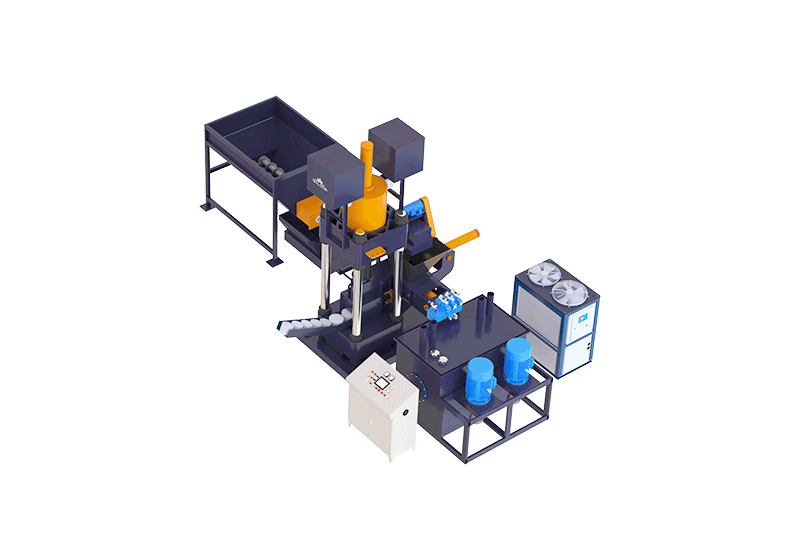
Pre-compression briquetting for loose, low-bulk-density metal chips
The DILOYA Aluminium Chips Briquetting Line is designed for fluffy metal chips that occupy a large volume in their loose condition but contain relatively little metal mass per unit of storage space. Typical materials include aluminium chips, copper chips, brass chips and suitably shredded steel chips.
The line follows the same basic handling concept as a hopper-fed short-chip briquetting system: material is loaded into a large screw-equipped buffer hopper, transferred by screw feeding and compressed into briquettes. The key difference is the briquetting machine's pre-compression design, which prepares a larger loose charge before the final high-pressure pressing stage. This makes the solution better suited to bulky, low-bulk-density chips than a configuration selected primarily for free-flowing, denser granules.
Suitable materials: aluminium, copper, brass and shredded steel chips
> Aluminium chips: loose machining chips with a fluffy structure and low initial bulk density. The feeding and pressing arrangement is selected around the actual chip shape, alloy and material condition.
> Copper chips: bulky copper machining chips that need to be assessed by their loose packing behavior, not only by the density of solid copper.
> Brass chips: suitable loose brass machining chips, with particle size, flow behavior and coolant condition considered during configuration.
> Shredded steel chips: steel turnings that have already been reduced to a suitable size for the hopper, screw feed and pre-compression system.
Although the solution is named Aluminium Chips Briquetting Line, its application is not limited to aluminium. Suitability depends on the actual material and its loose bulk density. Aluminium, copper, brass and steel grades should be processed separately according to the customer's recycling requirements, rather than mixed in the same feed batch.
Low bulk density and good flowability are different characteristics. A material can be light and fluffy while still tending to bridge or become entangled. Long, unprepared turnings may therefore require shredding or another preparation step before entering this line. Representative chip samples help determine the appropriate feed arrangement.
Why pre-compression matters for fluffy chips
A press receiving a fixed volume of loose material may take in only a small mass when the chips have a very low bulk density. Much of that incoming volume is empty space between the chips. The challenge is therefore not simply to apply more final pressing force, but to introduce a sufficient mass of metal into the pressing sequence.
The pre-compression stage reduces the loose charge's volume before final briquetting. By gathering and compacting the bulky chips, the design enables a larger loose charge to be accommodated within the configured pressing sequence. The prepared material then enters the final compression stage to form a briquette.
With a properly matched feed and pressing configuration, pre-compression can increase the metal mass incorporated into each briquette and improve the line's mass throughput. This is the central purpose of the design for fluffy chips: make better use of the available filling volume instead of producing a relatively light briquette from an insufficient loose charge.
From a buffer hopper to a finished briquette
1> Load the prepared chips. Suitable material is added to the large buffer hopper using the agreed workshop loading method. Foreign objects and pieces that exceed the selected feed requirements should be removed.
2> Maintain a working material reserve. The hopper holds a batch of chips between refills, reducing the need to add small quantities directly to the press throughout production.
3> Feed through the screw system. The screw arrangement transfers material toward the briquetting machine in coordination with the pressing sequence. Hopper geometry and screw selection must suit the actual fluffy feedstock.
4> Pre-compress the loose charge. The pre-compression mechanism consolidates the bulky material before final pressing, allowing the configured system to handle a greater loose-chip volume per pressing sequence.
5> Apply final hydraulic compression. The prepared charge is compressed into a briquette. Its dimensions and target weight are established for the chosen material and machine configuration.
6> Discharge and collect. Finished briquettes are discharged for collection, storage or onward recycling. Collection equipment must be sized around the intended production rate.
A large screw hopper reduces loading frequency
The large buffer hopper separates bulk loading from the repeated feeding and pressing cycles. Operators replenish a working reserve rather than feed each individual charge by hand. Screw conveying then links the hopper to the press, helping organize material transfer as part of one automated line.
For low-bulk-density chips, hopper selection must account for volume as well as mass. A large-looking quantity of aluminium chips may represent a relatively small weight of metal. The required hopper working volume should therefore be based on measured loose bulk density, target output and the desired interval between refills.
The usable capacity also depends on how the chips settle and move toward the screw. Feed trials can help confirm whether the proposed arrangement supplies material consistently or requires additional preparation or a revised hopper design.
Heavier briquettes and higher production potential
The production advantage comes from the relationship between briquette weight and cycle frequency. Hourly mass output depends on how much metal is contained in each finished briquette and how many briquettes the system completes during that hour. Increasing the charge mass can improve output, provided the feeding system and pressing cycle remain suitably coordinated.
Pre-compression is therefore selected to increase the amount of fluffy material handled per pressing sequence, not as a promise of a fixed percentage increase for every feedstock. Actual briquette weight and hourly throughput depend on the metal, initial bulk density, chip size and shape, moisture or coolant content, briquette requirements and selected machine settings.
A higher briquette weight should not be confused with a guaranteed final density or with a capacity figure transferred from another line. DILOYA should confirm the target briquette weight and achievable output for representative material. The capacity specified for a free-flowing granule solution does not automatically apply to fluffy aluminium or other low-bulk-density chips.
Integrated automation with less repeated manual feeding
Buffering, screw transfer, pre-compression, final pressing and discharge can be coordinated within the agreed control sequence. This reduces repeated manual transfers between process stages and allows operators to focus on replenishing material, monitoring operation and collecting briquettes.
The final configuration should define material-level monitoring, relevant interlocks, emergency stops and access for inspection and maintenance. Operators are still required for material management, supervision, cleaning and service; automated feeding does not remove these responsibilities.
Configure the line around your actual chip volume
For a suitable proposal, provide the metal and alloy, representative chip photos or samples, loose bulk density, existing chip preparation, moisture or coolant condition, required hourly output and preferred briquette dimensions or weight. Also identify the loading method, desired refill interval, available floor space, electrical supply and briquette collection arrangement.
DILOYA can then coordinate the hopper volume, screw feed, pre-compression system and final briquetting press. Any required upstream shredding, fluid collection or additional discharge equipment should be identified in the project-specific specification rather than assumed to be included in every line.