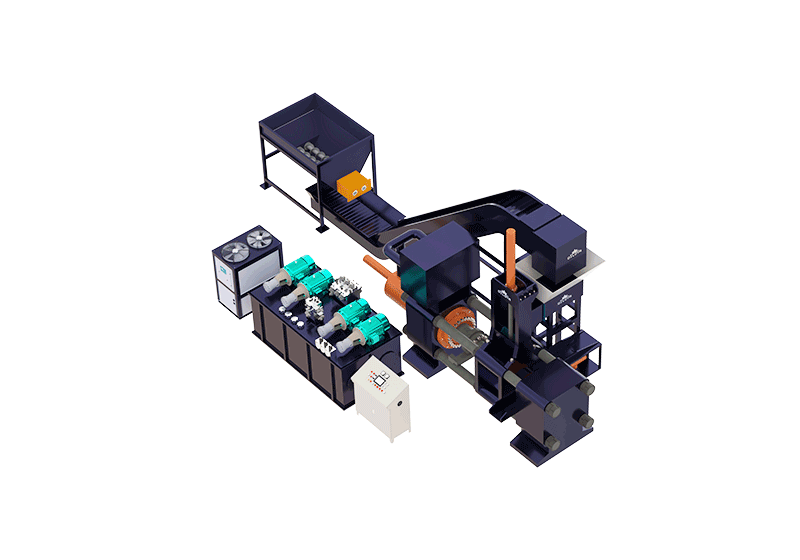
High-output horizontal briquetting for short metal chips
The DILOYA Horizontal Metal Chips Briquetting Line combines a horizontal briquetting machine with a large screw-equipped buffer hopper. It is designed to compress suitable short metal chips into briquettes while providing a material reserve for coordinated feeding and high-output production.
The main process is straightforward: load prepared short chips into the buffer hopper, feed them through the screw system, compress them in the horizontal press and collect the finished briquettes. The hopper-fed arrangement reduces the need to add small quantities directly to the press during each production cycle.
Suitable for different types of short metal chips
The line can be configured for a range of suitable ferrous and non-ferrous short chips, including steel or iron chips, cast iron chips, aluminium chips, copper chips and brass chips. The actual machine and feed arrangement must be selected for the metal grade, chip geometry, bulk density and fluid condition.
> Steel and iron chips: suitable short ferrous machining residues, assessed for thickness, toughness, contamination and feeding behavior.
> Cast iron chips: short machining material assessed for particle distribution, fines content and retained coolant.
> Aluminium chips: prepared short chips, with loose bulk density and the required briquette characteristics considered during configuration.
> Copper and brass chips: suitable sorted machining residues processed separately by metal and alloy grade.
This is a short-chip solution, not a general-purpose press for every form of scrap metal. Long, stringy or tangled turnings may require upstream shredding before they can be handled reliably by the hopper and screw system. Tools, bar ends, large solid pieces and other foreign objects should be removed or addressed through an agreed preparation arrangement.
Horizontal press design
The briquetting machine uses a horizontal compression arrangement as the central pressing stage of the line. Prepared material is supplied through the configured feed system, compressed hydraulically and discharged for collection.
The horizontal layout provides a basis for organizing feeding, pressing and briquette removal within one production arrangement. The final layout should match the workshop's loading route, available floor space and collection method, with access retained for inspection, cleaning and maintenance.
Press orientation alone does not establish achievable throughput. High-output operation requires the press, feed system, material supply and discharge handling to be selected together. Briquette dimensions, target weight and pressing settings should be confirmed for the actual feedstock.
Large screw hopper for buffering and controlled feeding
The large buffer hopper stores a working reserve of prepared chips between loading events. Operators can replenish the hopper in batches rather than remain beside the press to feed each individual charge. The screw arrangement then transfers material toward the briquetting machine in coordination with its operating sequence.
This buffer helps separate workshop loading activity from repeated pressing cycles. It can accommodate short-term variations in material delivery, but sustained production still requires the average loading rate to meet the press's consumption.
Hopper working volume should be selected according to loose chip bulk density, target output and the desired interval between refills. The same hopper volume contains different metal weights when filled with light aluminium chips or denser copper material. Nominal volume alone is therefore insufficient for estimating operating time between loads.
Hopper geometry, screw dimensions and the feed drive must also suit the chip shape and flow behavior. Material testing can help identify bridging, entanglement or inconsistent feeding before the final equipment specification is agreed.
Production sequence
1> Prepare and load. Sort the material and load suitable short chips into the large hopper using the agreed handling method.
2> Buffer the material. Maintain a working reserve that supports the planned pressing operation between refills.
3> Screw-feed the press. Transfer chips from the hopper to the briquetting machine according to its feed requirements.
4> Compress horizontally. The hydraulic pressing sequence forms the prepared chips into briquettes of the specified dimensions.
5> Discharge and collect. Remove finished briquettes through the selected collection or onward-handling arrangement.
High output through matched equipment
The line is intended for high-output metal-chip briquetting applications. Actual mass throughput depends on the metal, loose bulk density, chip size, moisture or coolant content, briquette weight and cycle rate, as well as the selected press configuration.
To maintain output, hopper replenishment, screw delivery and briquette removal must keep pace with the pressing stage. A large press cannot sustain its intended production rate if feed supply is interrupted or finished material blocks the discharge area.
No single hourly capacity should be assumed for all materials. DILOYA should confirm the production target using representative chips, the specified briquette requirements and the customer's operating schedule. Capacity figures from other solutions should not be transferred to this line without verification.
Integrated operation and practical workshop handling
The buffer hopper, screw feed and horizontal press can be coordinated through the specified control sequence. This reduces repeated manual transfer between storage and pressing stages and helps establish a more organized chip-processing station.
Operators still manage incoming material, monitor operation, collect briquettes and perform routine inspection and maintenance. The final specification should define the necessary guards, emergency stops, machine interlocks and safe access arrangements. Any fluid collection required by the feedstock should also be included in the project design.
Configure the line for your short-chip application
For a suitable proposal, provide the metal and alloy, representative chip photos or samples, chip dimensions, loose bulk density, coolant or oil condition, available material per shift and target hourly output. Also specify the preferred briquette dimensions or weight, loading method, desired refill interval, available floor area, electrical supply and collection arrangement.
DILOYA can then match the horizontal briquetting press, hopper working volume, screw feeding system and discharge equipment to the application. Confirmed throughput, installed power, line dimensions and any optional upstream preparation or fluid-handling equipment should be stated in the project-specific quotation.