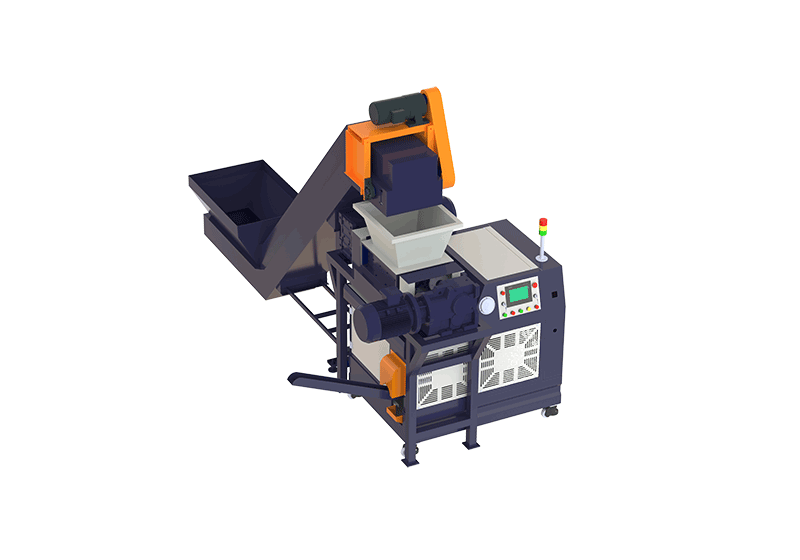
Compact chip recycling for machining centers
The DILOYA Small Metal Turnings Shred-Briquetting Line is a compact solution for machining centers, CNC workshops and other locations that generate relatively small quantities of metal turnings. It combines chip shredding with hydraulic briquetting so that loose, curled machining waste can be processed close to where it is produced.
The process follows a clear sequence: collect and sort the turnings, shred them into shorter pieces, then compress the prepared chips into briquettes. This arrangement suits workshops that need to improve chip handling without allocating the space or throughput associated with a large centralized recycling plant.
Materials the line can process
The line can be configured for different machining materials. The shredder, feeding system and briquetting press must be selected together for the actual alloy, chip shape and required output.
> Aluminum turnings and shavings: aluminum, also called aluminium, chips from milling, drilling and turning operations. Shredding breaks up long, tangled material before it reaches the briquetting stage.
> Steel and iron turnings: curled ferrous chips and shavings from compatible machining operations. Chip toughness, cross-section and contamination influence the required shredding and pressing configuration.
> Copper turnings: copper machining chips and shavings that need more orderly collection, compaction and storage.
> Other compatible metal chips: brass and other alloys may be considered after material assessment and, where needed, sample trials.
Different metals should be collected and processed separately to maintain material grade and recycling value. A line capable of handling several approved materials does not mean that those materials should be mixed together. Solid offcuts, tools, large foreign objects, fine metal dust and grinding sludge require separate assessment rather than being treated as ordinary turnings.
Process flow: shredding first, briquetting second
1. Collection and preparation. Turnings are collected from the machining area, separated by metal type and checked for unsuitable foreign objects. Collection containers and the loading arrangement are chosen to fit the workshop's existing handling routine.
2. Shredding. A compact metal-chip shredder cuts long or tangled turnings into shorter, more manageable pieces. This preparation is important in the proposed line because tangled swarf can bridge in a hopper, wrap around feeding components and make subsequent feeding less consistent.
3. Controlled transfer and feeding. The shortened chips are transferred to the briquetting press through a suitable hopper, conveyor or other selected feeding arrangement. The transfer rate is matched to the press so the two stages operate as one coordinated process.
4. Hydraulic briquetting. The prepared chips enter the pressing chamber and are compressed into briquettes. The selected tooling and press configuration determine the briquette format; the achievable density and consistency depend on the material and its condition.
5. Discharge and collection. Finished briquettes are discharged into a collection container or through a selected handling arrangement, ready for organized storage and transfer to an approved downstream recycler or melting operation.
A small footprint with practical workshop access
Limited floor space is a central consideration. The equipment layout is planned around the machining area, chip collection route, loading position and briquette discharge direction. Keeping the shredding and pressing stages close together can simplify the material path and reduce the space needed for separate handling operations.
The installation still needs clear access for safe operation, inspection, maintenance and removal of collected briquettes. The final footprint therefore includes working clearances and collection containers, not only the machine frames. DILOYA can assess a floor plan or site photographs before confirming the equipment arrangement.
Matched to lower-volume and intermittent production
This solution is intended for relatively small chip volumes, rather than large continuous flows from a centralized scrap-processing facility. It can be considered for a machining center, a small group of machines or a workshop that collects chips for scheduled batches.
Selection should take account of both average chip generation and short periods of higher production. A workshop producing a modest daily total may still need buffer capacity when several machines are emptied together. The line's output is matched to the available processing time, the material and the desired handling routine. A single throughput figure should not be assumed to apply equally to aluminum, steel and copper chips.
Equipment and configuration options
> Chip-shredding module: selected for the longest chips, degree of tangling, metal type and expected feed condition.
> Feeding and transfer: arranged around the available space, loading method, buffer requirement and press capacity.
> Hydraulic briquetting press: matched to the material, required output, briquette format and downstream handling needs.
> Controls and protection: the operating sequence, interlocks and protective measures are specified for the selected equipment and installation.
> Fluid collection where required: drainage or collection provisions can be assessed for chips carrying machining oil or coolant. Fluid recovery performance and suitability for reuse depend on the selected equipment and the workshop's fluid-management requirements.
> Discharge and utilities: collection height, container access, electrical supply and other utility requirements are confirmed during configuration.
What the workshop can achieve
Converting loose turnings into compact briquettes can make chip storage more orderly and reduce the space occupied by the material. Shredding before pressing helps prepare long or tangled chips for the feeding and compaction stages, while separate collection by metal type supports better grade control.
The practical benefit depends on the original bulk density, chip geometry, residual fluid, processing schedule and downstream requirements. DILOYA evaluates these factors before recommending a configuration; briquette density, output, fluid removal and financial return should be confirmed for the actual material rather than assumed from another installation.
Information needed for a suitable quotation
Please provide material photographs and, where possible, representative samples, together with the following details:
> The metal types and alloys, and whether each material will be processed separately.
> Typical chip length, thickness, curl and degree of tangling.
> Average and peak chip quantities per hour or day, plus the available processing hours.
> Oil or coolant condition, drainage needs and any known contamination.
> The available floor space, access routes, loading method and desired discharge position.
> Local voltage, frequency, required briquette format and the downstream recycler's requirements.
With this information, DILOYA can match the shredding and briquetting stages to a compact, lower-volume workshop process and confirm which options are appropriate for the application.