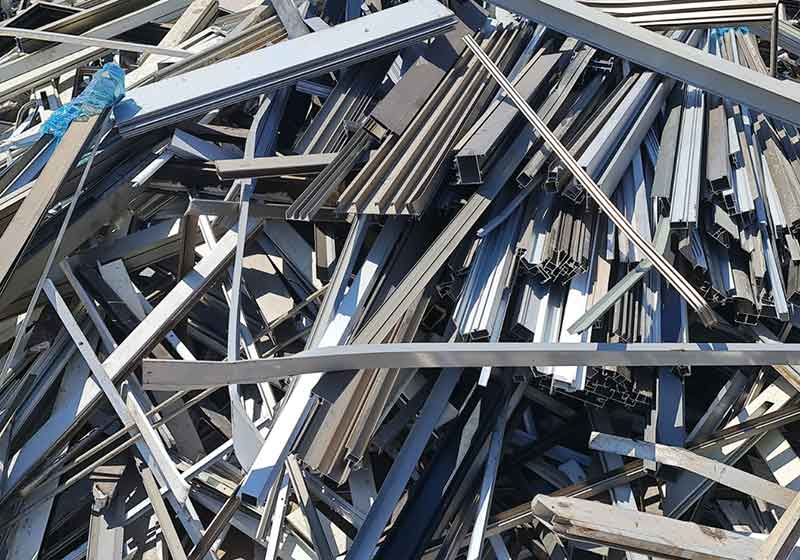
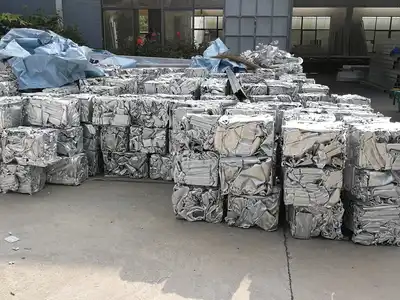
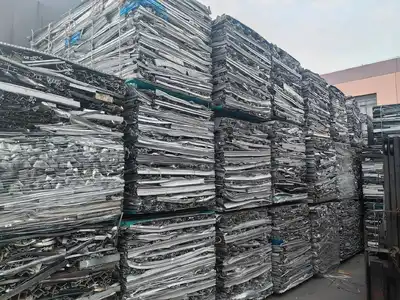
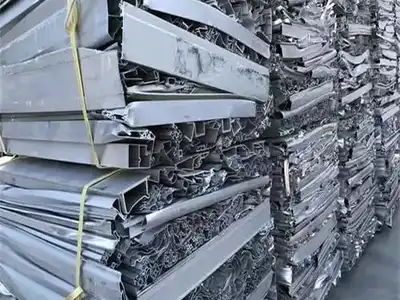
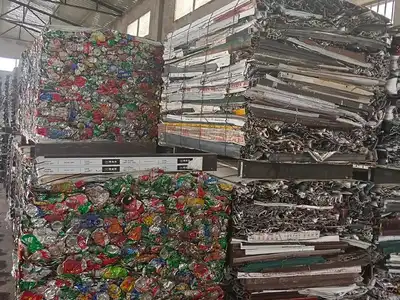
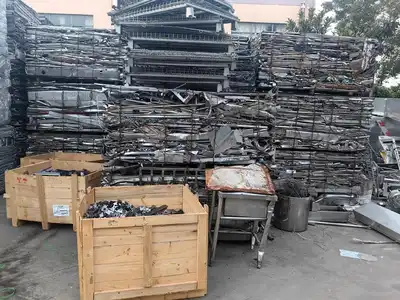
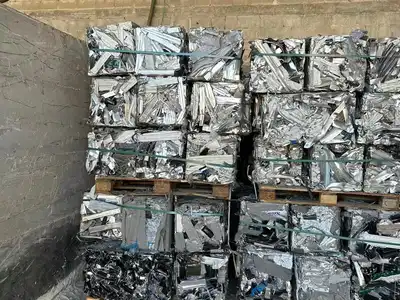
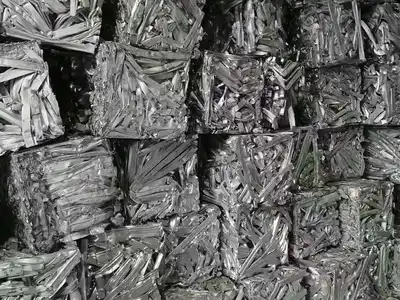
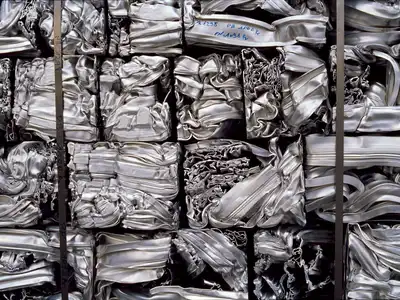
Aluminium profiles—also called aluminium extrusions—include window and door frames, structural sections, rails, channels and production offcuts. Their long, irregular shapes occupy substantial storage space and are difficult to load efficiently. A hydraulic metal baler compresses the profiles into dense, stackable bales for safer handling, economical transport and consistent delivery to aluminium recyclers and remelting plants.
1. Effect After Baling:
2. Why Bale Aluminium Profiles?
Loose aluminium profiles are bulky, springy and difficult to stack. A hydraulic metal baler applies controlled compression to form dense, stable transport packages.
Reduce storage volume: compact bales use yard and warehouse space more efficiently.
Lower transport cost: higher loading density improves truck and container utilization.
Improve handling safety: controlled packages reduce loose, sharp and projecting profile sections.
Simplify weighing and inventory: repeatable bale dimensions make material management easier.
Support efficient remelting: sorted, compact aluminium profile bales are easier for recyclers and foundries to receive and charge.
Increase scrap consistency: separated alloy grades and clean bales can improve downstream processing and commercial value.
3. How Does an Aluminium Profile Baler Work?
Material sorting
Profiles are separated by alloy grade where required, and steel, plastic, rubber and other contaminants are removed.
Size preparation
Extra-long profiles may be cut or folded to suit the baler chamber and feeding method.
Chamber loading
Material is loaded manually, by grab, conveyor or other handling equipment according to plant capacity.
Hydraulic compression
One or more rams compress the profiles from the sides and top to form a dense rectangular bale.
Bale formation
The programmed pressure and compression cycle stabilize bale size and density.
Automatic discharge
The finished bale is pushed or turned out for weighing, stacking, storage and transport.
4. What Do Our Engineers Evaluate?
DILOYA engineers review the actual profile condition and the complete material flow before recommending a baler:
profile length, cross-section, wall thickness and alloy grade;
loose bulk density, contamination and material variability;
hourly or daily throughput and peak loading frequency;
required bale dimensions, weight and target density;
feeding method, chamber opening and available handling equipment;
manual, semi-automatic or fully automatic operation;
installation space, local voltage, labor conditions and downstream transport requirements.
5. How to Choose a Suitable Aluminium Profile Baler?
Select the machine from representative profile samples, required throughput and the bale specification accepted by the receiving recycler or foundry. Long and rigid profiles require a sufficiently large feed opening and chamber, while high-volume yards may benefit from grab loading, automatic cycling and continuous bale discharge. Cutting or pre-folding may be recommended when profile length exceeds the chamber dimensions.
Send DILOYA material photos, maximum profile length, hourly capacity, preferred bale size, loading method, available installation space and local voltage. Our engineers will configure the chamber, hydraulic pressure, ram arrangement, controls and discharge system for reliable aluminium profile baling.