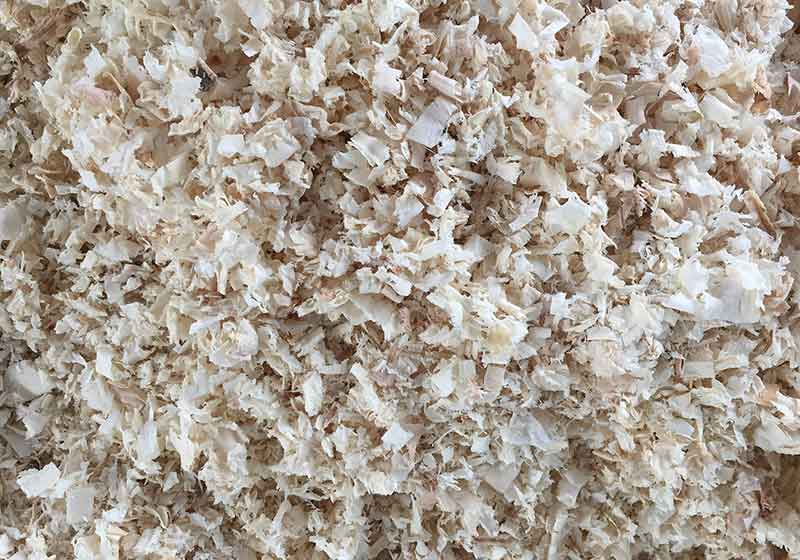
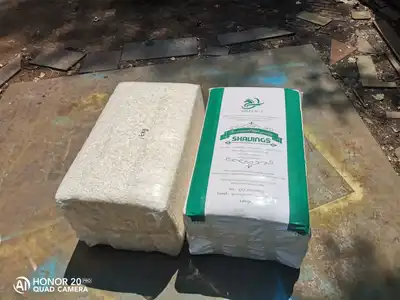
Wood shavings from planing, furniture production, timber processing and animal-bedding preparation are clean but extremely light. Their low loose bulk density makes storage, weighing and long-distance distribution inefficient unless the material is compacted into a controlled retail or wholesale package.
DILOYA high-speed wood-shavings balers meter the prepared material, compress it into a rectangular block and transfer the block into a plastic bag for closing and labelling. With the correct material, bale specification, feeding and packing arrangement, a configured line can produce up to 200 bales per hour.
High-Speed Compress-and-Bag Workflow
Condition → Meter → Compress → Transfer → Bag → Close → Check weight
- Screen the shavings and stabilise moisture before they enter the day bin.
- Meter a repeatable charge with a controlled conveyor or dosing system.
- Hydraulically compress the charge into a dense rectangular block.
- Hold the block shape during transfer to prevent premature expansion.
- Fit or advance the plastic bag around the compressed block.
- Seal, stitch or tape the bag according to the required package.
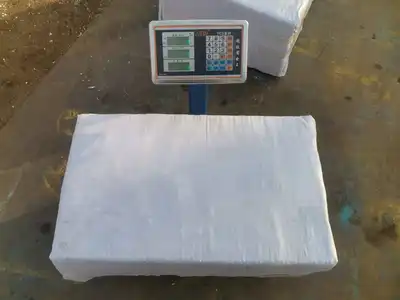
- Check weight, print the batch label and move the finished bale to palletising.
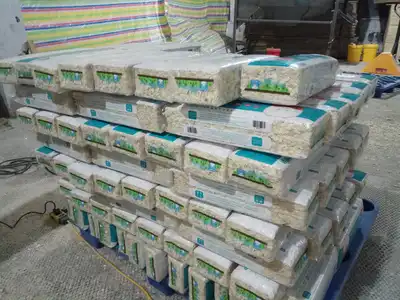
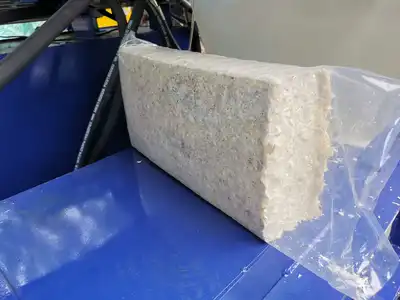
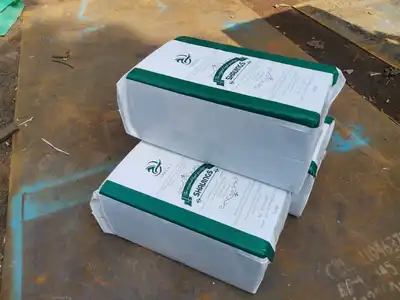
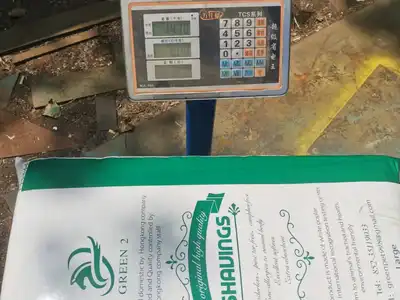
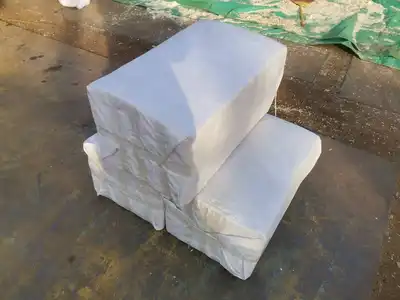
Finished Wood Shavings Packages
What “Up to 200 Bales per Hour” Requires
The 200-bale figure is a maximum configured line rate, not a guarantee for every feedstock or package. It requires consistent free-flowing shavings, stable moisture and bulk density, a suitably small bale specification, uninterrupted automatic feeding, rapid block transfer, an adequately staffed or automated bag-closing station and sufficient takeaway capacity.
Actual output is determined during selection from the target net bale weight, compression ratio, number of strokes, material recovery time, bag handling and downstream palletising. Larger or heavier bales, wet or stringy shavings, manual bag fitting and frequent material changes reduce the achievable hourly count.
Feed Quality Window
- Suitable: clean, screened and reasonably uniform softwood or hardwood shavings.
- Control: moisture, particle size, loose bulk density, dust fraction and spring-back.
- Remove: stones, metal, fasteners, large wood chunks, plastic and chemically contaminated material.
- Separate: animal-bedding grades from treated, painted or otherwise unsuitable wood residues.
Bag and Package Design
Bag length, width, film thickness, permeability, closure method and printed artwork must match the compressed block and its rebound. The transfer sleeve and bag opening should provide enough clearance for reliable insertion without wasting excessive film. Trial production confirms the fill weight, block dimensions, seal integrity and package appearance after recovery.
Dust, Fire and Operating Control
Dry wood particles create combustible dust and a substantial fire load. The line requires effective extraction, housekeeping, grounding, ignition-source control and fire protection appropriate to the site and local rules. Moist or biologically active material should not be sealed for storage until its condition is confirmed suitable.
What DILOYA Engineers Evaluate
DILOYA evaluates wood species and source, shaving dimensions, fines content, moisture, loose bulk density, flow and rebound, target bale weight and dimensions, required sustained output, bag size and film, bag fitting and closure method, feeding and buffer capacity, check-weighing, palletising, dust control, available space and local voltage. Representative samples and timed material data are required when the project targets a rate approaching 200 bales per hour.