6061 Aluminium Chip Briquetting for a Customer in Thailand
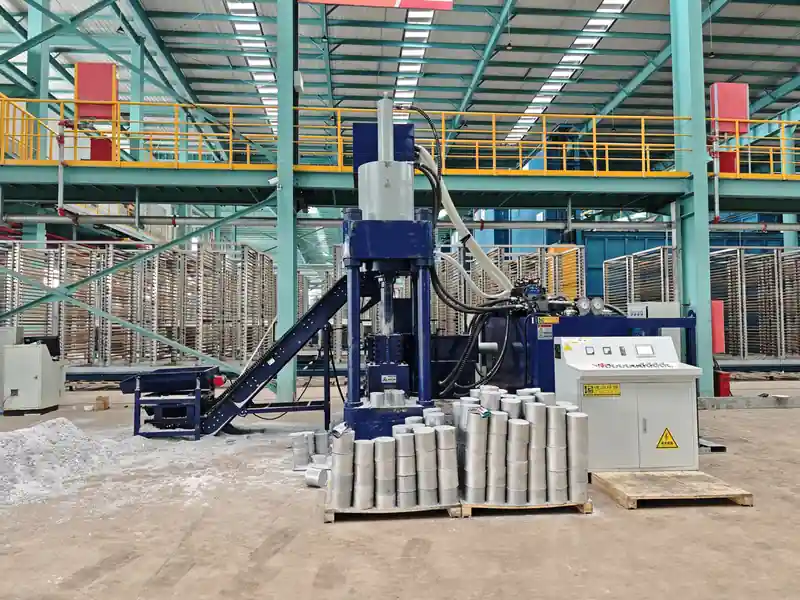
A customer in Thailand selected a DILOYA aluminium chips briquetting machine to turn loose 6061 aluminium machining chips into compact cylindrical briquettes. The project has a reported output of 1,000–1,500 kg/hour and a finished-briquette density greater than 2,000 kg/m³. The installation combines hydraulic briquetting with an industrial oil chiller to support extended production schedules.
The customer's priorities were practical: keep pace with the chip stream, reduce the space occupied by loose material, simplify dispatch and prepare a more manageable feed for remelting. For related equipment information, see Vertical Briquetting Press.
Project Configuration
Equipment: Aluminium chip briquetting machine with industrial oil chiller
Reported briquette density: Greater than 2,000 kg/m³
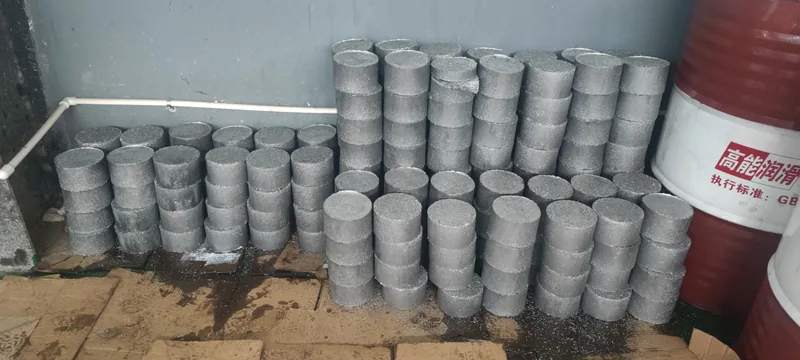
Finished form: Cylindrical aluminium chip briquettes.
Output and density are project figures supplied for this case. Actual results depend on chip geometry, cleanliness, residual-fluid content, feeding consistency and machine settings. Briquette density is not the same as the bulk density of briquettes stacked in a container.
The Challenge: Loose Chips Occupying Valuable Space
Loose 6061 aluminium chips can occupy considerable space between machining, collection and recycling. Moving this material repeatedly also complicates housekeeping and dispatch. The customer wanted to process the chips close to their source and collect them in a compact form suitable for organised storage and onward handling.
The selected processing range of 1,000–1,500 kg/hour addresses this project's material flow. Reliable performance depends on coordinating chip collection, feeding, pressing and finished-briquette removal rather than considering the press in isolation.
The Installation: Briquetting with Industrial Oil Cooling
The machine compresses prepared aluminium chips into dense briquettes. The installation includes an industrial oil chiller to help control hydraulic-oil temperature during prolonged operation. This thermal-management provision supports the customer's requirement for around-the-clock production, subject to the specified operating conditions, routine inspections, maintenance and safe operating procedures.
The customer reports that the machine runs well and delivers high output. The oil chiller is a supporting part of the production arrangement, not a substitute for maintenance or a guarantee of uninterrupted operation under every condition.
Key Benefits for the Customer
1. High Output for the Project's Chip Stream
A reported processing rate of 1,000–1,500 kg/hour gives the customer a practical basis for organising chip recovery. Matching the feeding and receiving arrangements to the press helps avoid a build-up of loose chips and supports a steady workflow. Material trials remain important when specifying a machine for a different chip source.
2. More Efficient Use of Warehouse Space
The customer reports a substantial improvement in storage-space use after briquetting. Compression reduces the voids within loose chips and provides a defined output form that can be collected in suitable containers or safely arranged in designated areas. The finished-briquette density above 2,000 kg/m³ describes the compact material; a precise storage-volume reduction would require measurements of the incoming chips and the actual storage arrangement.
3. Lower Transport Costs
According to the customer, the compact output has also reduced transport costs. Briquettes make it easier to consolidate material for dispatch and reduce the handling of loose chips. The benefit is especially relevant where loose-chip volume limits loading efficiency, although the actual saving depends on vehicle payload limits, packaging, loading practices and transport distance.
4. Improved Remelting Preparation
The customer reports improved melting efficiency and reduced burn-off during remelting. Compared with loose chips, dense briquettes provide a more concentrated charge form and reduce the exposed surface associated with individual chips. This can support more controlled furnace charging when the receiving process is suitable.
These are reported project benefits, not a guaranteed recovery percentage. Alloy segregation, contamination, moisture, furnace design, charging method and operating practice still influence yield. Briquettes must meet the receiving furnace's safety and material requirements; compaction alone does not establish that a charge is dry or safe to melt.
5. Support for Long Production Schedules
The industrial oil chiller helps manage hydraulic heat during extended production. Together with consistent feeding, operator checks and planned maintenance, it supports the customer's 24-hour production requirement. Cooling capacity and operating limits should be selected for the actual ambient conditions and duty cycle.
Finished 6061 Aluminium Chip Briquettes
The supplied photograph below shows the compact cylindrical output. Briquettes offer a defined form for collection, storage and dispatch while keeping the 6061 material stream identifiable. Suitable handling and stacking arrangements remain necessary to manage weight and prevent rolling or unstable piles.
Customer Feedback
The following is an edited English summary of the customer feedback supplied for this case, rather than a verbatim quotation.
The Thai customer is very pleased with the machine's performance, reporting smooth, reliable operation and high output. They highlight the industrial oil chiller as an important feature for their long production schedule. Briquetting has substantially reduced the space needed for chip storage and lowered transport costs, while the compact material has improved their remelting workflow and helped reduce burn-off.
Planning an Aluminium Chip Briquetting Project?
For a related aluminium project, read Aluminium Die Cast Chips Briquetting Line in Korea. That case concerns ADC12 chips rather than 6061 aluminium, so its operating figures should not be transferred directly to this project. Explore the Briquette Press range to compare equipment options.
Send DILOYA representative chip photographs or samples, alloy grade, hourly volume, residual-fluid condition, target briquette dimensions, available space, ambient temperature and required working schedule. These details help define the press, feeding arrangement, cooling provision and any necessary chip preparation for the actual application.
