Automatic UBC Baler

Explore automatic UBC balers for used aluminium beverage cans. Compare feeding arrangements, hydraulic compression and bale handling for your recycling operation.

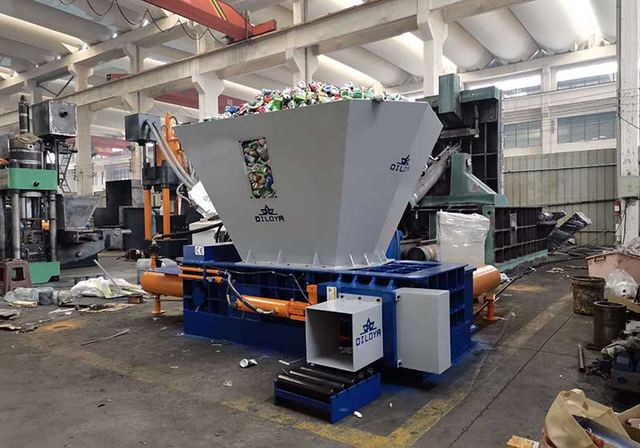
Hopper-fed UBC shear baler with large receiving hopper and discharge chute

Big Hopper Automatic UBC Shear Baler

Hopper Automatic UBC Shear Baler is designed to compact prepared aluminium used beverage cans into manageable bales. It combines a large receiving hopper with hydraulic compression and an automatic operating sequence, connecting loose-can collection with finished-bale handling.

View product details +

Customer Cases

View all cases +
Pile of compacted aluminium used beverage can balesAutomatic Aluminium UBC Shear Baler

A three-cylinder automatic shear baler for an Indonesian Aluminium UBC recycling customer, with a reported processing capacity of 900–1,100 kg/hour.

View case +
Integrated aluminium chip briquetting line with inclined conveyor and control panelAluminium Die Cast Chips Briquetting Line in Korea

An integrated briquetting line for a Korean customer's ADC12 aluminium die-cast chips, with a reported capacity of 200–300 kg/hour and a compact layout for limited production space.

View case +
Rows of finished iron chip briquettes from the Russia customer projectBig Output Horizontal Briquetting Line

A Russian iron chip briquetting project with a reported output of 4,000–6,000 kg/hour and briquette density of 5,000 kg/m³, supporting organised handling, storage and recycling.

View case +
Aluminium chip briquetting installation and finished briquettes for the Thailand customer projectAluminium Chips Briquetting Machine

A Thai customer's 6061 aluminium chip briquetting project with reported output of 1,000–1,500 kg/hour, density above 2,000 kg/m³ and industrial oil cooling.

View case +

Solutions

View all solutions +
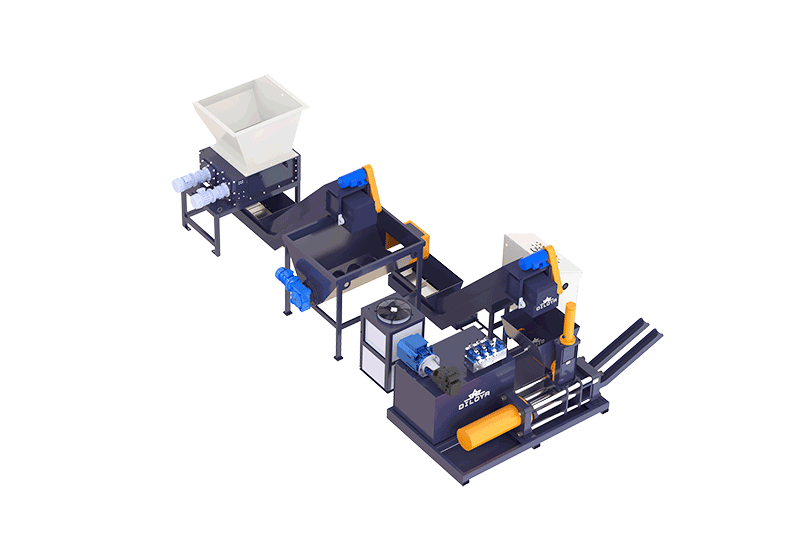
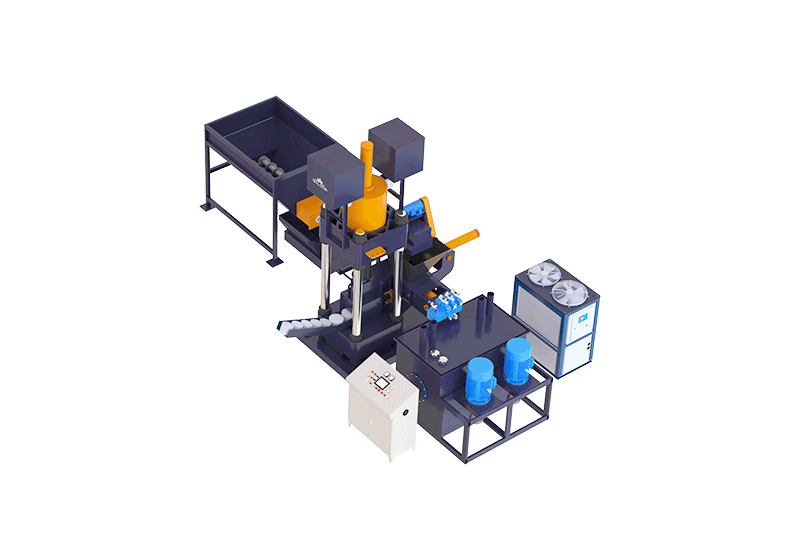
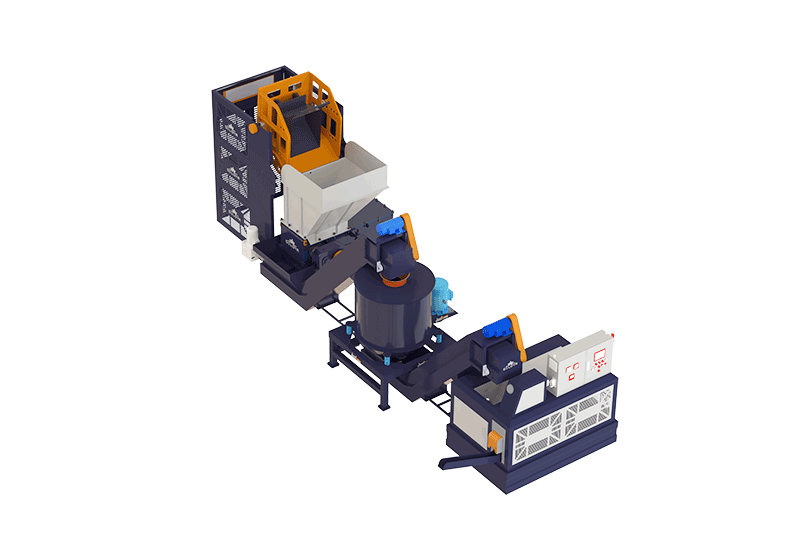
Metal-shavings shredding and briquetting line with buffer hopper and conveyorsAuto Metal Shavings Shred-Briquetting LineAn automated metal-shavings line integrating four-shaft shredding, an optional sizing screen, a large screw buffer hopper and a servo-controlled dual-outlet briquetting press. The hopper buffers shredded material for coordinated feeding. The compact system supports high-output operation, with approximately 5–6 finished briquettes per minute in a suitable configuration and energy-conscious servo control.Aluminium chip briquetting line with buffer hopper, feed conveyor and hydraulic pressAluminium Chips Briquetting LineA hopper-fed briquetting line for fluffy, low-bulk-density aluminium, copper and brass chips, as well as suitably shredded steel chips. The press incorporates pre-compression to accommodate a larger loose charge before final pressing, helping increase briquette weight and mass output. A large screw buffer hopper reduces loading frequency and supports coordinated automatic feeding.Metal-turnings processing layout with shredder, centrifugal dryer and briquetting pressMetal Turning Shred-Centrifuging Briquette LineAn automated line for tangled iron or steel, aluminium and copper turnings, combining trolley lifting and tipping, single-shaft shredding, centrifugal de-oiling and hydraulic briquetting. Prepared chips pass through the centrifuge before pressing; residual oil content can reach approximately 3% with suitable material and operating conditions. Coordinated handling reduces repeated manual transfers between stages.

FAQ

How should bale density be evaluated?+

Calculate bale density from measured mass and the released bale's external dimensions, then assess whether that package is stable and acceptable. Density is a useful comparison only when the measurement stage is consistent. A chamber dimension under pressure can overstate the density of a springy bale after discharge.

Illustration: a bale measuring 0.5 m × 0.5 m × 0.5 m has an external volume of 0.125 m³. If its measured mass is 100 kg, the calculated bulk bale density is 800 kg/m³. These figures are an arithmetic example, not a promised bale specification.

A useful assessment also considers shape stability, loose edges, handling and the receiving furnace or recycler's requirements. Higher density is not the only goal if the package becomes unsuitable for handling or downstream processing. Agree the sampling and measurement method for acceptance.
What matters when baling light sheet scrap?+

For light sheet scrap, the loading problem is often volume and spring-back rather than weight alone. Large skeletons can bridge or leave uneven voids, so chamber access and the pressing sequence deserve close attention. A sample trial should demonstrate a manageable released bale, not merely show that the scrap can be pushed into the chamber.

Assess piece size, coatings, attached contaminants and how the material is loaded. The selected baler must form a manageable package without assuming that light weight means easy processing. Buyer requirements for bale dimensions, cleanliness and density should guide the final configuration.

Can the same baler process stainless steel and carbon steel?+

A baler approved for carbon-steel scrap is not automatically approved for similarly sized stainless scrap. Grade and work-hardening condition can change the pressing duty, while mixing grades can reduce the value of the load. Check mechanical compatibility and grade-control procedures separately before using a shared machine.

Grade separation is also important for recycling. Confirm approved materials and loading limits, and consider cleaning between valuable alloy streams. A shared machine configuration must be established through engineering assessment and, where needed, representative testing.

Why does a bale expand after discharge?+

Expansion after discharge is often elastic recovery, not evidence that the pressure gauge must be turned up. The extent depends on scrap stiffness, how the load is distributed and the approved pressing sequence. Evaluate the released dimensions and stability under the intended handling conditions before deciding whether preparation or a different arrangement is needed.

Check the approved pressing sequence, material distribution and bale requirements with the machine supplier. Do not improvise higher pressure or change protective settings. Representative post-discharge measurements are needed when final dimensions and stability are important to the buyer.

What is the role of a hopper-type shear baler?+

A hopper-type shear baler should be assessed as a particular feeding, cutting and compaction sequence. Its usefulness depends on how the scrap enters and what must happen before a stable package can be discharged. Hopper Type Shear Baler provides configuration context, not a general cutting permission for unknown solid sections.

Confirm the approved scrap size, cutting duty and finished-product requirement for the proposed model. Do not assume a shear-baler can cut every solid object or substitute for a heavy scrap shear regardless of section strength.

Automatic UBC Baler Selection

UBC means used beverage cans. This category brings together existing automatic baling equipment for processing aluminium cans into compact bales. Start with the incoming can quantity, bulk density, sorting and draining requirements, then coordinate feeding, compression and finished-bale handling.

View the Big Hopper Automatic UBC Shear Baler for the available machine configuration. Compare Aluminium Can Baling Machine for material-specific selection and Hopper-Fed Can Baler for hopper-loading layouts. Actual throughput, bale size and automation requirements must be confirmed against the supplied material and project conditions.

Leave A Message

Let's Figure Out The Best Solutions!

Tell us what you need.

Share your material, target hour capacity and other requirements. Our engineering team will reply with a suitable solutions.

01Call DILOYA+86 152 2134 765002Email our teaminfo@diloya.com
We use your details to respond to this enquiry. Read our Privacy Policy.