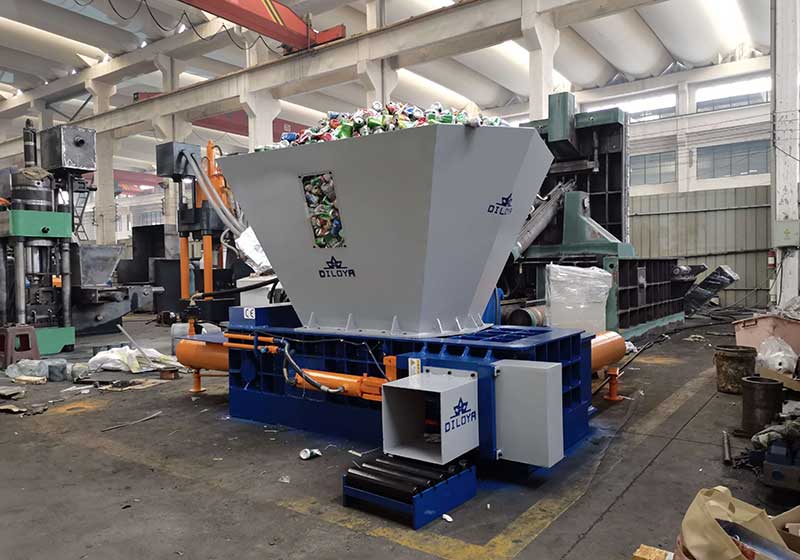
Big Hopper Automatic UBC Shear Baler
Large-Hopper Hydraulic Baler for Automatic Aluminium UBC Compaction
Hopper Automatic UBC Shear Baler is designed to compact prepared aluminium used beverage cans into manageable bales. It combines a large receiving hopper with hydraulic compression and an automatic operating sequence, connecting loose-can collection with finished-bale handling.
- Driven Type
- Hydraulic Driven
- Control
- PLC Automtic Control
- Core Components
- Pump, Motor
- Motor
- China Famous Brand
- PLC Brand
- Mitsubishi
- Electrical Components
- Schneider
Description
Automatic Baling For Loose Aluminium Beverage Cans
The DILOYA Big Hopper Automatic UBC Shear Baler is designed to compact prepared aluminium used beverage cans into manageable bales. It combines a large receiving hopper with hydraulic compression and an automatic operating sequence, connecting loose-can collection with finished-bale handling.
Loose beverage cans occupy considerable space relative to their weight. Forming them into compact packages helps recyclers organise material, simplify collection and prepare loads for onward transport. The finished bale should be matched to the receiving buyer's requirements for dimensions, weight, cleanliness and handling.
From Material Receiving To Finished Bales
Prepared cans enter the receiving hopper before the configured compression and discharge sequence. The hopper provides an interface between incoming material and the press; its size and loading arrangement should be selected around loose-can volume, delivery batches and the available working space. Conveyor feeding can be evaluated where the project requires an integrated material flow.
Automatic operation coordinates the specified machine cycle, but material supply, bale collection and supervision remain part of the complete process. Required output must be assessed with representative cans and the agreed loading and collection arrangement.
Related project references include the big-hopper UBC shear baler in Colombia and the automatic aluminium UBC shear baler in Indonesia. These illustrate customer applications, not universal performance ratings for every configuration.
Advantage
Large-Hopper Material Receiving
The large receiving hopper supports the handling of bulky, lightweight can feed before compression. Matching the hopper and loading method to the incoming batches helps organise material delivery and reduce repeated small-batch handling.
Hydraulic Compression And Automatic Sequencing
Hydraulic compression consolidates prepared cans into defined packages. Automatic cycle control coordinates the configured compression and discharge operations, reducing repeated manual cycle commands. The exact control functions and any conveyor or remote-control interfaces should be confirmed in the supplied configuration.
Organised Storage And Transport Preparation
Turning loose cans into bales supports clearer stock organisation and planned material collection. Actual space utilisation and transport efficiency depend on the released bale dimensions, weight, stacking method and the receiving customer's specification.
Integration Around The Actual Workflow
Feeding, available hopper capacity and finished-bale removal should be considered together. A coordinated layout can connect the press with upstream collection and downstream handling without treating the baler alone as the entire recycling line.
Defined Operation And Service Access
Plan controlled access, operator visibility and maintenance clearance around both the hopper and discharge area. Automatic mode does not mean unattended operation. Inspection, blockage clearing and maintenance must follow the supplied machine's safeguarding and energy-isolation procedures.
Parameter
Please find below specification of different models:
| Model | CMS100 | CMS160 | CMS200 | CMS315 |
|---|---|---|---|---|
| Chamber Size | 1200x700x400mm | 1500x1000x350mm | 1600x1200x400mm | 2000x1400x500mm |
| Bale Size | 400x250mm | 350x350mm | 400x400mm | 500x500mm |
| Bale Weight | Al:15-20kg Steel:20-40kg | Al:30-45kg Steel:75-100kg | Al:45-70kg Steel:115-150kg | Al:90-120kg Steel:225-300kg |
| Motor Power | 18.5kw | 37kw | 2x22kw | 2x45kw |
| Cycle Time | 60s | 60s | 60s | 60s |
| Control | PLC Control | PLC Control | PLC Control | PLC Control |
| Cooling System | Oil Chiller | Oil Chiller | Oil Chiller | Oil Chiller |
| Main Cylinder | 1000kn | 1600kn | 2000kn | 3150kn |
| Side Cylinder | 630kn | 1000kn | 1250kn | 2000kn |
| Lock Cylinder | 100kn | 150kn | 200kn | 250kn |
We can customize the baler machine according to your special requirements.
Application
The shear baler machine can press below materials:
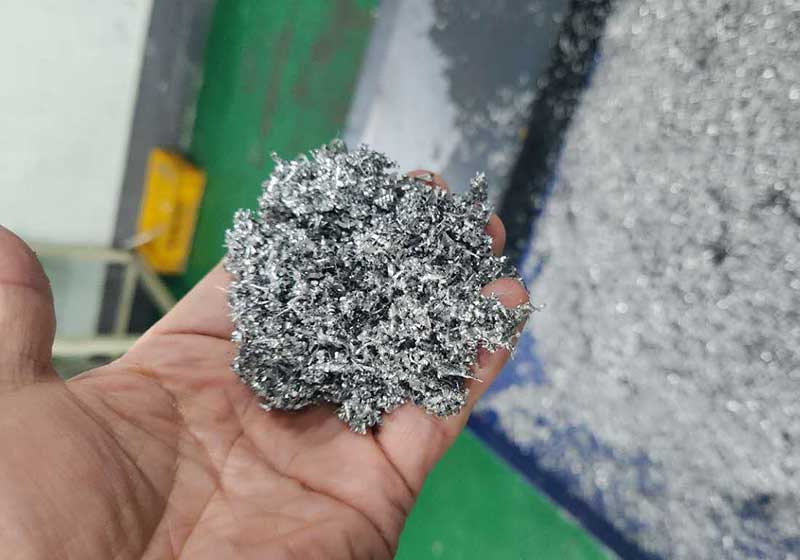
Aluminium Chips
Aluminium Chips are precision-processed from pure aluminum and aluminum alloy via CNC turning and milling. Strictly sorted, cleaned and dried, these chips feature uniform shape, low oxidation and zero sundry impurities. As premium recycled aluminum raw materials, they deliver stable metallurgical and physical properties, ideal for aluminum smelting, alloy production, chemical processing and thermal conduction applications with high cost performance.
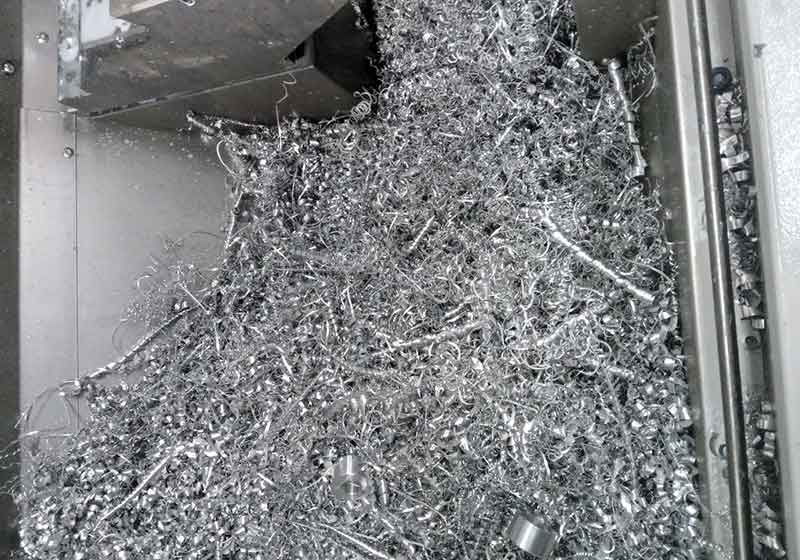
Aluminium Turnings
Aluminium Turnings are lightweight, spiral-shaped metal chips generated during machining, drilling and milling. DILOYA briquetting and baling systems compact loose turnings into dense, manageable blocks, helping reduce storage volume, improve transport efficiency and support aluminium recovery.
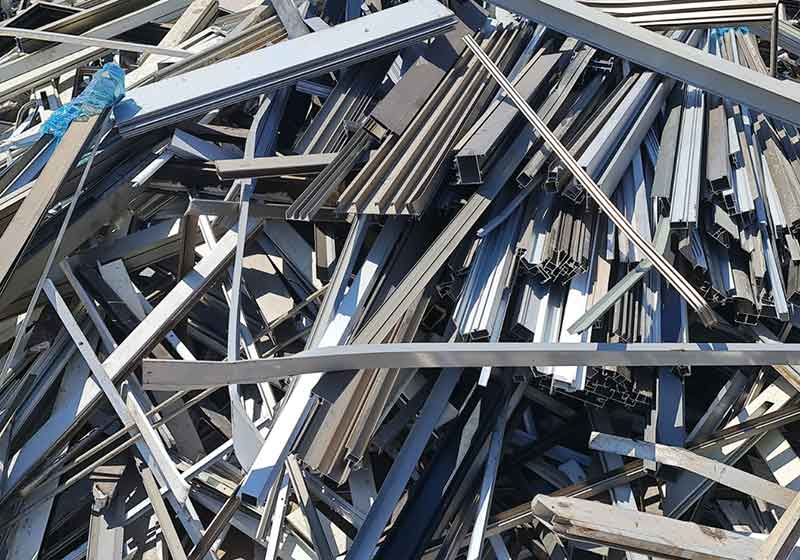
Aluminium Profiles
Aluminium profiles and extrusion offcuts are long, hollow and difficult to stack efficiently. DILOYA hydraulic metal balers compress window frames, structural sections and production offcuts into dense, stable bales for safer handling, lower storage and transport costs, and consistent delivery to aluminium recyclers and remelting plants.
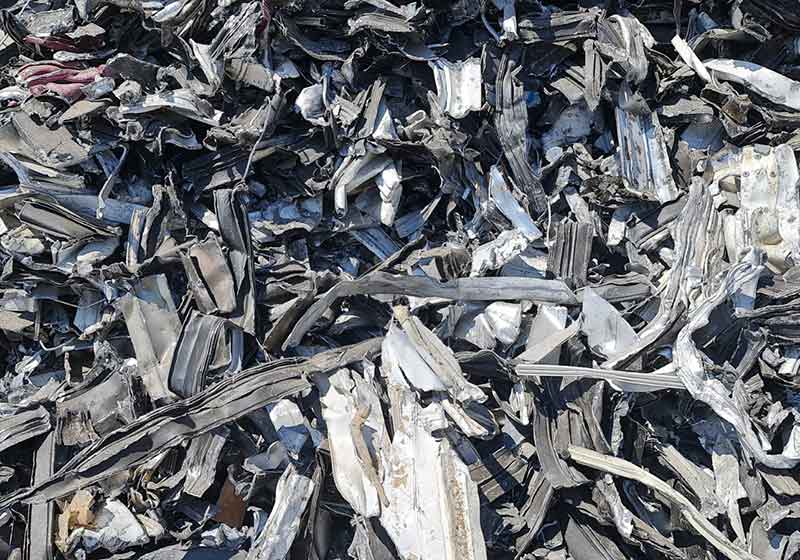
Aluminium Scrap
General aluminium scrap includes sheet offcuts, stampings, thin-gauge trimmings and mixed clean production pieces. DILOYA hydraulic aluminium scrap balers compress this loose material into dense, stable bales for efficient storage, safer handling, economical transport and consistent delivery to recycling and remelting plants.
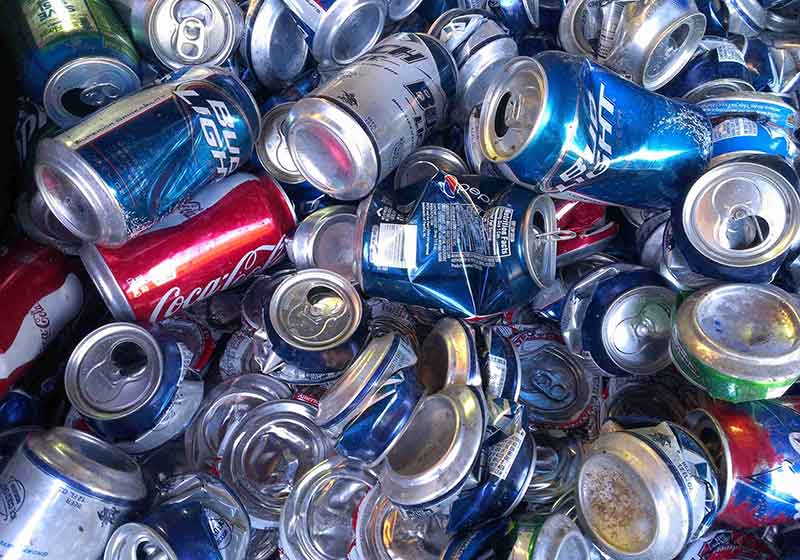
Aluminium UBC
Aluminium UBC consists of lightweight used beverage cans collected from municipal, commercial and deposit-return streams. DILOYA hydraulic UBC balers compress sorted cans into dense, stable and stackable bales for efficient storage, economical transport and consistent delivery to aluminium can recycling and remelting plants.
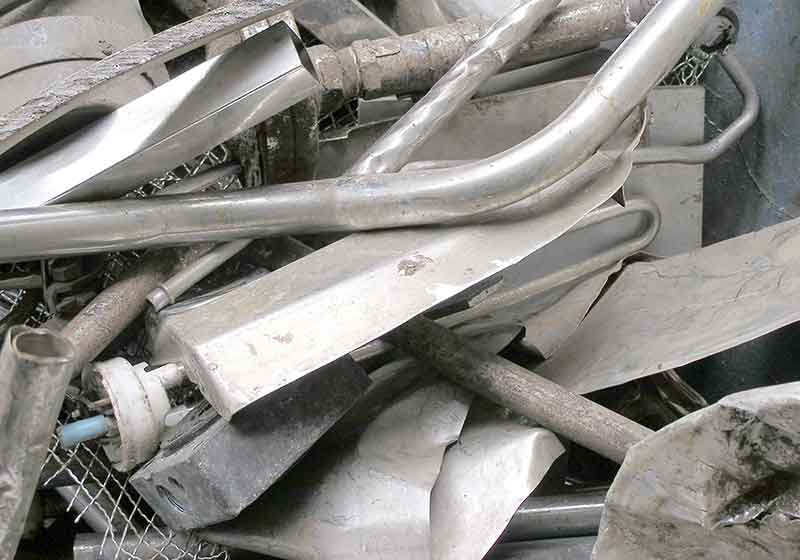
Stainless Steel Scrap
Stainless steel scrap includes sorted sheet offcuts, press skeletons, wire, mesh and light fabrication remnants. DILOYA hydraulic metal balers compress this valuable but bulky material into dense, stable bales while supporting grade separation, safer handling, compact storage and efficient shipment to stainless recyclers and melting plants. This application is intended for baling only.
FAQ
What should be considered for aluminium UBC baling?+
For aluminium UBC, define the can condition and the buyer's bale requirement before choosing automation or capacity. Loose cans create a high-volume feeding duty; residual liquid and mixed containers also affect the process. Automatic Aluminium UBC Shear Baler documents one Indonesian project, but its reported output is not a rating for every UBC stream.
The buyer may specify bale size, density, packaging and cleanliness. Match the baler and any conveyor to those requirements. A can-baling line does not replace upstream sorting, and mixed containers or unsuitable contaminants should not be assumed acceptable.
When Is A Hopper-Fed Can Baler Suitable?+
A hopper-fed can baler is worth considering when cans arrive in repeatable loose-volume batches or through a conveyor and the process needs a receiving point between collection and compression. The hopper can provide a controlled interface, but its presence does not automatically make the line continuous or eliminate manual handling.
Size the receiving arrangement around the delivery pattern
Check the largest routine batch, loose bulk density, can condition and the intended loading method. A large hopper that receives material faster than the press can use it may overflow; an inconsistent supply can leave an otherwise capable press waiting. Hopper geometry and feeding behaviour should be assessed with representative cans rather than extrapolated from a nominal volume alone.
Compare Hopper-Fed Can Baler with the actual Big Hopper Automatic UBC Shear Baler and Hopper Feed Aluminium Cans Baler product pages. These references show different equipment options; final suitability still depends on material and layout. A small, irregular collection operation may instead prioritise simple batch loading, while another site may need a conveyor and coordinated controls.
Plan visibility, access control, spill management and maintenance space around the loading point. Never rely on workers entering or reaching into the hopper to keep material moving. If bridging or a blockage occurs, the response must follow the approved machine-specific isolation and clearing procedure.
What Conveyor Is Suitable For An Automatic UBC Baler?+
A suitable conveyor must deliver the required loose-can volume into the baler at a controllable rate. Belt width alone does not establish suitability. Assess can size, whether cans are loose or flattened, residual-liquid condition, contamination, delivery batches and the vertical and horizontal distance between collection and the receiving hopper.
Define the mechanical duty and the control interface
Conveyor type, surface, incline, side containment and any cleats should be selected for the actual material and route. The transfer point must avoid uncontrolled spillage and excessive drop-related disruption. Provide cleaning and inspection access, and confirm how liquids and loose debris will be managed rather than allowing them to accumulate beneath the line.
The feed rate needs coordination with the press cycle and available hopper space. Review the supplier’s level detection, start-stop logic, overload response and safeguarding interfaces. An upstream conveyor should not continue loading a stopped or full receiving point merely because the press itself has an automatic mode.
Compare Automatic UBC Baler and Hopper-Fed Can Baler when specifying the integrated arrangement. The Automatic Aluminium UBC Shear Baler case offers an example of a project application, not a universal conveyor specification. Ask for the proposed route drawing, design flow, drive and control scope, guarding boundaries and representative material-test results before approving the conveyor.
What is the role of a hopper-type shear baler?+
A hopper-type shear baler should be assessed as a particular feeding, cutting and compaction sequence. Its usefulness depends on how the scrap enters and what must happen before a stable package can be discharged. Hopper Type Shear Baler provides configuration context, not a general cutting permission for unknown solid sections.
Confirm the approved scrap size, cutting duty and finished-product requirement for the proposed model. Do not assume a shear-baler can cut every solid object or substitute for a heavy scrap shear regardless of section strength.
How should metal-baler throughput be measured?+
Metal-baler throughput is accepted bale mass divided by representative elapsed production time. State whether that time includes loading and collection, and retain information about interruptions. A fast ram stroke can coexist with low yard output if the chamber waits for scrap or finished bales cannot be removed.
- Record the actual incoming scrap and target bale.
- Time a representative production period.
- Weigh accepted completed bales.
- Include the loading and collection tasks agreed for the test.
- Report interruptions rather than deleting them from the result without explanation.
A short no-load cycle or peak ram speed does not represent sustained tonnes per hour. Mixed scrap, inconsistent loading and collection delays can change output. Agree the measurement boundary before comparing machine performance.
Related products
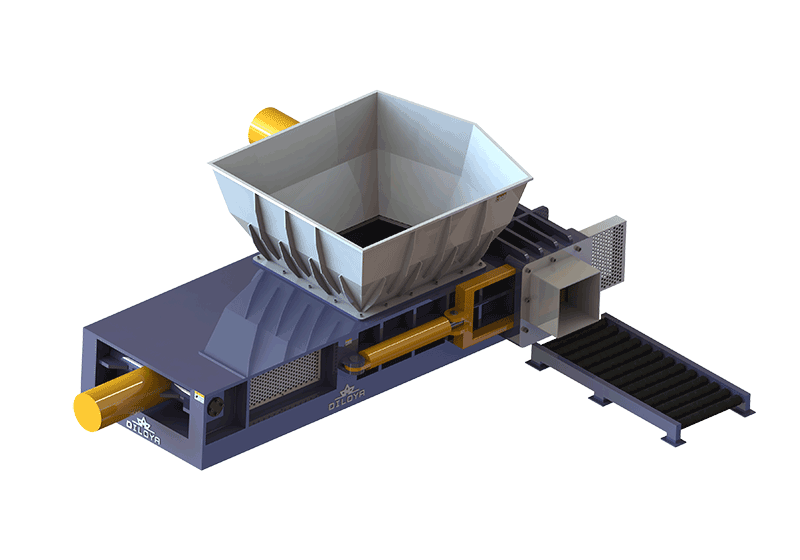
Hopper Type Shear Baler
The Hopper Type Shear Baler is a heavy-duty hydraulic scrap processing machine designed for efficient shearing, compacting, and recycling of various metal scraps, aluminium tins cans, Scrap steel, light metal, sheet metal, profiles, pipes, and other bulky materials can be continuously loaded into the hopper and compressed before cutting.
View details +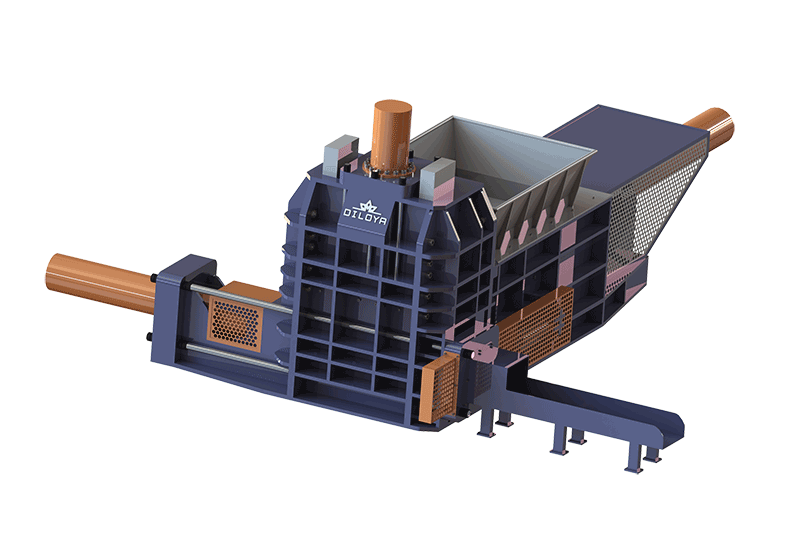
Three Rams Shear Baler
The DILOYA Three Rams Shear Baler combines staged hydraulic compression, shearing and bale discharge to turn loose metal scrap into compact, uniform bales for recycling, storage and transport.
View details +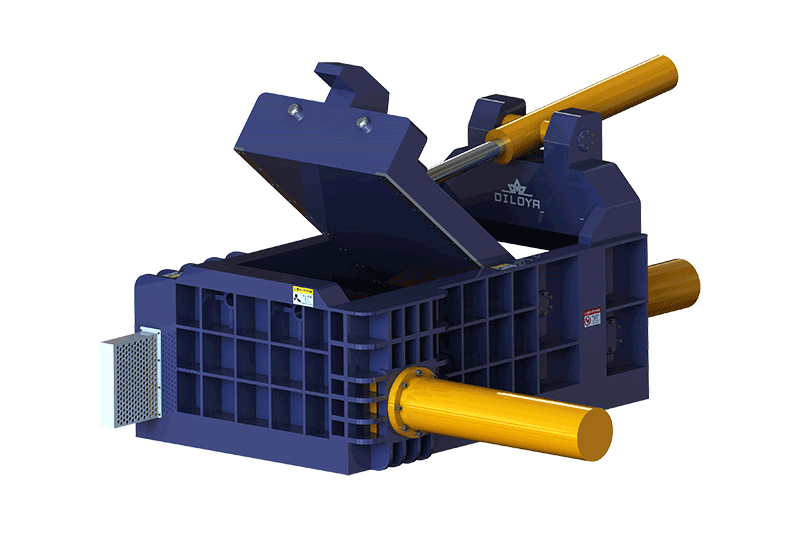
Side Push-Out Metal Baler
The DILOYA Side Push-Out Metal Baler compresses loose ferrous and selected non-ferrous scrap into stackable rectangular bales, then ejects each bale through a side outlet for efficient handling.
View details +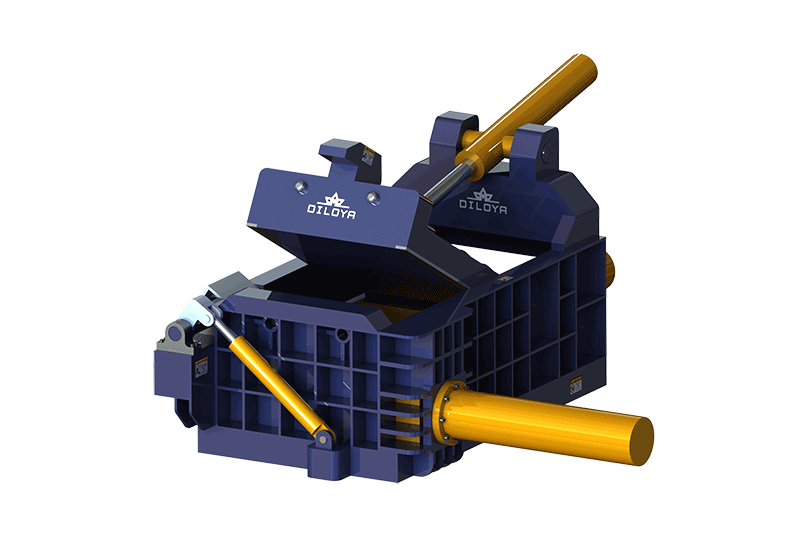
Side Turn-Out Metal Baler
The DILOYA Side Turn-Out Metal Baler compacts suitable loose metal scrap into rectangular bales and turns each finished bale out from the side of the chamber for collection and transport.
View details +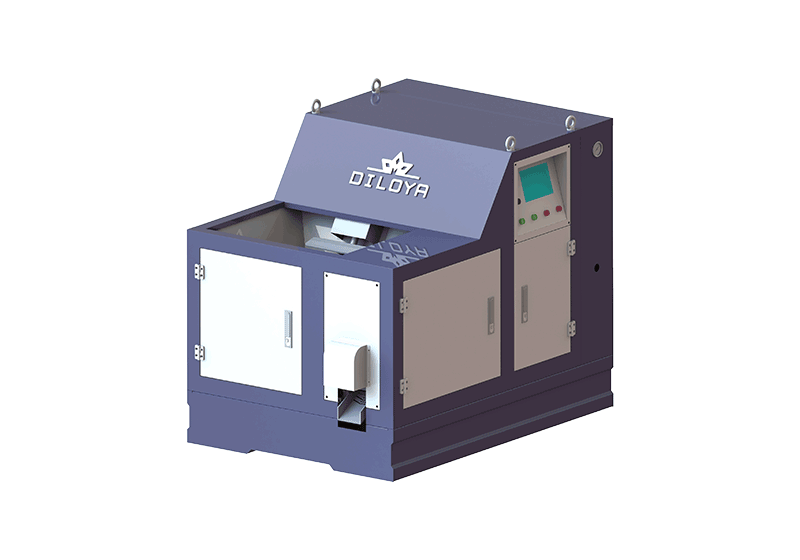
Small Briquetting Press
The DILOYA Small Briquetting Press cold-compresses loose metal chips into compact briquettes without melting. Designed for machining centers and workshops, it can process suitable aluminium, copper, brass and iron chips while occupying relatively little floor space and using a power system sized for small-scale chip recovery.
View details +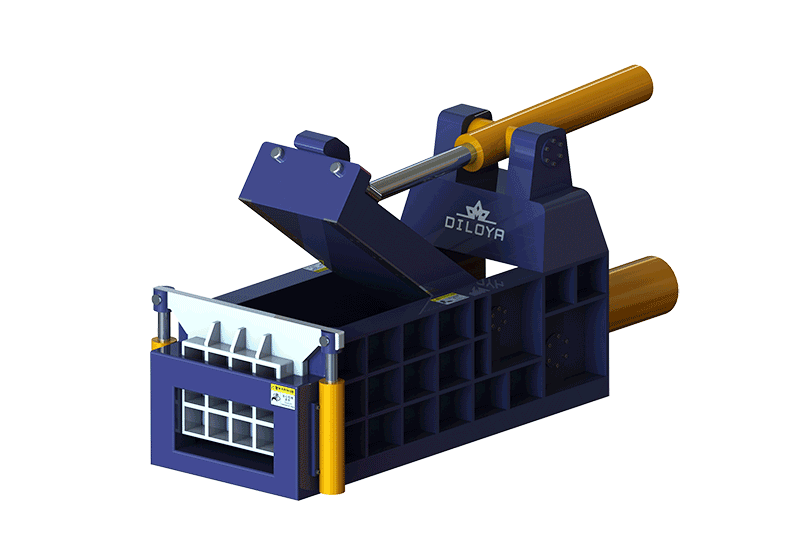
Forward-Out Metal Baler
The DILOYA Forward-Out Metal Baler compresses suitable loose metal scrap into compact bales, then pushes each finished bale through a front outlet for straightforward collection and handling.
View details +Customer Cases
View all cases + High-Output Three-Ram Big-Hopper UBC Shear Baler In Colombia
Colombia customer case: three-direction compression for empty aluminium cans, PLC and remote control, with reported maxima of 90 bales/hour and 4,000 kg/hour.
View case + Automatic Aluminium UBC Shear Baler
A three-cylinder automatic shear baler for an Indonesian Aluminium UBC recycling customer, with a reported processing capacity of 900–1,100 kg/hour.
View case +Leave A Message
Let's Figure Out The Best Solutions!
Tell us what you need.
Share your material, target hour capacity and other requirements. Our engineering team will reply with a suitable solutions.