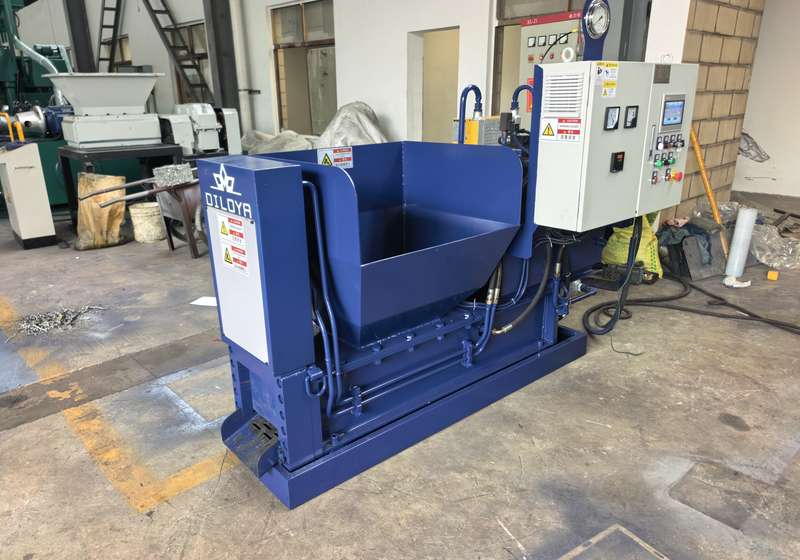
Forward-Out Metal Baler
Hydraulic Metal Baler with Forward Push-Out Discharge
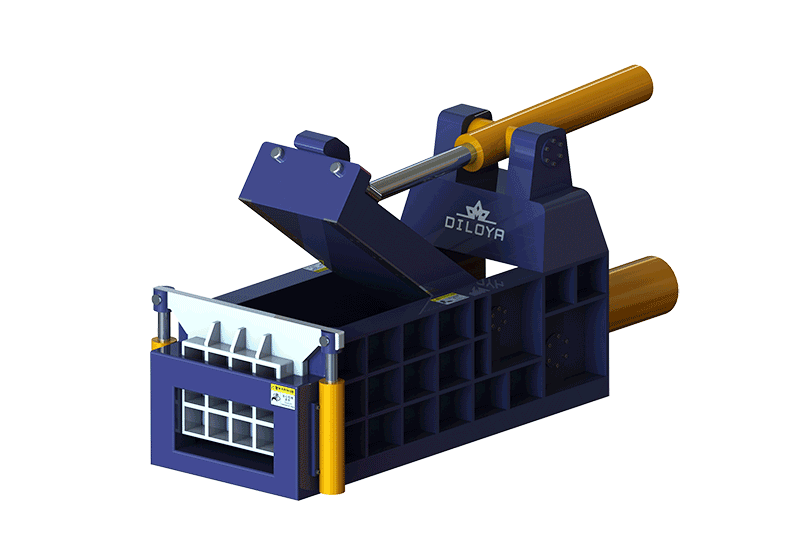
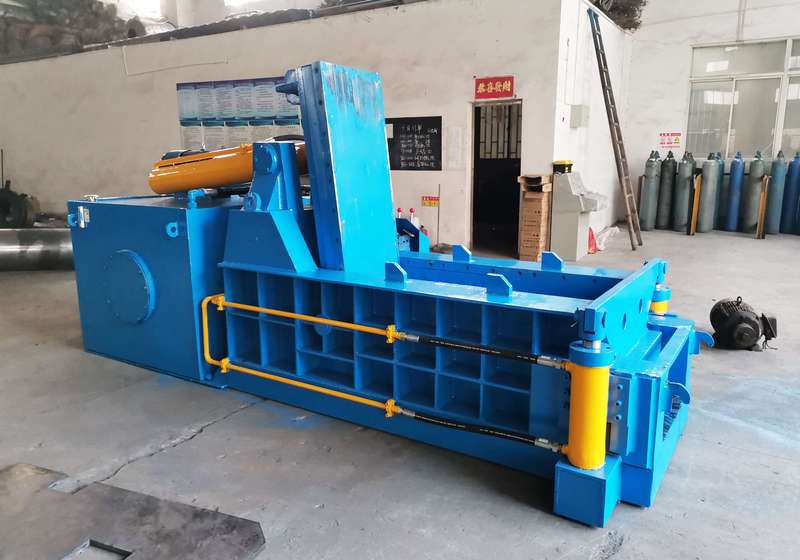
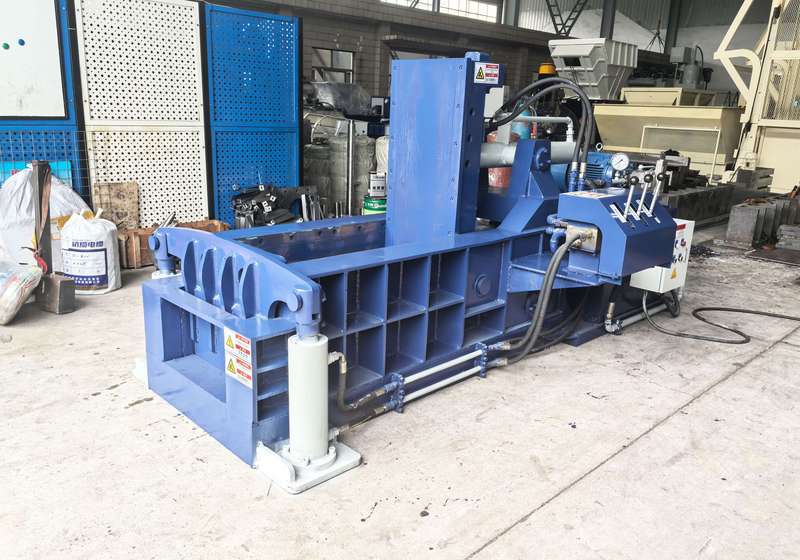
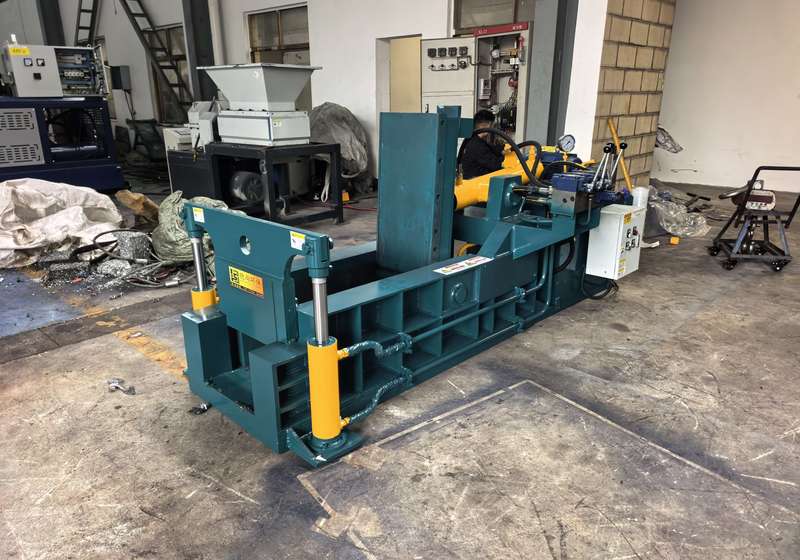
The DILOYA Forward-Out Metal Baler compresses suitable loose metal scrap into compact bales, then pushes each finished bale through a front outlet for straightforward collection and handling.
- Model
- QM Series
- Capacity
- 300-3000kg/Hour
- PLC Brand
- Mitsubishi
- Control
- PLC or Manual control
- Power Supply
- Customized
- Cooling System
- Fan or Oil Chiller
Description
The DILOYA Forward-Out Metal Baler is a hydraulic scrap compactor with a front discharge path. Loose, prepared metal is compressed inside the chamber and the finished rectangular bale is pushed forward through an outlet after the discharge door opens. The forward-out layout differs from side push-out and side turn-out designs; it should be selected with the site's feeding direction, front clearance and bale collection method in mind.
1> How the Forward-Out Cycle Works
Operators load sorted scrap into the chamber by grab, conveyor or another suitable feeding system. The lid closes and hydraulic pressure compacts the charge to the selected bale dimensions. When compression is complete, the front gate or locking door opens and the main ram advances to push the bale forward. The ram and door then reset for the next charge. The exact sequence and automation level depend on the model.
2> Suitable Feedstock
Typical materials include cans, light steel offcuts, sheet scrap, wire, aluminium profiles, stainless steel offcuts and selected copper scrap. The correct configuration depends on loose density, maximum piece size, thickness, hardness and contamination. The machine compacts material; it should not be described as cutting long or heavy sections unless a separate shear is included in the project.
3> Benefits for Recycling Operations
Compact bales are easier to count, stack, weigh and transport than loose scrap. Forward discharge creates a defined front-side collection zone that can be integrated with a receiving platform or other downstream handling arrangement. Reducing void space can improve storage and loading efficiency, while sorting grades before baling helps maintain consistent material quality.
4> Configuration and Site Planning
DILOYA can specify chamber size, compression force, bale dimensions, power, cooling, controls and front discharge arrangement according to the customer's material and target capacity. The project brief should also include front clearance, foundation, available electrical supply, feeding equipment and planned bale handling. Performance figures must be confirmed for the selected model and actual feedstock.
Advantage
> Forward push-out discharge: the bale exits through a front outlet for a clear, planned collection path.
> Hydraulic compression: loose scrap becomes more compact, regular and manageable.
> Defined handling zone: the front discharge can be aligned with downstream bale collection equipment.
> Improved storage and loading: consistent bales simplify stacking, weighing and transport planning.
> Suitable for varied grades: light ferrous and selected non-ferrous scrap can be handled after suitability review.
> Repeatable cycles: coordinated compression, door opening and ram discharge support consistent operation.
> Control options: PLC and operating-mode choices can match the site's staffing and feeding method.
>Project-specific design: chamber, force, bale size, front clearance and hydraulic package can be tailored to the installation.
Parameter
Please find below specification of different models:
| Model | QMC40 | QMC80 | QM80 | QM100 | QM125 | QM135 | QM160 |
|---|---|---|---|---|---|---|---|
| Chamber Size | 600x250x200mm | 800x350x250mm | 800x400x200mm | 1000x500x500mm | 1200x600x600mm | 1400x600x600mm | 1400x600x600mm |
| Bale Size | 250x200mm | 350x250mm | 400x200mm | 500x200mm | 600x200mm | 600x250mm | 600x300mm |
| Bale Weight | Al:5-80kg Steel:12-20kg | Al:10-15kg Steel:20-35kg | Al:15-20kg Steel:25-40kg | Al:18-25kg Steel:35-50kg | Al:20-30kg Steel:40-60kg | Al:25-35kg Steel:45-70kg | Al:30-50kg Steel:55-80kg |
| Motor Power | 3kw | 5.5kw | 5.5kw | 11kw | 15kw | 18.5 | 22kw |
| Cycle Time | 60s | 60s | 120s | 120s | 120s | 120s | 120s |
| Control | PLC Or Manual | PLC Or Manual | PLC Or Manual | PLC Or Manual | PLC Or Manual | PLC Or Manual | PLC Or Manual |
| Cooling System | Fan Cooling | Fan Cooling | Fan Cooling | Fan Cooling | Fan Cooling | Fan Cooling | Fan Cooling |
| Main Cylinder | 400kn | 800kn | 800kn | 1000kn | 1250kn | 1350kn | 1600kn |
| Lid Cylinder | 250kn | 300kn | 630kn | 630kn | 800kn | ||
| Door Cylinder | 80kn | 80kn | 80kn | 100kn | 200kn | 200kn | 250kn |
We can customize the baler machine according to your special requirements.
Application
The DILOYA QM Series forward-out metal baler can press below materials:
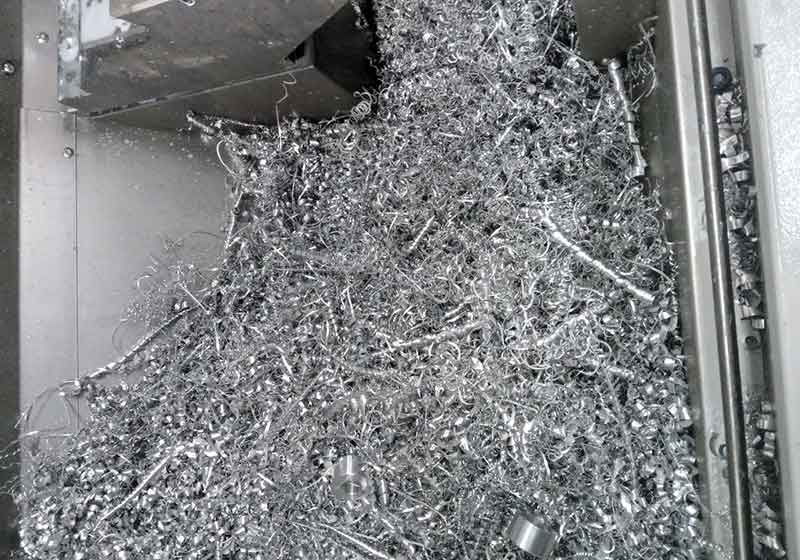
Aluminium Turnings
Aluminium Turnings are lightweight, spiral-shaped metal chips generated during machining, drilling and milling. DILOYA briquetting and baling systems compact loose turnings into dense, manageable blocks, helping reduce storage volume, improve transport efficiency and support aluminium recovery.
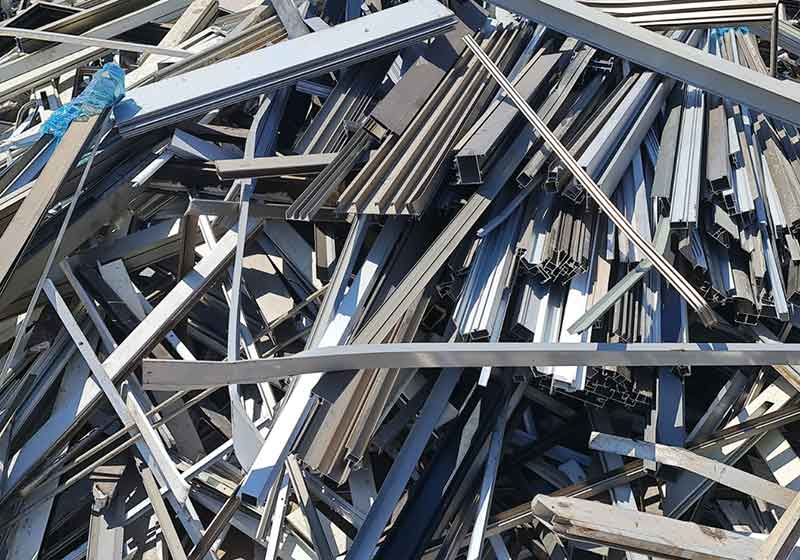
Aluminium Profiles
Aluminium profiles and extrusion offcuts are long, hollow and difficult to stack efficiently. DILOYA hydraulic metal balers compress window frames, structural sections and production offcuts into dense, stable bales for safer handling, lower storage and transport costs, and consistent delivery to aluminium recyclers and remelting plants.
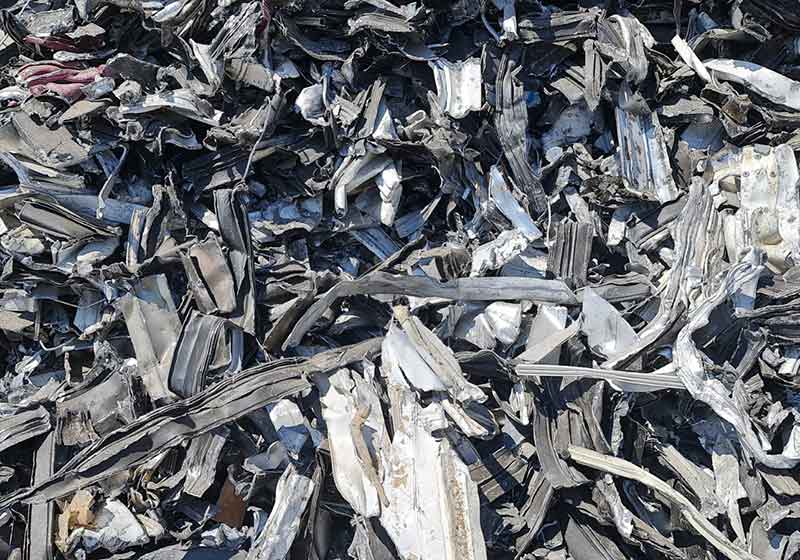
Aluminium Scrap
General aluminium scrap includes sheet offcuts, stampings, thin-gauge trimmings and mixed clean production pieces. DILOYA hydraulic aluminium scrap balers compress this loose material into dense, stable bales for efficient storage, safer handling, economical transport and consistent delivery to recycling and remelting plants.
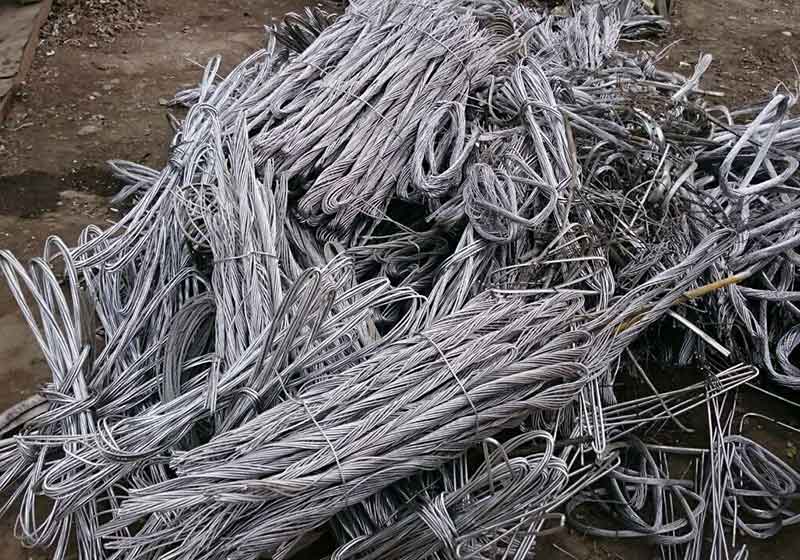
Aluminium Wires
Aluminium wire scrap is long, flexible and easily tangled, making loose material difficult to stack, load and transport. DILOYA hydraulic metal balers compress clean aluminium wires and cable conductors into dense, stable rectangular bales for safer handling, compact storage and efficient delivery to aluminium recyclers and remelting plants.
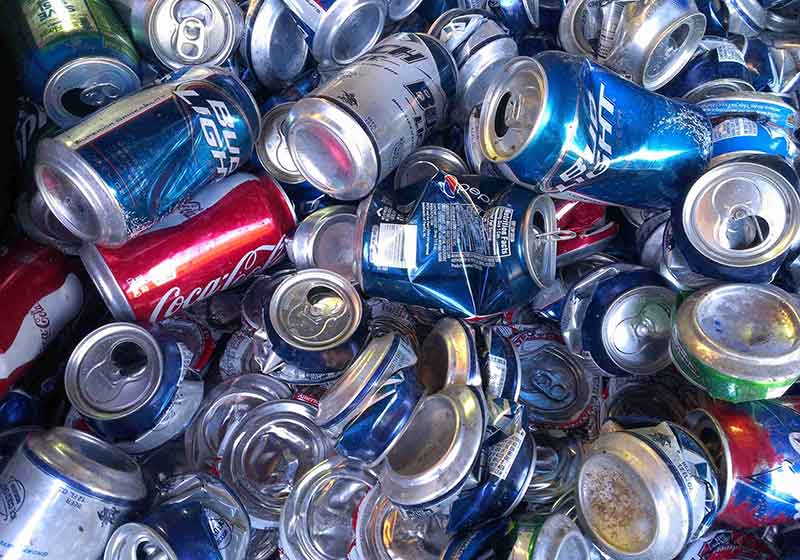
Aluminium UBC
Aluminium UBC consists of lightweight used beverage cans collected from municipal, commercial and deposit-return streams. DILOYA hydraulic UBC balers compress sorted cans into dense, stable and stackable bales for efficient storage, economical transport and consistent delivery to aluminium can recycling and remelting plants.
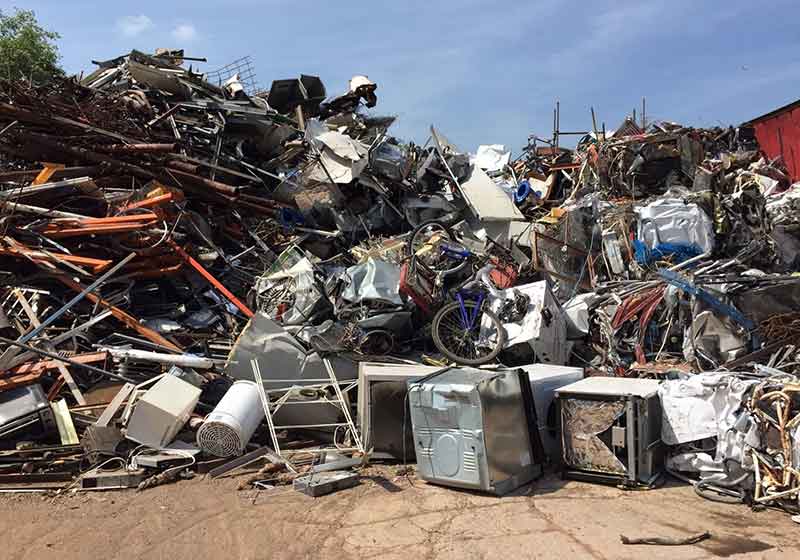
Light Scrap Metal
Light scrap metal includes thin-gauge steel sheet, press-shop offcuts, panels and other bulky ferrous pieces. DILOYA hydraulic metal balers compress this loose, springy material into dense rectangular bales for controlled storage, efficient loading and economical transport. This application is intended for baling only.
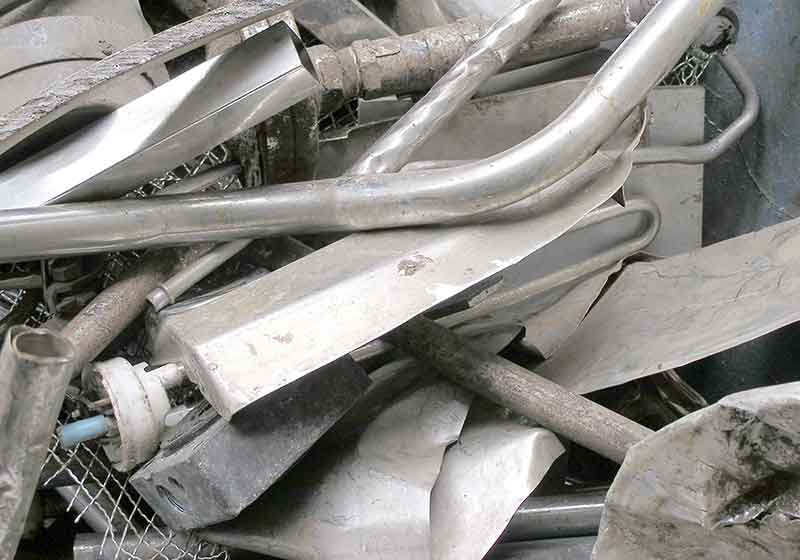
Stainless Steel Scrap
Stainless steel scrap includes sorted sheet offcuts, press skeletons, wire, mesh and light fabrication remnants. DILOYA hydraulic metal balers compress this valuable but bulky material into dense, stable bales while supporting grade separation, safer handling, compact storage and efficient shipment to stainless recyclers and melting plants. This application is intended for baling only.
FAQ
How do side-push, forward-out and turn-out bale discharge differ?+
Discharge direction determines where the receiving equipment and working clearance must be located. Side Push-Out Metal Baler, Forward-Out Metal Baler and Side Turn-Out Metal Baler illustrate distinct arrangements. Compare them against a scale yard layout, including the moving envelope and bale collection route, rather than choosing a preferred name before checking access.
- Side-push: assess the receiving area beside the machine.
- Forward-out: plan the collection route in the discharge direction.
- Turn-out: confirm the full moving and receiving envelope.
Use the actual arrangement drawing because names alone do not establish clearances or the approved collection sequence.
Select discharge around the yard layout and bale-handling method, not the name alone. Confirm the approved working envelope, bale support and machine sequence in the arrangement drawing. A preferred discharge direction is only practical if the receiving area can handle the package safely.
How do I select the charging-chamber size?+
Size the chamber around how the scrap actually arrives. A large sheet skeleton may bridge an opening even when its weight is low, whereas short offcuts may fill efficiently. Check the useful loading envelope, batch presentation and bale specification together. How to Match Material Size, Press Chamber Dimensions and Bale Requirements When Selecting a Metal Baler? develops this selection problem beyond nominal chamber dimensions.
- Largest normal scrap dimensions and awkward shapes.
- Loading-machine reach and batch size.
- Useful chamber volume for bulky material.
- Preparation needed for oversized pieces.
- Finished-bale dimensions and the pressing sequence.
Consider the loading machine, typical batch size and whether incoming pieces require preparation. A large chamber may reduce loading frequency, but it must be matched to pressing force, cycle time and the required bale. Send maximum dimensions as well as average feed size.
Which loading method is suitable for a metal baler?+
Choose loading around the complete cycle: collection, presentation, chamber filling and the time the press waits for the next batch. The heaviest possible load is not always the most consistent one. If a conveyor is proposed, confirm the actual scrap envelope and interfaces; Steel Hinged Belt Conveyor provides relevant transfer-equipment context.
The useful loading comparison is not simply manual versus automatic. Check how scrap is collected, whether it needs repositioning, how each batch is presented and whether the next load can be prepared while the machine completes its cycle.
Include loading time in sustained-output testing when it is part of the agreed production boundary.
Check how consistently the chamber can be filled and whether loading limits the production cycle. The loading arrangement must avoid uncontrolled impact or unsuitable objects. Required guarding and working clearances should be part of the installation plan, not added as an afterthought.
Why does bale weight vary with the same machine?+
Bale mass changes because the package contains different metal and void proportions from one batch to another. A common chamber size cannot make aluminium and steel bales weigh the same. If a buyer requires a narrow mass range, combine a defined material stream with a repeatable loading method and appropriate weighing; do not rely on how full the chamber looks.
If the sale or handling limit depends on mass, establish an appropriate weighing method. A visually full chamber is not a weighing system.
State whether bale mass or dimensions are the main receiving requirement. Trials can establish a practical weight range for the actual scrap. Consistent loading and material separation improve repeatability, but a general catalogue weight should not be treated as universal.
How should finished metal bales be matched to transport and handling?+
Match the finished bale to the whole journey: lifting, storage, vehicle loading and receiver acceptance. A dense bale may still be impractical if it is too heavy for site equipment or its released dimensions do not suit the loading arrangement. Use an actual package and loading plan rather than deriving a universal shipment weight from chamber size.
Include post-discharge stability and spring-back in the assessment. Container or vehicle loading must consider actual package geometry and permitted load conditions. Do not promise a universal shipment weight from bale size without a complete loading plan.
Related products
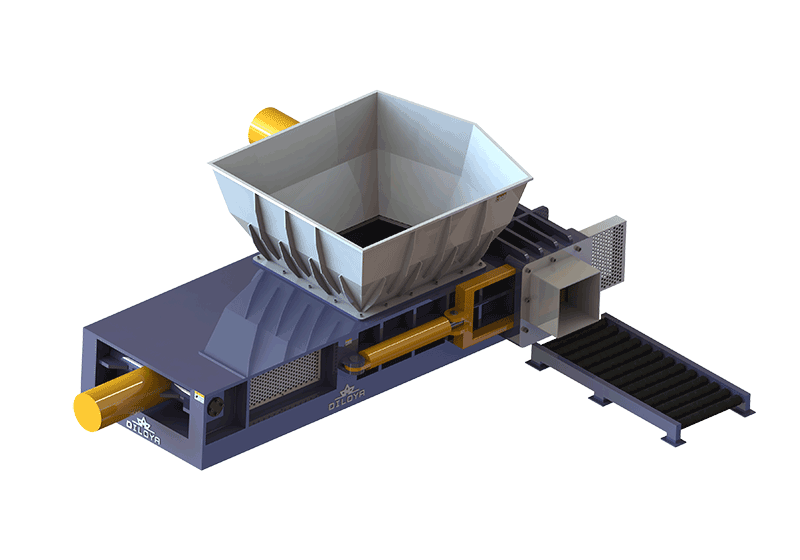
Hopper Type Shear Baler
The Hopper Type Shear Baler is a heavy-duty hydraulic scrap processing machine designed for efficient shearing, compacting, and recycling of various metal scraps, aluminium tins cans, Scrap steel, light metal, sheet metal, profiles, pipes, and other bulky materials can be continuously loaded into the hopper and compressed before cutting.
View details +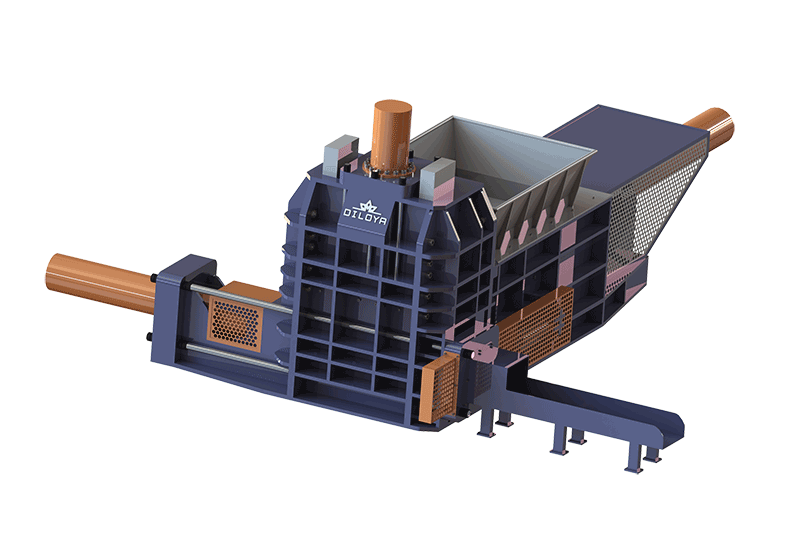
Three Rams Shear Baler
The DILOYA Three Rams Shear Baler combines staged hydraulic compression, shearing and bale discharge to turn loose metal scrap into compact, uniform bales for recycling, storage and transport.
View details +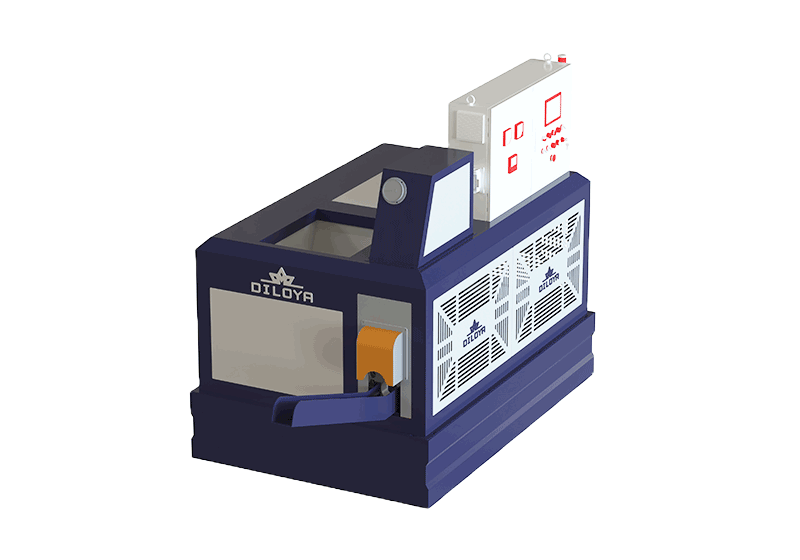
Integrated Briquetting Press
The DILOYA Integrated Briquetting Press combines chip feeding, hydraulic compaction, briquette discharge and coordinated controls in one metal-chip recovery system. It turns sorted aluminium, copper, brass, cast-iron and other suitable machining chips into compact briquettes for easier handling and recycling.
View details +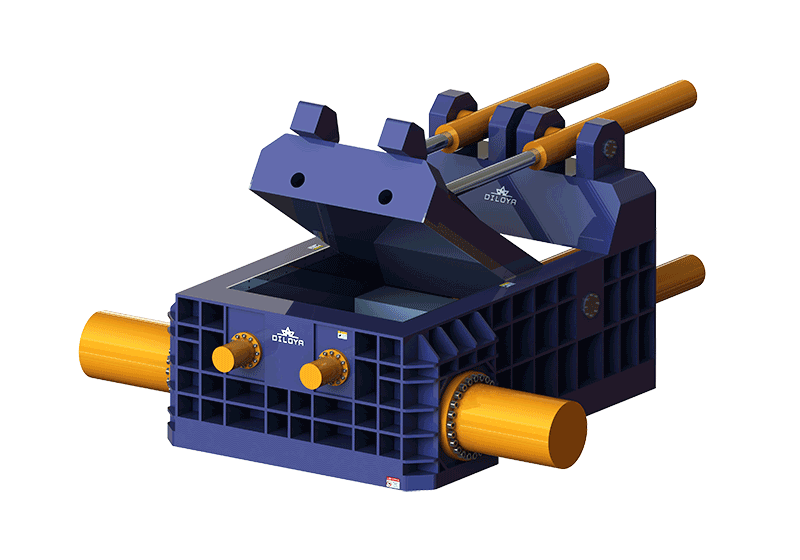
Heavy Duty Metal Baler
The DILOYA Heavy Duty Metal Baler uses two main hydraulic cylinders to compact bulky scrap metal into dense, rectangular bales. Finished bales are removed by grab for storage, loading and downstream recycling.
View details +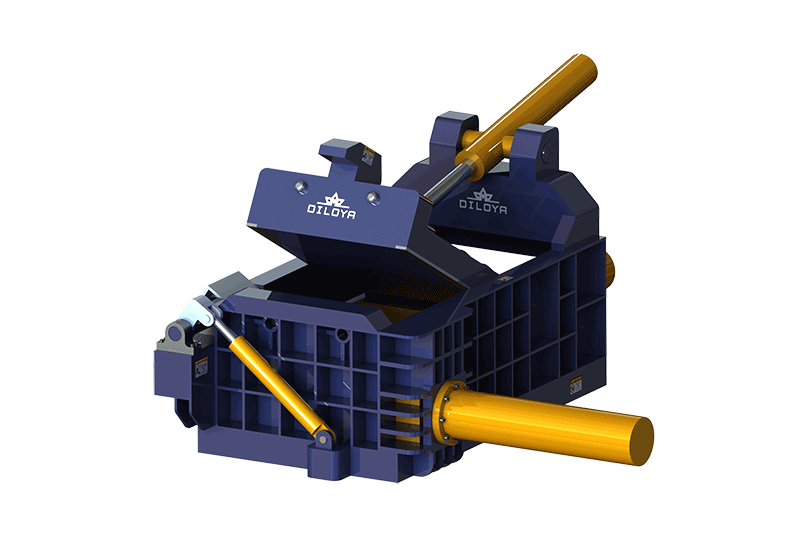
Side Turn-Out Metal Baler
The DILOYA Side Turn-Out Metal Baler compacts suitable loose metal scrap into rectangular bales and turns each finished bale out from the side of the chamber for collection and transport.
View details +Customer Cases
View all cases + 160-Ton Forward-Out Aluminium Profile Baler In Japan
A Japanese customer uses a 160-ton forward-out baler for aluminium profiles, with reported output of 800–1,200 kg/hour and a defined front bale collection path.
View case + High-Output Three-Ram Big-Hopper UBC Shear Baler In Colombia
Colombia customer case: three-direction compression for empty aluminium cans, PLC and remote control, with reported maxima of 90 bales/hour and 4,000 kg/hour.
View case + Heavy-Duty Vertical Metal Baler In Indonesia
An Indonesian customer uses a heavy-duty vertical tying baler for aluminium profiles, stainless steel and beverage cans, with reported bale weights of 600–1,500 kg.
View case +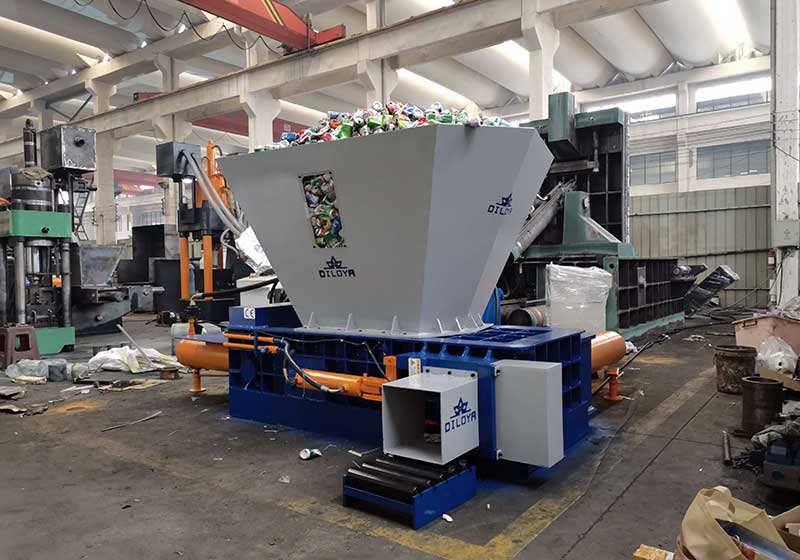 Aluminium Can Baler For Sale In Turkey
A Turkey-focused can baler procurement brief covering supply scope, buyer bale requirements and installed-cost comparison. Final project data are pending.
View case + Automatic Aluminium UBC Shear Baler
A three-cylinder automatic shear baler for an Indonesian Aluminium UBC recycling customer, with a reported processing capacity of 900–1,100 kg/hour.
View case + Heavy-Duty Double Main Cylinder Metal Baler In Poland
A Polish customer's heavy-duty double-main-cylinder scrap baler combines PLC automatic control and remote control, with reported output up to 15 t/hour.
View case +Leave A Message
Let's Figure Out The Best Solutions!
Tell us what you need.
Share your material, target hour capacity and other requirements. Our engineering team will reply with a suitable solutions.