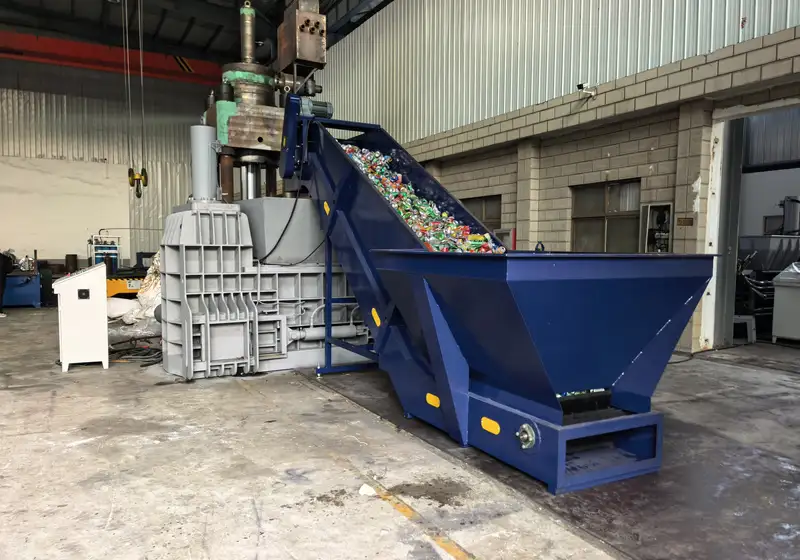
Three Rams Shear Baler
Hydraulic Three-Ram Scrap Shearing and Baling System
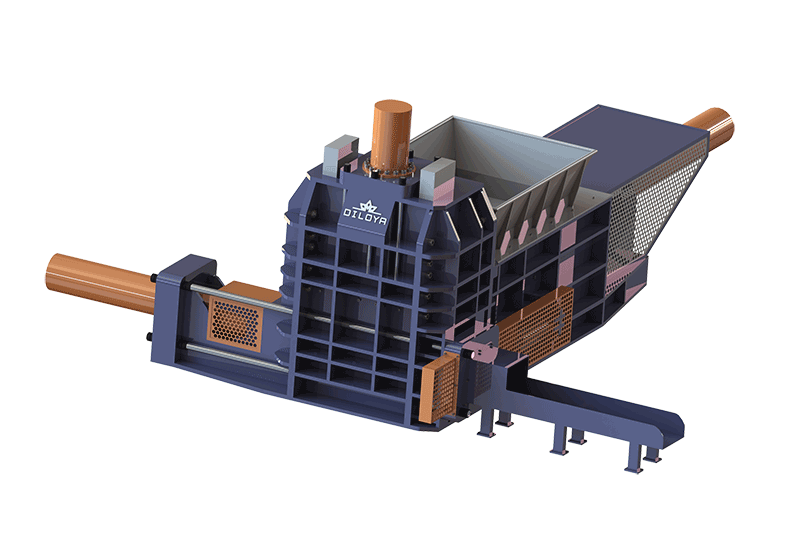
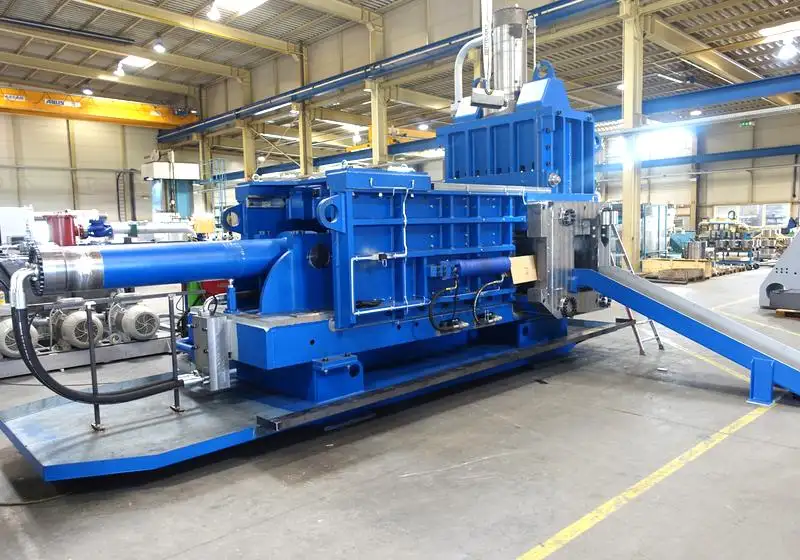
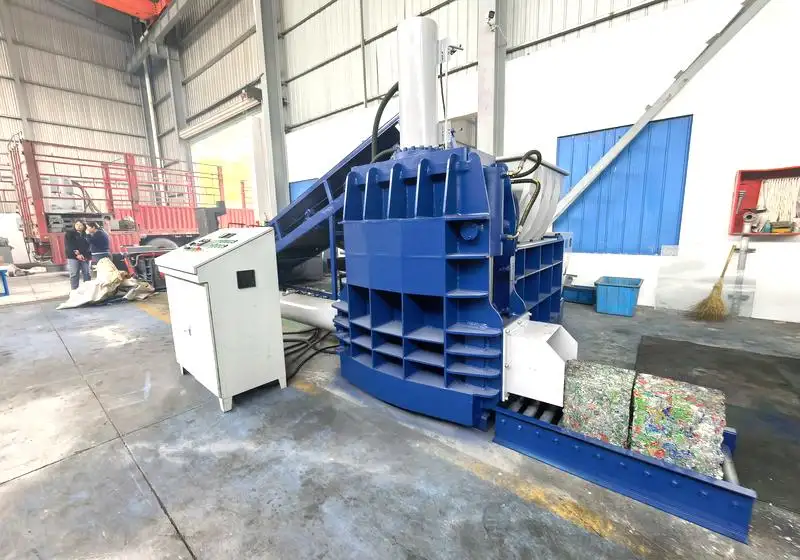
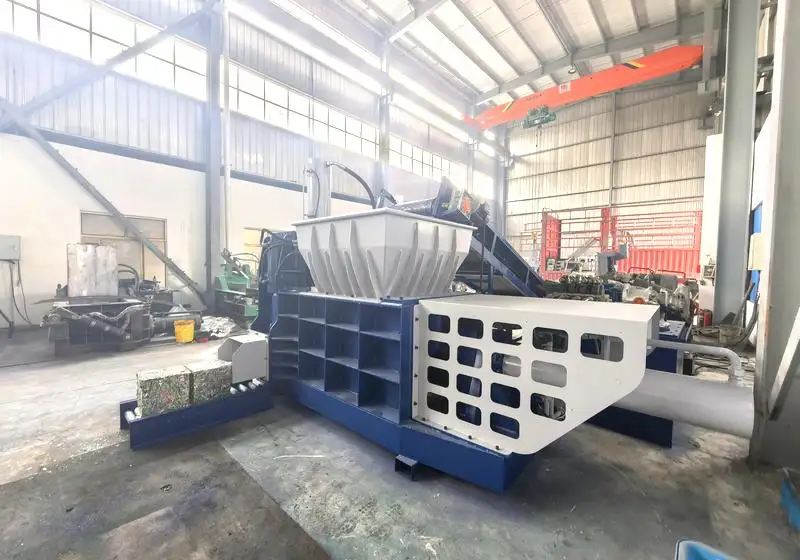
The DILOYA Three Rams Shear Baler combines staged hydraulic compression, shearing and bale discharge to turn loose metal scrap into compact, uniform bales for recycling, storage and transport.
- Design
- Three Rams
- PLC
- Mitsubishi
- Model
- CMSH Series
- Electrics
- Schneider
- Output Capacity
- 500-10000kg/Hour
- Motor Power
- 22-135kw
Description
The DILOYA Three Rams Shear Baler is an industrial hydraulic metal recycling machine that combines staged, multi-directional compression with shearing and baling. It is designed to turn loose, bulky or irregular scrap into compact rectangular bales that are easier to handle, stack, transport and prepare for downstream recycling. The three-ram arrangement gives the operator controlled compression of the charge before the finished bale is discharged.
1> How the Three-Ram Shear Baling Process Works
Scrap is loaded into the receiving chamber by a grab, material handler or other suitable feeding equipment. Coordinated hydraulic rams compress the charge in stages, reducing voids and bringing projecting pieces under control. The shear cuts material that extends beyond the processing area as required by the machine configuration. Final compression forms a consistent bale, which is then pushed out for collection or onward handling. The exact cycle sequence and discharge method depend on the selected model and control settings.
2> Suitable Metal Scrap
Typical feedstock includes light and medium steel scrap, sheet offcuts, stamping skeletons, steel wire, thin profiles, pipes and mixed fabrication remnants. Aluminium, copper and stainless steel scrap may also be suitable when their dimensions, thickness, hardness and contamination level match the configured chamber and cutting capacity. Oversized, unusually hard or sealed items should be assessed before feeding rather than assumed to be compatible.
3> Value in a Recycling Operation
Loose scrap occupies significant yard space and can be difficult to load consistently. Combining cutting and compression in one production sequence reduces repeated handling of long or springy pieces. Uniform bales support more predictable stacking, weighing, inventory control and truck or container loading. At the receiving plant, compact packages are easier to move and can provide a more consistent feed for downstream processing.
4> Configuration Around the Material
DILOYA selects the machine configuration from the customer's actual scrap mix and production requirements. Important inputs include the largest piece dimensions, material thickness, loose density, required hourly throughput, target bale dimensions, feeding method, available electrical supply and site layout. Chamber size, hydraulic force, shear arrangement, motor power, cooling, controls and bale discharge can then be specified for the project rather than inferred from a single nominal capacity.
5> Typical Sites
The Three Rams Shear Baler is relevant to scrap yards, metal recovery centers, steel service centers, stamping plants, fabrication workshops and other facilities that accumulate mixed metal offcuts. A material review and production brief are the best basis for confirming whether this baler, a hopper type shear baler or another DILOYA machine is the right fit.
Advantage
> Three-ram hydraulic compression: staged pressure from multiple directions helps control bulky or springy scrap and form a more consistent rectangular bale.
> Shearing and baling in one sequence: projecting metal can be cut during processing, reducing separate handling where the feedstock is suitable for the selected shear.
> Compact, uniform output: regular bales are easier to stack, count, weigh and load than loose scrap.
> Flexible material handling: the chamber can be configured for common light and medium ferrous scrap and selected non-ferrous grades after material assessment.
> Coordinated hydraulic operation: the compression, cutting and discharge steps work together to support repeatable production cycles.
> PLC control options: cycle settings and operating modes can be matched to different material grades and site workflows.
> Industrial construction and service access: chamber protection, wear parts and maintenance points can be specified for the expected duty and scrap condition.
> Project-specific engineering: chamber dimensions, force, power, cooling, bale size, feeding and discharge options can be matched to the required throughput and installation conditions.
Parameter
Please find below specification of different models:
| Model | CMS125 | CMS160 | CMS200 | CMS250 | CMS315 |
|---|---|---|---|---|---|
| Chamber Size | 1600x800x800mm | 1800x1000x1000mm | 2000x1200x1000mm | 2200x1200x1200mm | 2500x1200x1200mm |
| Bale Size | 300x300mm | 350x350mm | 400x400mm | 450x450mm | 500x500mm |
| Bale Weight | Al:15-20kg Steel:20-40kg | Al:30-45kg Steel:75-100kg | Al:45-70kg Steel:115-150kg | Al:65-100kg Steel:150-200kg | Al:90-120kg Steel:225-300kg |
| Motor Power | 22kw | 2x22kw | 2x37kw | 2x45kw | 2x55kw |
| Cycle Time | 60s | 60s | 60s | 60s | 60s |
| Control | PLC Control | PLC Control | PLC Control | PLC Control | PLC Control |
| Cooling System | Oil Chiller | Oil Chiller | Oil Chiller | Oil Chiller | Oil Chiller |
| Main Cylinder | 1250kn | 1600kn | 2000kn | 2500kn | 3150kn |
| Top Cylinder | 1000kn | 1250kn | 1600kn | 2000kn | 2500kn |
| Side Cylinder | 800kn | 1000kn | 1250kn | 1600kn | 2000kn |
| Lock Cylinder | 150kn | 150kn | 200kn | 200kn | 250kn |
We can customize the baler machine according to your special requirements.
Application
The DILOYA CMSH Series baler can process below materials:
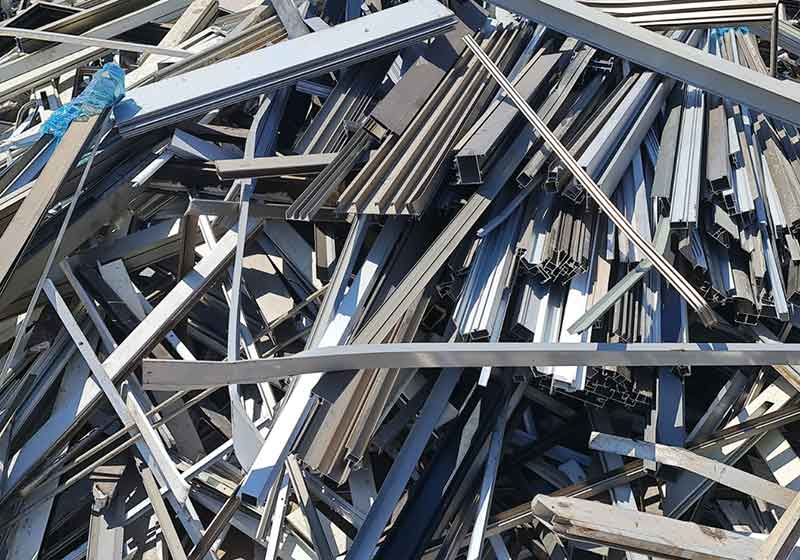
Aluminium Profiles
Aluminium profiles and extrusion offcuts are long, hollow and difficult to stack efficiently. DILOYA hydraulic metal balers compress window frames, structural sections and production offcuts into dense, stable bales for safer handling, lower storage and transport costs, and consistent delivery to aluminium recyclers and remelting plants.
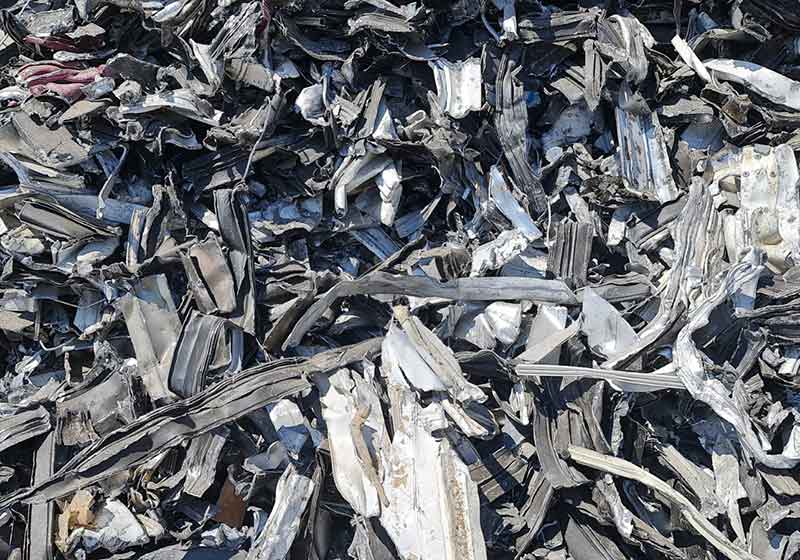
Aluminium Scrap
General aluminium scrap includes sheet offcuts, stampings, thin-gauge trimmings and mixed clean production pieces. DILOYA hydraulic aluminium scrap balers compress this loose material into dense, stable bales for efficient storage, safer handling, economical transport and consistent delivery to recycling and remelting plants.
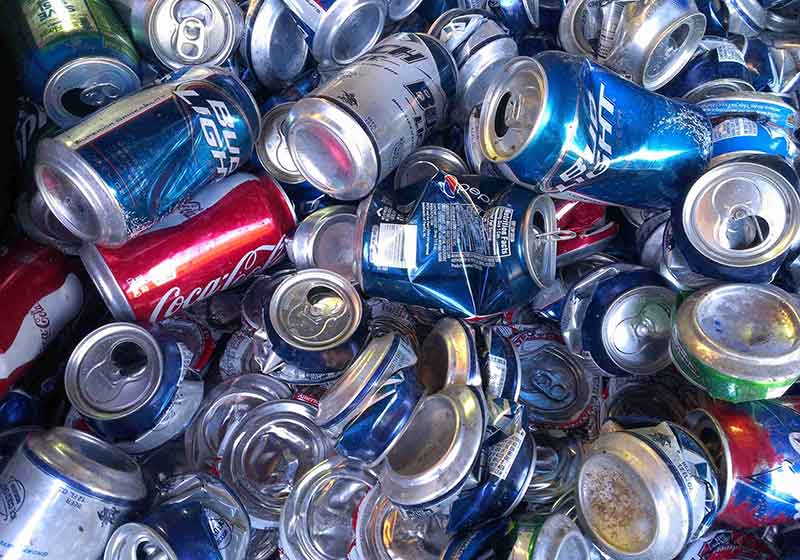
Aluminium UBC
Aluminium UBC consists of lightweight used beverage cans collected from municipal, commercial and deposit-return streams. DILOYA hydraulic UBC balers compress sorted cans into dense, stable and stackable bales for efficient storage, economical transport and consistent delivery to aluminium can recycling and remelting plants.
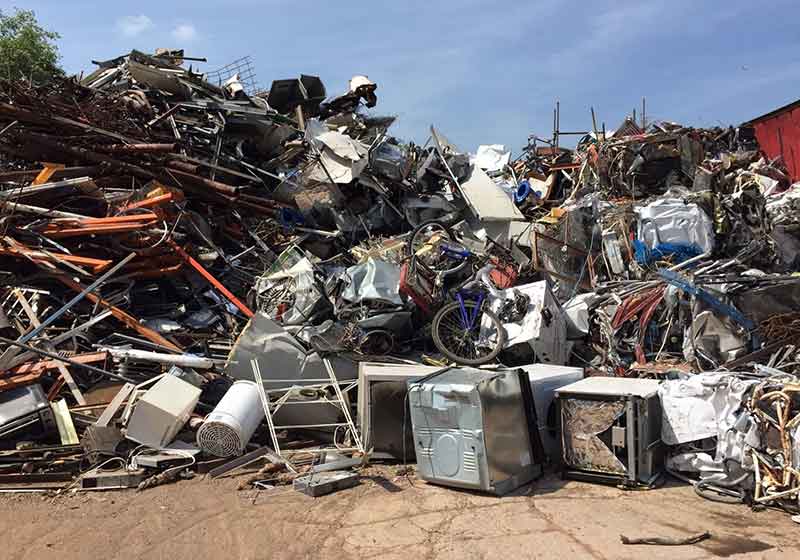
Light Scrap Metal
Light scrap metal includes thin-gauge steel sheet, press-shop offcuts, panels and other bulky ferrous pieces. DILOYA hydraulic metal balers compress this loose, springy material into dense rectangular bales for controlled storage, efficient loading and economical transport. This application is intended for baling only.
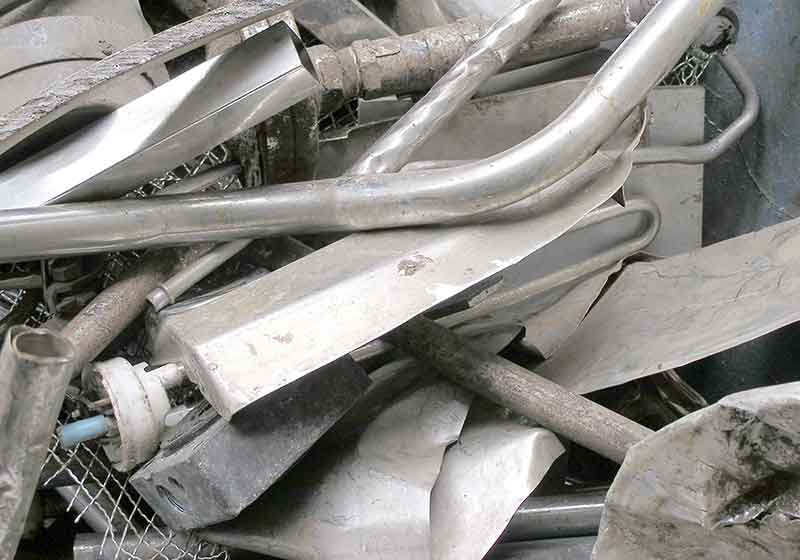
Stainless Steel Scrap
Stainless steel scrap includes sorted sheet offcuts, press skeletons, wire, mesh and light fabrication remnants. DILOYA hydraulic metal balers compress this valuable but bulky material into dense, stable bales while supporting grade separation, safer handling, compact storage and efficient shipment to stainless recyclers and melting plants. This application is intended for baling only.
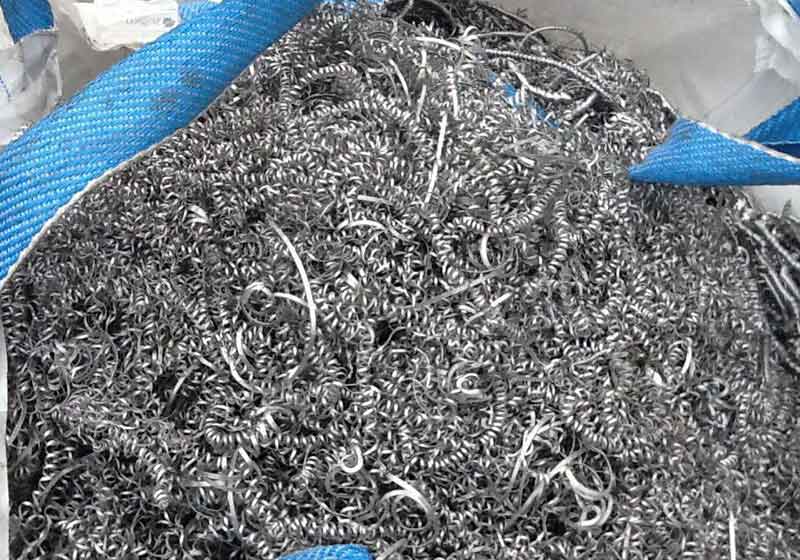
Steel Shavings
Steel shavings are long, curled machining residues that interlock into bulky nests and retain cutting fluid. DILOYA can compress foldable shavings directly into rectangular transport bales, or shred long tangled nests into short uniform feed before hydraulic briquetting. Process selection depends on shaving geometry, fluid content, required density and downstream furnace specifications.
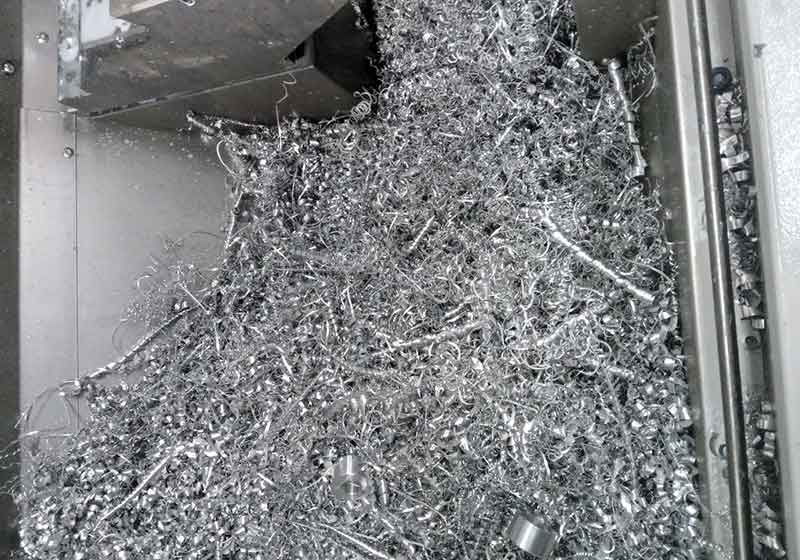
Aluminium Turnings
Aluminium Turnings are lightweight, spiral-shaped metal chips generated during machining, drilling and milling. DILOYA briquetting and baling systems compact loose turnings into dense, manageable blocks, helping reduce storage volume, improve transport efficiency and support aluminium recovery.
FAQ
How should I compare single-, double- and multi-ram baler designs?+
Compare ram designs by the problem their pressing sequence solves. Multiple directions may help control particular bulky scrap, but cylinder count alone does not establish bale quality or hourly output. Three Rams Shear Baler is one configuration to assess against the actual feed, chamber control and collection requirements.
Compare useful chamber size, approved material limits, finished bale and sustained output under equivalent conditions. Ask which operational problem a particular design addresses, such as bulky loading, compression direction or discharge, rather than selecting solely from the number of cylinders.
How do I select the charging-chamber size?+
Size the chamber around how the scrap actually arrives. A large sheet skeleton may bridge an opening even when its weight is low, whereas short offcuts may fill efficiently. Check the useful loading envelope, batch presentation and bale specification together. How to Match Material Size, Press Chamber Dimensions and Bale Requirements When Selecting a Metal Baler? develops this selection problem beyond nominal chamber dimensions.
- Largest normal scrap dimensions and awkward shapes.
- Loading-machine reach and batch size.
- Useful chamber volume for bulky material.
- Preparation needed for oversized pieces.
- Finished-bale dimensions and the pressing sequence.
Consider the loading machine, typical batch size and whether incoming pieces require preparation. A large chamber may reduce loading frequency, but it must be matched to pressing force, cycle time and the required bale. Send maximum dimensions as well as average feed size.
Does a higher pressing force always produce a better bale?+
More force does not automatically mean a better bale. The contact area, pressing sequence and stiffness of the feed determine how that force acts, while spring-back affects the released package. Specify the required stable bale first. Only then compare the force and chamber combination using representative scrap.
For example: thin, springy sheet can require careful chamber control even though each piece is light, while a compact solid section can create a demanding local load. Neither case is described adequately by loose mass alone.
Compare machines using representative material and a defined finished bale. The objective is a stable package that meets handling and buyer requirements, not simply the largest force figure in a quotation.
How should bale density be evaluated?+
Calculate bale density from measured mass and the released bale's external dimensions, then assess whether that package is stable and acceptable. Density is a useful comparison only when the measurement stage is consistent. A chamber dimension under pressure can overstate the density of a springy bale after discharge.
Illustration: a bale measuring 0.5 m × 0.5 m × 0.5 m has an external volume of 0.125 m³. If its measured mass is 100 kg, the calculated bulk bale density is 800 kg/m³. These figures are an arithmetic example, not a promised bale specification.
A useful assessment also considers shape stability, loose edges, handling and the receiving furnace or recycler's requirements. Higher density is not the only goal if the package becomes unsuitable for handling or downstream processing. Agree the sampling and measurement method for acceptance.
How do side-push, forward-out and turn-out bale discharge differ?+
Discharge direction determines where the receiving equipment and working clearance must be located. Side Push-Out Metal Baler, Forward-Out Metal Baler and Side Turn-Out Metal Baler illustrate distinct arrangements. Compare them against a scale yard layout, including the moving envelope and bale collection route, rather than choosing a preferred name before checking access.
- Side-push: assess the receiving area beside the machine.
- Forward-out: plan the collection route in the discharge direction.
- Turn-out: confirm the full moving and receiving envelope.
Use the actual arrangement drawing because names alone do not establish clearances or the approved collection sequence.
Select discharge around the yard layout and bale-handling method, not the name alone. Confirm the approved working envelope, bale support and machine sequence in the arrangement drawing. A preferred discharge direction is only practical if the receiving area can handle the package safely.
Related products
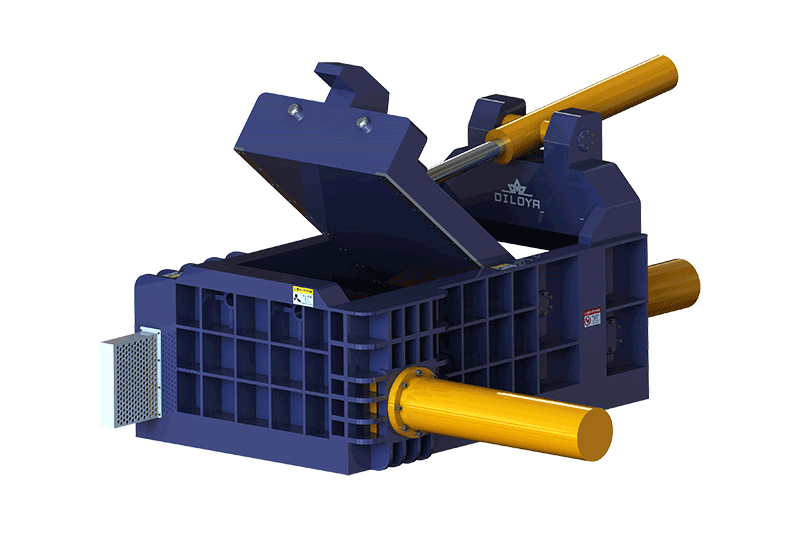
Side Push-Out Metal Baler
The DILOYA Side Push-Out Metal Baler compresses loose ferrous and selected non-ferrous scrap into stackable rectangular bales, then ejects each bale through a side outlet for efficient handling.
View details +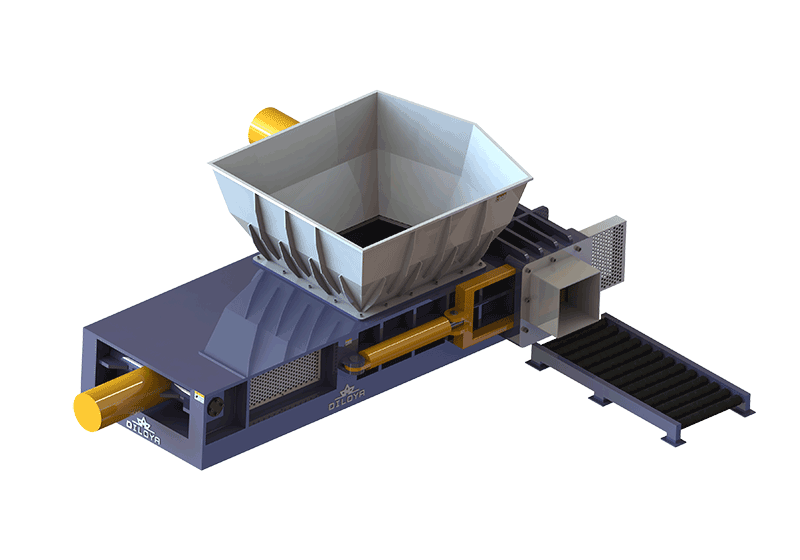
Hopper Type Shear Baler
The Hopper Type Shear Baler is a heavy-duty hydraulic scrap processing machine designed for efficient shearing, compacting, and recycling of various metal scraps, aluminium tins cans, Scrap steel, light metal, sheet metal, profiles, pipes, and other bulky materials can be continuously loaded into the hopper and compressed before cutting.
View details +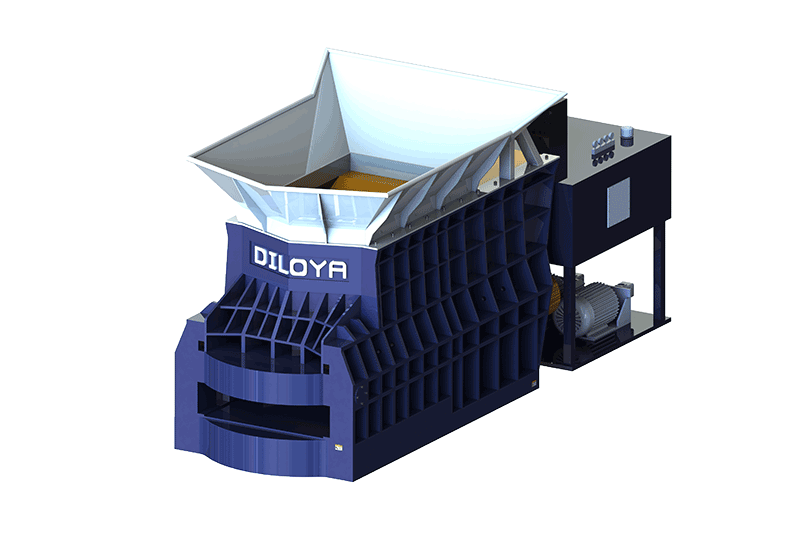
Horizontal Container Shear
The DILOYA Horizontal Container Shear uses a box-style receiving chamber to contain, compress and shear bulky steel scrap in a planned production sequence. Its horizontal layout is intended for high-volume scrap yards that need strong cutting performance while using the available site area efficiently. Heavy plate, structural sections and other compatible ferrous scrap are assessed against chamber dimensions and cutting force.
View details +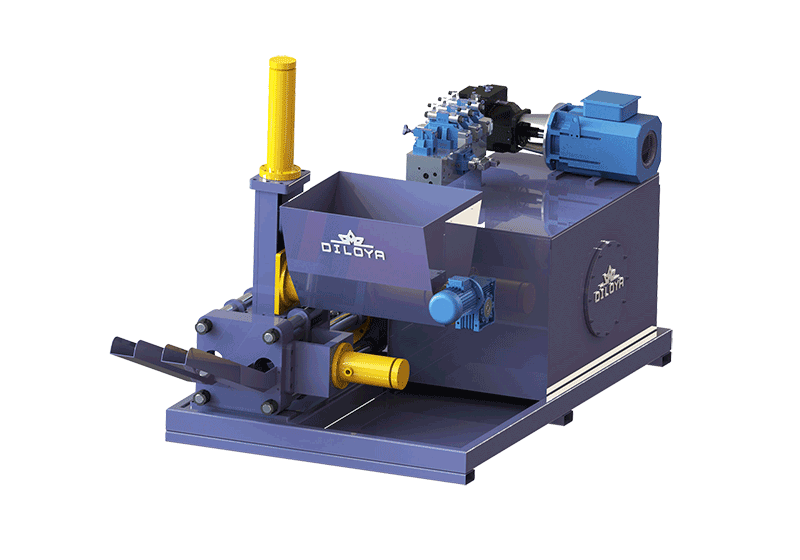
Double Outlet Briquetting Press
The DILOYA Double Outlet Briquetting Press cold-compresses suitable metal chips into dense briquettes and uses two discharge outlets to support a planned collection flow. It is configured for recycling operations that need steady feeding and efficient removal of finished blocks.
View details +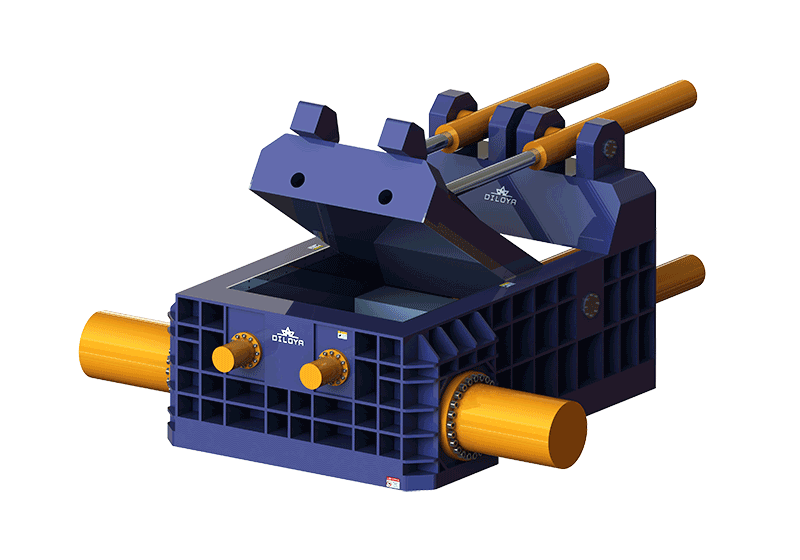
Heavy Duty Metal Baler
The DILOYA Heavy Duty Metal Baler uses two main hydraulic cylinders to compact bulky scrap metal into dense, rectangular bales. Finished bales are removed by grab for storage, loading and downstream recycling.
View details +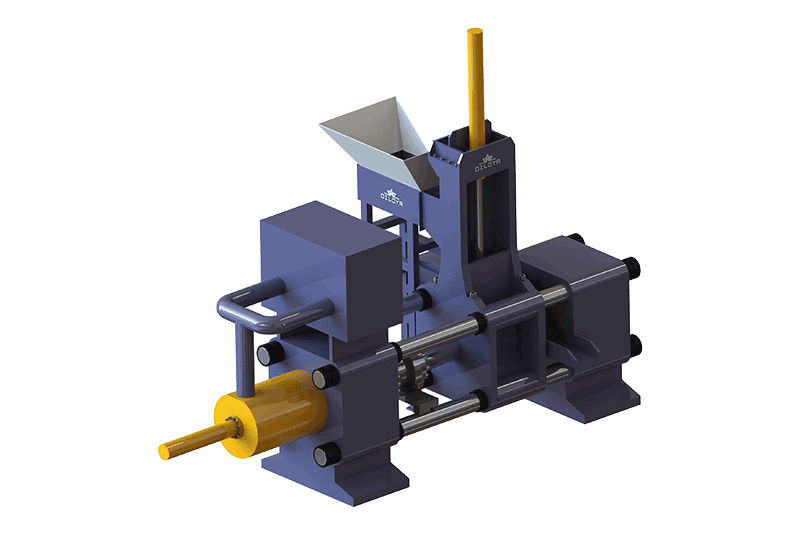
Horizontal Briquetting Press
The DILOYA Horizontal Briquetting Press uses horizontal hydraulic compression to turn sorted machining chips and swarf into dense, manageable briquettes. It can be configured with controlled feeding, discharge and optional chip preparation for metalworking or recycling lines.
View details +Hydraulic Can Baler
Compare hydraulic balers for aluminium beverage cans. Select chamber size, feeding method and bale discharge around your material stream and recycling workflow.
View details +Customer Cases
View all cases + High-Output Three-Ram Big-Hopper UBC Shear Baler In Colombia
Colombia customer case: three-direction compression for empty aluminium cans, PLC and remote control, with reported maxima of 90 bales/hour and 4,000 kg/hour.
View case + Automatic Aluminium UBC Shear Baler
A three-cylinder automatic shear baler for an Indonesian Aluminium UBC recycling customer, with a reported processing capacity of 900–1,100 kg/hour.
View case +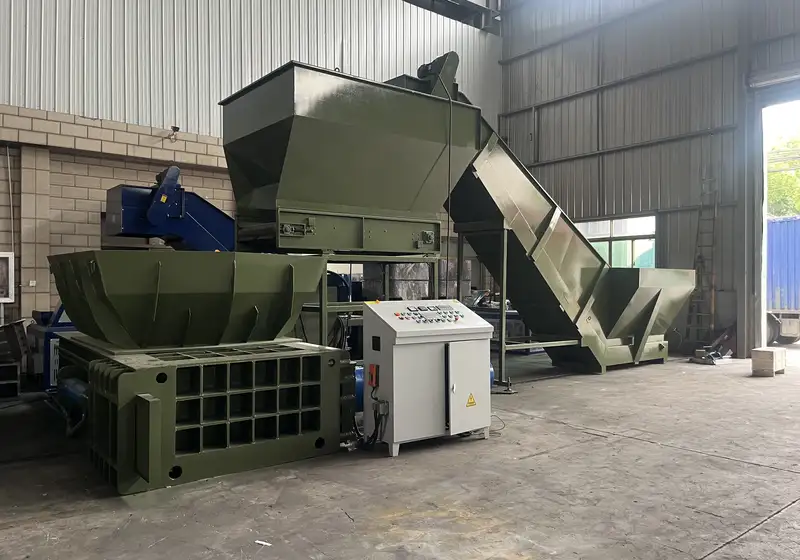 Aluminum UBC Baler For Recycling Operations In The United States
A United States UBC baler planning brief covering line integration, output acceptance and equipment interfaces. Model, capacity and customer photographs are pending.
View case + 250-Ton Side-Discharge Scrap Metal Baler In North Macedonia
North Macedonia customer case: a 250-ton side-discharge scrap baler with a 500 × 500 mm bale cross-section, 250–400 kg bales and reported output of 4–6 t/hour.
View case + Heavy-Duty Double Main Cylinder Metal Baler In Poland
A Polish customer's heavy-duty double-main-cylinder scrap baler combines PLC automatic control and remote control, with reported output up to 15 t/hour.
View case +Leave A Message
Let's Figure Out The Best Solutions!
Tell us what you need.
Share your material, target hour capacity and other requirements. Our engineering team will reply with a suitable solutions.