A customer in Japan uses a 160-ton forward-out metal baler to compact aluminium profile scrap, with reported output of 800–1,200 kg per hour. The project combines hydraulic compression with a front bale-discharge arrangement so that finished packages can be collected along a defined handling path. The 160-ton designation identifies the stated machine force class; it is not the weight of a finished bale or a production figure.
Project Background: Preparing Aluminium Profiles For Recycling
Aluminium profiles and extrusion offcuts are valuable recyclable materials, but their long, hollow or irregular shapes can leave considerable empty space when stored loose. The baling task is to form more manageable packages while maintaining the material separation required by the receiving recycler. Incoming piece dimensions, alloy streams, surface condition and any attached non-aluminium material should be considered before the loading and package specifications are finalized.
The equipment is associated with the Forward-Out Metal Baler product family. It should be selected around the actual profile scrap and the intended handling layout rather than from the nominal force designation alone. No unprovided model code, bale weight, bale size, PLC configuration or remote-control feature has been assumed for this Japanese project.

Equipment overview: 160-ton forward-out metal baler for the aluminium-profile application.
Why The Forward-Out Arrangement Matters
A forward-out machine presents the completed package through the front discharge path after the prescribed compression and gate sequence. That direction affects how the baler fits into the site: the loading area, operator position, front clearance and bale collection method need to be planned together. A collection route that becomes obstructed can interrupt production even if the pressing cycle itself is operating normally.
The discharge arrangement is a handling feature, not a separate promise of higher density or throughput. For a comparable project, confirm the actual outlet position, permissible handling equipment and required access before establishing the machine location. The receiving area should allow packages to be removed under the approved site procedure without introducing personnel into moving-equipment zones.
Aluminium Profile Material And Loading Preparation
The Aluminium Profiles application page gives further context for this feed. Profile length, cross-section, wall thickness and the mix of shapes can influence filling and compression. Oversized or unsuitable material needs assessment and, where necessary, separate preparation. A standard baler should not be represented as cutting long material unless a cutting function is actually included in the supplied configuration.
Keep material grades separated where required by the buyer, and record contamination or attached components that may affect acceptance. The raw profiles and finished packages should be evaluated as part of one workflow: preparation, loading, compression, discharge, weighing and storage. A photograph of a compact bale is useful context, but it does not replace the receiving specification or a representative material trial.
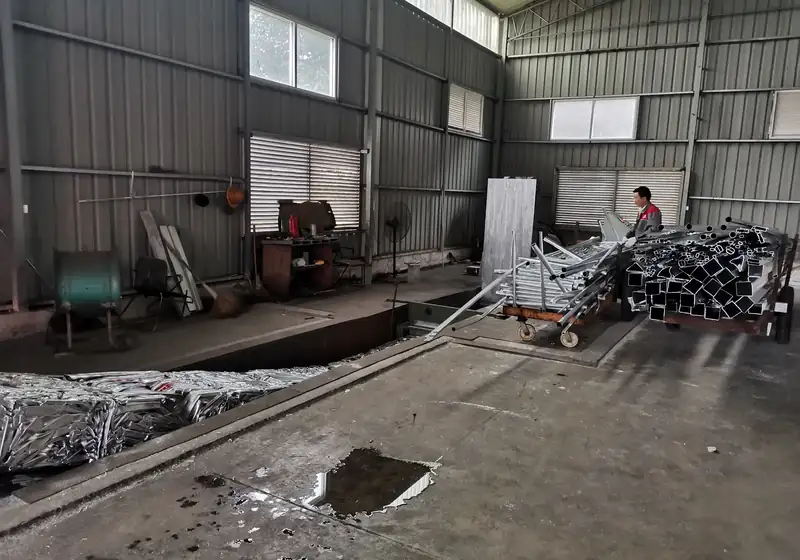
Material-handling view: aluminium profiles presented beside the baling and collection area.
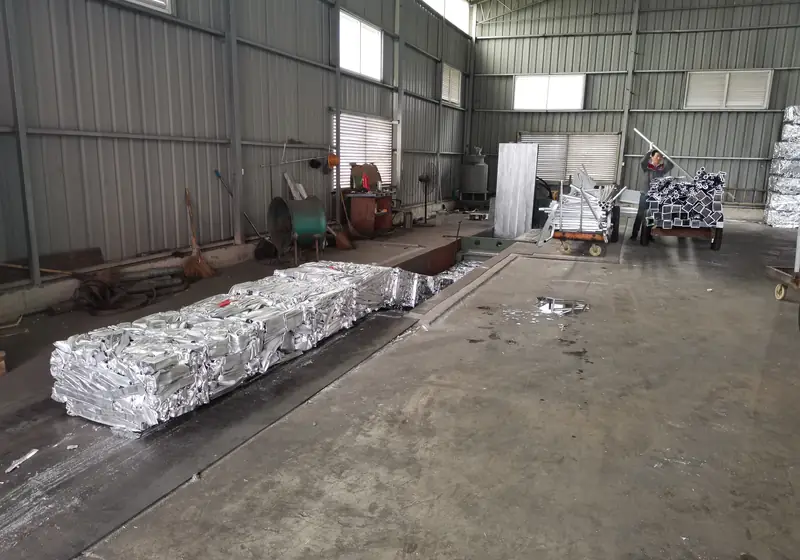
Process view: finished packages and incoming profiles within the working area.
Reported Processing Output: 800–1,200 kg Per Hour
The customer supplies an hourly processing range of 800–1,200 kg. It describes the stated project application rather than a guaranteed result for every profile shape, alloy or loading method. The mass received per load, consistency of feeding, compression sequence, front discharge and timely package removal all influence useful production over a shift.
When evaluating a similar machine, agree how output will be measured. Record the representative material, the mass processed, the elapsed trial time and the handling steps included. An unloaded cycle time or one selected package cannot establish a sustained hourly rate. The broad selection principles are described in How to Match Material Size, Press Chamber Dimensions and Bale Requirements When Selecting a Metal Baler?
Finished Aluminium Profile Bales
The supplied finished-material photographs show compressed aluminium packages in storage and on pallets. They illustrate the change from loose profiles to defined packages without assigning an unreported mass or density to an individual image. Exact package dimensions, weight and integrity requirements should be documented with the receiving recycler and the site's handling plan.
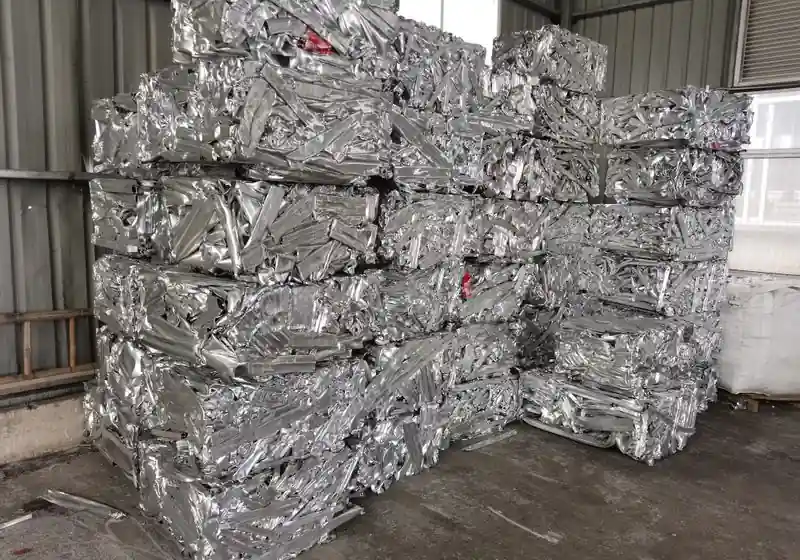
Finished material: aluminium-profile bales arranged in an indoor storage area.
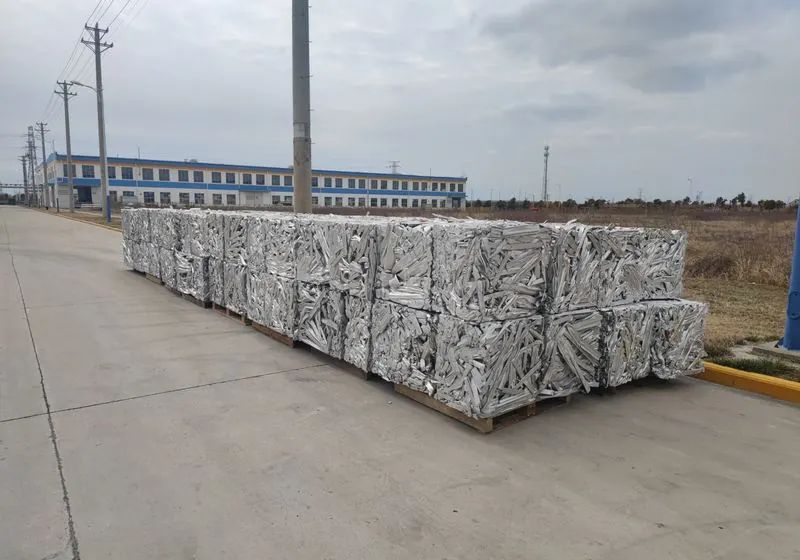
Finished material: aluminium packages arranged on pallets for subsequent handling.
Storage And Shipment Considerations
Forming defined packages supports weighing, stock identification and planned loading. The actual storage and transport benefit depends on bale dimensions, stack stability, available handling equipment and vehicle limits. Baling does not remove the need to maintain access routes or respect permissible payload. No measured storage reduction, freight-saving percentage or melting-yield improvement was supplied for this case, so none has been added as a project result.
The Japanese application should also not be confused with a machining-chip briquetting line. This case concerns aluminium profile scrap formed into bales. Material that is primarily chips or swarf needs its own handling and equipment assessment rather than being treated as the same feed.
Information Needed For A Similar Project
Send photographs of the loose profiles, the maximum incoming lengths and cross-sections, wall thickness range, material grades, daily quantity and intended processing hours. Include the required finished package, available power, loading equipment and a drawing of the front collection area. These details help assess whether a 160-ton forward-out configuration is appropriate for the intended work.
For another aluminium-profile arrangement, the Heavy-Duty Vertical Metal Baler In Indonesia case illustrates a different vertical tying layout. Its 600–1,500 kg figure is individual bale weight, not an output range to be substituted into this Japanese project.
Project FAQ
Does “160 Tons” Mean Each Bale Weighs 160 Tons?
No. It is the stated machine force class. The project reports processing output of 800–1,200 kg per hour; an individual bale-weight figure was not supplied.
Is This A Front-Discharge Or Side-Discharge Machine?
This customer case specifies forward-out, or front-discharge, baling. The machine layout should provide the required front collection space rather than assuming the same arrangement as a side-discharge installation.
Can The Reported Output Be Applied To Every Aluminium Profile?
No. Actual production depends on the prepared feed, filling, configured cycle and package handling. Confirm the requirement using representative material and an agreed acceptance method for the selected machine.