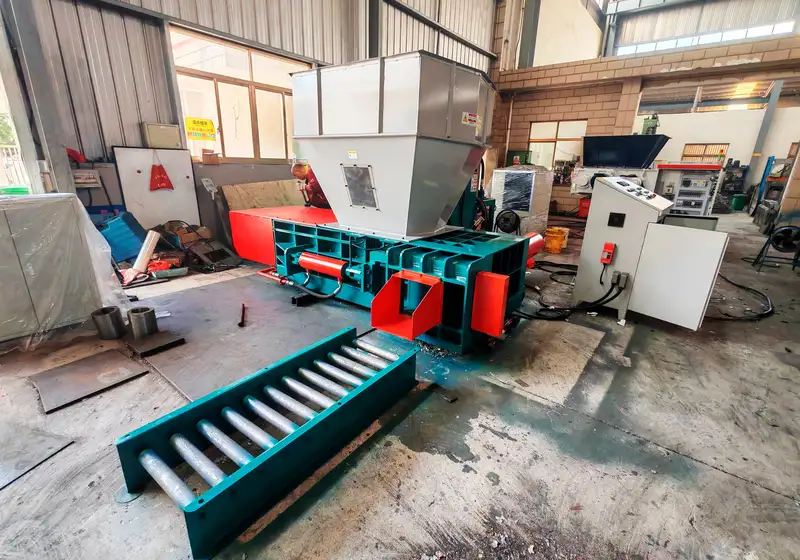
A hydraulic can baler maintenance plan must follow the exact machine manual, duty cycle and site risk assessment. Operators can record visible conditions and operating trends from designated safe positions; authorized service personnel handle work requiring isolation, access behind guards, hydraulic intervention or electrical testing. There is no universal oil-change interval, grease schedule or pressure setting that is correct for every can baler. Treat the plan below as an organizing framework and obtain the model-specific requirements before carrying out work.
Build The Maintenance File Before Production Starts
Keep the model, serial number, commissioning record, operating manual, hydraulic and electrical documentation, lubrication chart, component list and service contacts together. Record the approved operating settings and the material used during acceptance. Identify the installed filters, hydraulic fluid specification, cooler type and wear components by part reference. A label such as “hydraulic oil” is not enough to select a compatible replacement fluid, and a visually similar hose or seal is not evidence of an approved substitute.
Assign each inspection or service task to a responsible role and define what must be recorded. An operator checklist should distinguish observation from repair. The Hydraulic Can Baler configuration may differ from an Automatic UBC Baler with additional feeding and discharge equipment; the maintenance file should cover the complete installation, not just the main press.
Separate An Operating Stop From Safe Maintenance Isolation
A stopped ram does not by itself establish a safe condition for maintenance. In the United States, OSHA 29 CFR 1910.147 — Control Of Hazardous Energy distinguishes control buttons from energy-isolating devices and addresses stored energy and verification. Authorized personnel must follow the applicable machine-specific isolation procedure, control hazardous residual or stored energy and verify the safe condition before the relevant servicing begins. Other countries require compliance with their own applicable rules.
Do not enter the chamber, reach into a hopper, clear a jam behind a guard or work beneath a raised member merely because the emergency stop has been pressed. Hydraulic pressure and gravity-supported components require the documented measures for that machine. This article is not a lockout procedure or authorization to undertake maintenance.
What Operators Can Check Before A Shift
Use the manufacturer’s pre-start checklist from the normal safe access positions. Check the surrounding area for spilled fluid, accumulated cans and obstructed access. Look for visible hose damage, disturbed protective covers, loose external items and unusual conditions around the receiving and discharge areas. Check the specified fluid level or indicators only by the documented method and in the stated machine condition; an arbitrary reading during a different cylinder position can be misleading.
Record unresolved alarms and previous-shift observations before starting. Any prescribed functional checks of guards, interlocks, emergency stops or other safety functions must follow the authorized procedure and be performed by the designated personnel. Do not improvise a test by placing a person in a danger zone. If a required protective function is faulty, keep the equipment out of service until the fault is properly resolved.
Control Material Quality And Housekeeping
Maintenance begins upstream of the press. Keep the incoming stream consistent with the accepted material specification and remove unsuitable items through the approved sorting process. Do not assume that aerosols, sealed containers, batteries or containers with unknown residues are normal can-baler feed. Material containing liquid, abrasive dirt or mixed scrap can change both operating behaviour and the housekeeping workload. Refer to Do Aluminium Cans Need To Be Drained Before Baling? when defining feed preparation with the receiving recycler and site team.
Plan cleaning around safe access and the documented shutdown procedure. Clear approved external collection areas before material accumulates around sensors, access routes or the discharge point. Do not use a hand, bar or improvised tool to force a bridge into a live hopper. Select cleaning methods compatible with the equipment and site hazards; do not assume water jetting or compressed-air cleaning is acceptable around electrical equipment, hydraulic components or accumulated debris.
Hydraulic Oil, Filters And Contamination Control
Use the specified fluid grade and compatibility requirements. Keep replenishment equipment and containers clean and identified, and follow the documented filling or filtration method. Record quantities added and investigate repeated topping-up rather than treating it as ordinary consumption. A change in colour, persistent foam, water contamination indicators or abnormal filter warnings should be reported for assessment; appearance alone does not establish whether a fluid is fit for continued service.
Set filter and fluid service tasks from the manufacturer’s schedule, operating hours and any approved condition-monitoring programme. Where sampling is specified, use the approved sampling point and method so that successive results are comparable. Record the filter part number, service date, machine hours and findings. Do not mix fluids or choose a replacement filter only because it fits the housing. Hydraulic work, pressure checks and component replacement belong with appropriately qualified personnel following the prescribed procedure.
Maintain The Cooling System For The Intended Duty
Record operating temperature under comparable material, load and ambient conditions. A trend that changes during the shift can be more useful than an isolated reading. For an air-cooled installation, inspect accessible airflow paths and the cooler condition as specified. For a water-cooled installation, follow the documented requirements for the water circuit and exchanger. Any cleaning or servicing must respect isolation, access restrictions and the approved cleaning method.
Do not invent a universal acceptable oil temperature from another machine’s specifications. Use the limits stated for the installed system and respond to protective alarms. If temperature rises, qualified investigation may need to consider ambient conditions, cooler performance, airflow, load pattern and hydraulic losses. Simply adding a cooler does not prove that the whole installation is suitable for continuous 24-hour operation. Cooling capacity, supervision, inspections and planned servicing must all match the assessed duty.
Inspect Hoses, Seals, Guides And Wear Components
During scheduled service, authorized personnel should inspect the specified hoses, fittings, cylinder areas, accessible guides, wear plates, fasteners and lubrication points. Use the stated replacement criteria, tightening values, lubricant and inspection method. Record deterioration so that parts can be planned before an unplanned shutdown. A superficial visual check does not establish the remaining safe life of a damaged pressure hose, and leakage should not be addressed by repeatedly tightening an unidentified fitting.
Do not search for a hydraulic leak with a bare hand or intervene on a pressurized connection. Report suspected leakage and arrange the proper safe inspection. Changes in noise, cycle duration or bale shape can have several causes, including changed material, feeding conditions or wear. Read Hydraulic Can Baler Pressure And Bale Density: A Practical Guide before assuming that a lower-density bale requires a higher pressure setting.
Include Conveyors, Hoppers And Discharge Equipment
A Hopper-Fed Can Baler may rely on the condition of a conveyor, feed-control devices and the discharge arrangement to maintain stable output. Put the applicable belt or chain checks, drive inspections, guarding, sensors and lubrication tasks into the maintenance plan using the component manuals. Define responsibility for each auxiliary machine and its energy sources. A well-maintained main press can still suffer repeated interruptions if the supporting equipment is ignored.
Observe whether the feed rate remains controlled and whether finished bales can be removed without obstructing the normal cycle. Record recurring bridges or discharge delays and investigate their cause; avoid repeatedly clearing the same symptom. Keep approved access and handling routes available for operators and service personnel.
A Practical Maintenance Planning Framework
Convert the following headings into site-specific tasks and intervals. They are planning categories, not a replacement schedule:
Before each shift: prescribed safe observations, material suitability, accessible indicators, alarms and previous-shift handover.
During normal operation: record output, cycle behaviour, temperature trends and abnormalities from designated positions without reaching into the equipment.
Approved cleaning shutdown: carry out the documented housekeeping and access tasks after the required safe preparation.
Scheduled service: assign qualified personnel to the model-specific lubrication, filter, fluid, hose, wear-part, cooler and protective-system checks.
After repair or adjustment: document the work, restore required safeguards and complete the prescribed checks and authorized return-to-service process.
Following changed conditions: review the plan if operating hours, material, ambient temperature, feeding equipment or production demands change.
Use machine hours or cycle counts where specified rather than relying only on calendar dates. Keep overdue tasks visible and record who has authority to release the machine after service. For multi-shift production, make the handover part of the procedure so that a new operator does not unknowingly restart equipment with an unresolved fault.
Know When To Stop And Request Qualified Service
Follow the operating procedure and stop the machine when a protective device fails, a hydraulic line is damaged, significant leakage develops, abnormal movement occurs or a serious unexplained noise, smoke or burning smell appears. Keep people clear and arrange the appropriate response. Repeatedly resetting a protective shutdown without identifying the cause can conceal the original problem. Do not defeat an interlock or alter approved pressure limits to continue production.
Provide service personnel with the model and serial number, alarm information, machine hours, material description, recent changes and the sequence of events. Photographs or video should be taken only from a safe location and without bypassing safeguards. Useful records describe when the symptom appears and what changed; a request stating only “the baler is weak” gives little diagnostic information.
Use Maintenance Records To Improve Cost And Reliability
Track accepted output, operating hours, service actions, replacement parts and time lost to faults. Review whether repeated interruptions come from the press, feed preparation, auxiliaries or downstream handling. This distinguishes maintenance needs from process bottlenecks and provides a more useful cost-per-tonne calculation. The article Aluminium Can Baling Machine Price: Cost Factors And Buying Guide explains why planned service and parts availability belong in the original purchasing decision.
FAQ
How Often Should Hydraulic Oil Be Changed?
Use the machine manual and the approved fluid-condition programme. The correct interval depends on the installed system and operating conditions. Do not apply an interval from a different baler or choose a date solely because the fluid still looks clean.
Can Operators Adjust Pressure To Restore Bale Density?
Only personnel authorized under the manufacturer’s service procedure should make permitted adjustments. First investigate changes in the feed, filling, package dimensions and operating condition. Never exceed approved limits or use a pressure adjustment to conceal an unresolved fault.
Can A Can-Baler Checklist Be Used For A Briquetting Press?
The general planning principles overlap, but the equipment and model-specific tasks differ. Beverage-can baling should not be confused with compacting machining chips into briquettes. For the latter application, use How To Maintain An Aluminium Chips Briquetting Machine? as background alongside the correct machine documentation. For can balers, see How To Maintain A Hydraulic Aluminium Can Baler? and request the service schedule for your exact installation.