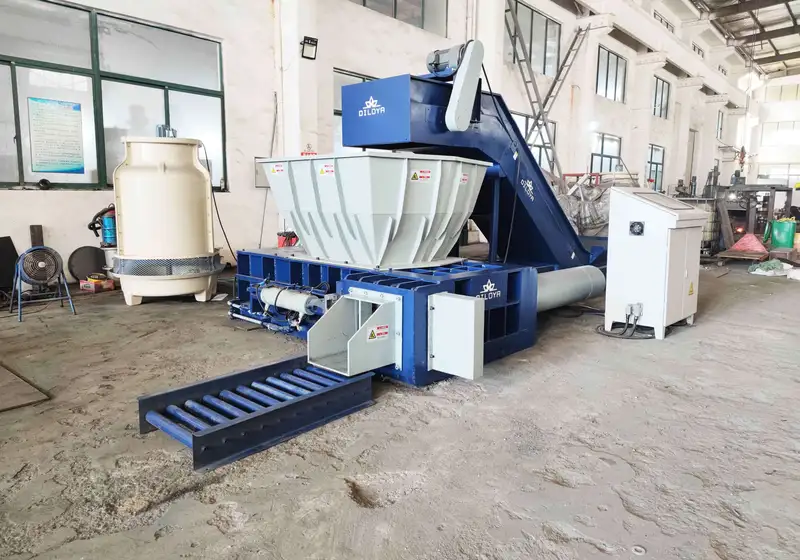
An aluminium can baling machine should be priced against a defined production task. The same phrase can describe a manually loaded press, a conveyor-fed hydraulic machine or an automatic UBC processing installation. UBC means used beverage cans. These configurations are not interchangeable, so a meaningful quotation must state the material condition, sustained output, finished bale specification and equipment included. This article does not publish an unverified price range or a live offer; request a dated, project-specific quotation for an actual purchase decision.
Start With The Cans And The Buyer’s Bale Requirements
Describe whether the feed consists of loose beverage cans, flattened cans, production rejects or mixed aluminium and steel containers. State how the material arrives and whether it contains residual drinks, plastic, dirt or other contamination. A photograph of a finished bale alone does not describe the loose feed. Provide representative photographs or a safely prepared sample, together with daily mass and delivery pattern. A receiving recycler may require a particular bale size, weight range, integrity or contamination limit; obtain those requirements before selecting the press.
The Aluminium Can Baling Machine page provides a starting point for equipment selection. For an enquiry-ready material checklist, read What Information Is Needed For An Aluminium Can Baler Quotation? Do not describe paint tins, aerosols or unidentified sealed containers as ordinary beverage-can feed. Their suitability and preparation require a separate assessment.
What Changes The Purchase Price?
Required Output And The Real Production Window
Specify both the tonnes received per day and the hours available to process them. Average daily output can hide short delivery peaks or restricted loading time. A machine chosen for occasional batches may need a different feeding arrangement from one serving a continuous sorting line. Ask whether the quoted capacity includes loading, pre-compression, final pressing, discharge, tying where applicable and normal material-handling delays. An unloaded cycle time is not equivalent to verified tonnes per operating hour.
Chamber, Compression Arrangement And Finished Bale
The chamber must accept the actual incoming material and form a package that the downstream buyer can handle. Chamber volume, cylinder arrangement, bale cross-section, structural design and discharge method all belong in the comparison. A larger nominal pressing force does not by itself prove higher useful output or a better bale. Compare the proposed configuration with the principles in Hydraulic Can Baler Pressure And Bale Density: A Practical Guide, particularly the distinction between oil pressure, cylinder force and final bale density.
Loading, Automation And Supporting Equipment
A receiving hopper, conveyor, level detection and coordinated controls may reduce manual feeding, but they also add equipment and commissioning requirements. Evaluate the Automatic UBC Baler and Hopper-Fed Can Baler according to the actual feed pattern rather than treating “automatic” as a complete specification. Ask where the operator is still needed: removing unsuitable items, supervising feed, arranging empty bins, clearing the discharge area or handling finished bales.
Electrical, Cooling And Site Conditions
Supply voltage, frequency, ambient temperature, available ventilation, operating hours and hydraulic cooling requirements should be identified before the offer is finalized. Cooling provision must suit the assessed duty cycle and site, not a generic promise of uninterrupted production. Where long shifts are planned, ask the supplier to define permitted operation, thermal limits, inspection requirements and any planned servicing stops. Electrical installation, local approvals and protective equipment may need separate scope and pricing.
Compare The Complete Supply Scope
Ask each supplier to return a written inclusion-and-exclusion list. Keep the same requirement sheet for every bidder. Otherwise, one low machine price may exclude the equipment needed to achieve the output shown in another offer. The following groups make a useful quotation checklist:
Main machine: exact model, chamber and bale dimensions, compression arrangement, drive and control configuration.
Material handling: hopper, conveyor, loading height, discharge equipment, tying equipment or consumables if required.
Site work: foundations or anchoring requirements, clearances, lifting plan information, cabling and power connection responsibilities.
Delivery: named delivery place, agreed delivery terms, packing, freight, insurance responsibilities and unloading arrangements.
Start-up: installation assistance, commissioning, operator instruction, manuals and the acceptance test procedure.
After-sales: warranty scope, exclusions, recommended spare parts, support method and expected parts lead times.
For international projects, clarify the quotation currency, validity period, payment milestones and destination-specific expenses. Do not compare an ex-works machine amount directly with a delivered-and-commissioned installation. Obtain advice appropriate to the destination for taxes, duties, electrical requirements and import documentation; these are not universal additions with a fixed percentage.
Look Beyond Purchase Price To Cost Per Tonne
A useful operating measure is the cost of producing an accepted tonne of baled cans. Include actual electricity use, labour, applicable tying materials, planned servicing, wear parts and other directly attributable running costs. Divide those costs by the accepted output measured over the same period. Count rejected or reworked bales separately. A low purchase price can be offset by frequent manual intervention or unsuitable bale dimensions, while a more automated line may be difficult to justify for a small, intermittent feed stream.
Use measured electricity consumption rather than multiplying the motor nameplate rating by every scheduled hour and treating the result as actual demand. Record loading and handling time as well as press cycles. The FAQ How To Calculate Aluminium Can Baler Capacity? helps structure the output calculation. Maintenance assumptions should be checked against Hydraulic Can Baler Maintenance: Inspection And Preventive Care.
Estimate Transport And Storage Benefits Without Exaggeration
Measure the existing loose-can storage volume, collection frequency, vehicle loading constraints and handling steps. Then compare a proposed baled workflow using an agreed bale size and a realistic loading arrangement. Denser material may improve volume utilization, but savings also depend on vehicle payload limits, routes, collection contracts and whether the buyer accepts the package. Avoid a blanket claim that every shipment becomes cheaper by the same percentage. Record the baseline and test the proposed arrangement before using savings in a budget.
If a payback estimate is needed, calculate it from documented net operating savings and the complete installed investment. Include the costs of operating and maintaining the new process, not only the benefits. Treat the result as a planning scenario, not a guaranteed return. A site with little material or irregular collections may have a very different outcome from a recycling plant processing a steady stream of sorted UBC.
Agree An Acceptance Test Before Ordering
The offer should state how performance will be demonstrated. Define representative feed, preparation, the duration of the run, how output is weighed, the number of bales measured and which interruptions are included. Record bale dimensions after discharge and the agreed settling period, not just the internal chamber dimensions. Confirm that the package remains suitable for lifting, stacking and transport under the site’s approved handling plan. A test on carefully selected material should not be presented as a universal capacity guarantee.
The published Automatic Aluminium UBC Shear Baler case provides equipment context, but its configuration should not be used as a substitute for your own material trial or quotation. Ask what must change for your can condition, production window and downstream buyer.
Questions Buyers Commonly Ask
Can I Get A Price From The Required Tonnes Per Hour Alone?
That figure is a useful start, but not a complete specification. Include the feed condition, available processing hours, bale requirements, loading method, power supply and destination. These details help determine whether the requirement is for a stand-alone machine or a coordinated line.
Is A Higher-Pressure Machine Always Worth Paying More For?
No. Compare the complete compression design and the accepted bale produced with your material. Hydraulic circuit pressure is not the same as pressing force or final density. Paying for a larger pressure number without a suitable chamber, feeding system and test protocol can lead to a misleading comparison.
How Do I Request A Comparable DILOYA Quotation?
Send representative can photographs, material composition and preparation, daily quantity, target hourly output, accepted bale size and weight, planned shifts, voltage and frequency, loading equipment, site layout and destination. Ask for the equipment list, excluded work, acceptance procedure and service provision in writing. The companion FAQ How Much Does An Aluminium Can Baler Cost? summarizes the information needed to move from a broad price enquiry to a project-specific proposal.