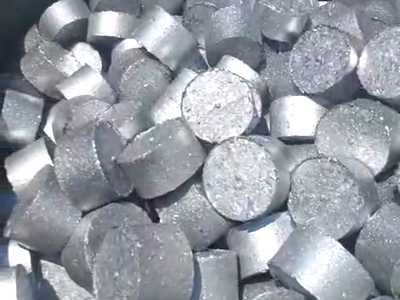
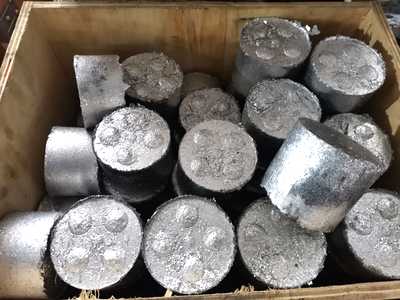
For a small CNC machine shop, the right metal chip briquetting line is the one that matches the actual chips, the available processing time and the workshop layout—not simply the press with the highest advertised capacity. Start with the metal grade, chip shape, daily quantity and cutting-fluid condition. Then decide whether the line needs shredding, liquid separation, buffer storage or automatic trolley loading before choosing the briquetting press.
This guide explains how to build a practical specification for a compact chip-handling system. It is a selection guide, not a report of a particular installation or a guarantee of output.
1. Identify the chips before comparing machines
Two workshops producing the same daily weight of scrap may need different equipment. Short, free-flowing milling chips behave differently from long, springy turning swarf. Aluminium, steel, cast iron, copper and brass also have different bulk densities and compaction characteristics.
Prepare a material profile for each main waste stream:
> Metal and alloy: state the grade where known and identify whether different alloys are kept separate.
> Chip form: provide photos showing typical lengths, curls, bundles and any unusually large pieces.
> Liquid condition: identify coolant or cutting oil and describe whether the chips are drained, damp or carrying free liquid.
> Contamination: check for broken tools, bar ends, fasteners, rags and other unsuitable objects.
> Variation: include samples from different machining jobs, not only the easiest material to process.
Do not assume that approval for one metal means the same line can accept every alloy or chip form. Unusual or reactive materials require a separate application and safety assessment.
2. Size the line around usable processing hours
A small shop does not necessarily need to process chips continuously. It may collect material during machining and run the briquetting line in scheduled batches. What matters is whether the complete system clears the workload within the time actually available.
Initial sizing calculation: daily chip mass ÷ available chip-processing hours = average required throughput.
For example, a workshop generating 240 kg of chips per day and allocating four hours to chip processing needs an average of 60 kg/h. This is an illustrative workload calculation, not a DILOYA machine rating. Loading, grade changes, cleaning and planned interruptions must be allowed for when confirming the required system capacity.
Ask for performance on your material, with the measurement basis stated. A capacity figure obtained with dense, short steel chips should not be treated as a confirmed figure for fluffy aluminium turnings. Record both mass flow and loose bulk volume when evaluating the hopper and conveying stages.
3. Decide whether shredding is necessary
Long, tangled turnings can be difficult to meter consistently into a press. Where material testing confirms the need, a shredder breaks down these bundles before briquetting. Short chips that already feed reliably may not need this additional stage.
> Single Shaft Shredder: a screened arrangement can be considered where controlled discharge size is important.
> Double Shaft Shredder: an option for breaking suitable tangled turnings into more manageable pieces before downstream processing.
> Four Shaft Shredder: a screened configuration can be evaluated where further cutting and discharge-size control are required.
Shaft count alone does not determine suitability. Cutter arrangement, screen opening where fitted, drive selection and the actual chip geometry must be considered together. The smallest possible particle is not automatically the best feed for every press.
A Hammer Crusher Machine is a separate secondary size-reduction option for suitable pre-shredded material; it should not be added to every compact line by default. Confirm its necessity through a material trial and the downstream feed requirements.
4. Add liquid separation only where it solves a defined problem
A Centrifugal Dryer can be evaluated for suitable short chips carrying coolant or cutting oil. Its role is to separate liquid before the next processing stage. Whether it is needed depends on the incoming liquid load, the press specification, the fluid-handling arrangement and the buyer's requirements for the finished material.
Ask the supplier to explain where separated liquid is collected, how chips reach the dryer and how the discharge feeds the press. If fluid reuse is planned, confirm the necessary filtration and quality checks; separation alone does not establish that recovered fluid is ready to return to a CNC machine.
Residual liquid figures must be tied to a test method and material conditions. Do not treat a best-case percentage as a universal result for every metal, chip shape and coolant.
5. Choose the simplest complete configuration that meets the workload
Short chips with modest, intermittent output
Start by evaluating a suitable briquetting press with a matched loading and metering arrangement. If the chips already meet the press feed requirements, omitting unnecessary shredding can simplify the line. Confirm how an operator will load material and remove finished briquettes.
Long, tangled turnings in a small workshop
A compact shred-and-briquette arrangement may be appropriate. The shredder prepares the feed, while the hydraulic press forms the briquettes. DILOYA's Small Metal Turnings Shred-Briquetting Line is a relevant starting point for discussing this type of application, subject to material and capacity confirmation.
Several CNC machines feeding a shared collection point
Evaluate a Storage Screw Hopper to buffer short chips and meter them into the press. Variable-speed screw feeding can be matched to the downstream process, but it cannot make a press exceed its confirmed processing capacity.
Trolley collection with frequent manual handling
A Lift-Flipping Device can be considered where compatible trolleys need to discharge into a shredder or briquetting system. Confirm trolley dimensions, loaded weight, tipping height, guarding and the receiving hopper before specifying the lifting equipment.
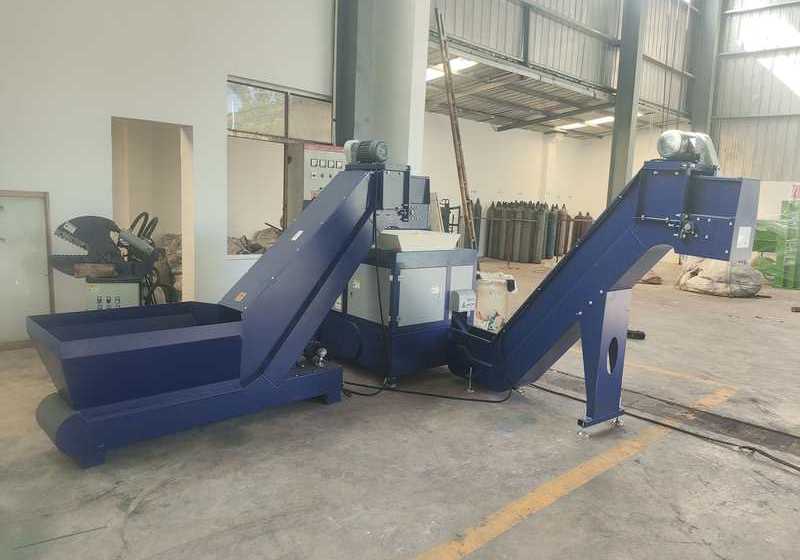
Conveying and collection arrangements should be matched to the workshop layout and the equipment receiving the chips.
6. Check the working envelope, not just the machine footprint
A compact machine can still be difficult to use if trolley access or maintenance space is overlooked. Mark the proposed installation on a floor plan and check the complete route from the CNC machines to the finished-briquette container.
> Loading and tipping height, including overhead obstructions.
> Access for trolleys, operators and maintenance personnel.
> Space to remove briquettes and collect separated liquid.
> Door, guard and service-panel opening areas.
> Electrical supply, connected load and suitable cable routing.
> Noise, leakage control and any material-specific extraction or fire precautions identified by the risk assessment.
If several metals will share the line, define a practical changeover and cleaning procedure. Keeping alloy streams separate may be important to the scrap receiver, and a shared machine does not remove that requirement.
7. Confirm the result with a representative material trial
A useful trial demonstrates the complete workflow, not just a short video of briquettes leaving the press. Agree the feed condition and record a meaningful operating period, including how the system is loaded.
1> Weigh and describe the input: identify the alloy, chip form and liquid condition.
2> Run the proposed preparation stages: confirm whether shredding and liquid separation are needed.
3> Measure sustained output: distinguish actual processing results from theoretical cycle calculations.
4> Inspect the briquettes: check dimensions, consistency and handling behaviour against the receiver's requirements.
5> Review the whole operation: assess operator involvement, material build-up, liquid collection and cleaning access.
Confirm acceptance criteria in the proposal. Briquette density, remaining liquid, sale value and downstream suitability should not be assumed from appearance alone.
Inspect briquette consistency and handling behaviour during a representative material trial. Confirm the receiving customer's requirements; appearance alone does not establish density or residual liquid content.
8. Compare total operating cost and send a clear enquiry
Compare the full installed scope: press, essential preparation equipment, conveying, controls, liquid collection, utilities and operator tasks. Consider service access and wear parts as well as purchase price. Any payback estimate should use your own chip quantity, operating costs and confirmed recycler terms—not an assumed scrap-price premium.
For a project-specific recommendation, send DILOYA material photos or samples, daily and peak quantities, available processing hours, trolley details, supply voltage, workshop layout and the intended briquette requirements. State which tasks you want to automate and which can remain manual.
The best compact line is not the one with the most accessories. It is the line that reliably handles the shop's actual chips, fits the available space and produces briquettes acceptable to the receiving customer.
Explore the Small Briquetting Press and Small Metal Turnings Shred-Briquetting Line, or contact DILOYA with your material and workload details.